
PUF Panel Flush Doors: Features, Applications & Specifications
Industrial and commercial facilities need doors that do much more than simply provide access. In cold storage rooms, food-processing units, pharmaceutical facilities and clean rooms, maintaining the right temperature, hygiene and internal environment is essential. Poor sealing or unwanted heat transfer through a door can affect the efficiency of the entire facility. This is where PUF Panel Flush Doors offer a practical solution.

Designed with a rigid Polyurethane Foam (PUF) insulated core enclosed between protective metal sheets, these doors provide thermal insulation, durability and a smooth, easy-to-maintain surface. Unlike a conventional flush interior door, a PUF flush door is specifically developed for demanding industrial and controlled environments. Depending on the requirement, it can be supplied as a single leaf flush door or double leaf flush door, with suitable hardware, gaskets and a properly designed frame.
The quality of flush door fitting is also important. A well-installed frame and sealing system help reduce unwanted air leakage and maintain better insulation performance. PUF flush doors are commonly available with PPGI or stainless-steel facing and different thickness options. Industry specifications may include PUF core densities around 40 ± 2 kg/m³, although the appropriate specification depends on the application.
When comparing flush door price or the overall cost of flush door, businesses should consider more than the initial purchase price. Insulation quality, facing material, sealing, hardware, dimensions and installation all influence long-term performance. For temperature-controlled and hygienic facilities, choosing the right PUF Panel Flush Door can support better operational efficiency, durability and environmental control.
What Is a PUF Panel Flush Door?
In industrial and commercial facilities, a door needs to do more than provide access between two areas. Cold storage rooms, food-processing units, pharmaceutical facilities and clean rooms often require controlled temperatures, better hygiene and reduced air movement. This is where PUF Panel Flush Doors are designed to provide an effective solution. PUF stands for Polyurethane Foam, a rigid insulating material used at the core of the door.
A PUF Panel Flush Door is an insulated door assembly in which the PUF core is enclosed between protective inner and outer metal sheets. This construction creates a smooth, flat surface while providing thermal insulation and durability. The flush surface also makes the door relatively easy to clean, which is useful in hygiene-sensitive environments.
A typical door includes the insulated core, metal-facing sheets, a flush door frame, sealing gaskets, hinges and a locking mechanism. Depending on the application, accessories such as vision panels, kick plates, door closers, handles and emergency-release systems can also be incorporated. Proper flush door fitting is essential because correct alignment and sealing help minimize air leakage.
It is important not to confuse an industrial PUF door with a conventional flush interior door used in homes and offices.
PUF Panel Flush Door vs. Conventional Flush Door
PUF Panel Flush Door | Conventional Flush Door |
PUF insulated core | Timber/engineered-wood core |
Designed for thermal insulation | Primarily designed for general access/interiors |
Common in cold and controlled environments | Common in residential/commercial interiors |
Metal protective skin commonly used | Plywood, MDF or laminate commonly used |
Designed around thermal performance | Thermal performance is generally not the primary purpose |
Whether the requirement is a single leaf flush door for a smaller opening or a double leaf flush door for wider access, specifications should match the application. Similarly, flush door price and the overall cost of flush door should be evaluated alongside insulation, materials, hardware and installation.
Also Read: Insulated Doors and Accessories
How Are PUF Panel Flush Doors Constructed?
A PUF Panel Flush Door is made from several components that work together to provide insulation, strength, sealing and smooth operation. Unlike a basic flush interior door, its construction is designed for demanding environments such as cold rooms, food-processing areas, pharmaceutical facilities and clean rooms. The main components include:
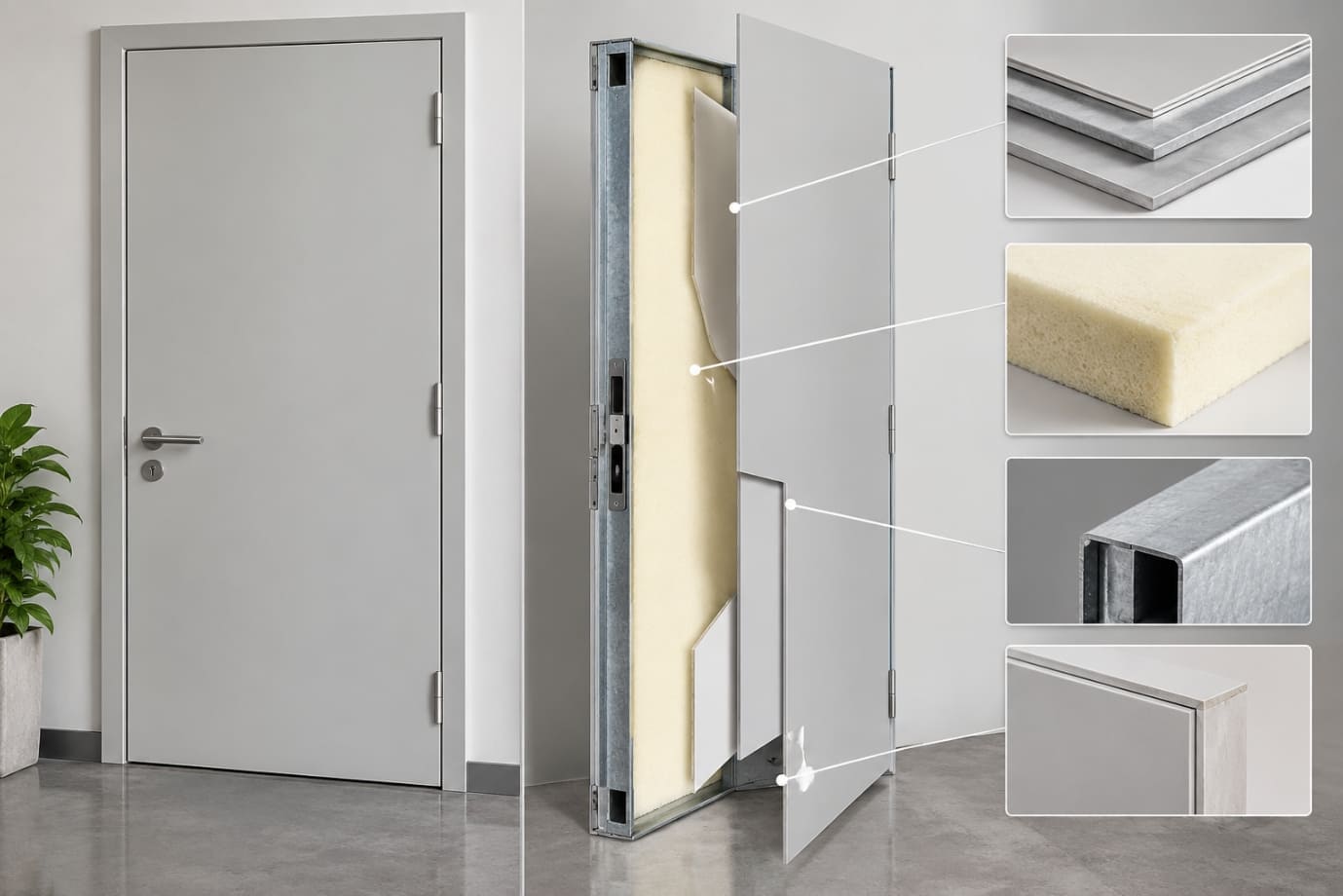
1. Polyurethane Foam Core
The core is the heart of a PUF door. Polyurethane Foam (PUF) is a rigid insulating material that helps reduce heat transfer through the door. The required core thickness and density can be selected according to the application, temperature and insulation requirements. For more details, you can explore our comprehensive page on PUF Panels.
2. Metal Facing Sheets
The PUF core is enclosed between durable inner and outer metal sheets. Common options include PPGI, GI and stainless steel. The facing material, thickness and finish can be selected according to factors such as hygiene, moisture, corrosion resistance and the operating environment. This also gives the flush door its smooth and durable surface.
3. Door Frame
A properly designed flush door frame is essential for the complete door assembly. It supports the door leaf and provides a firm surface for the sealing system. Accurate flush door fitting and proper alignment help minimize gaps and unwanted air leakage.
4. Gaskets and Sealing
Perimeter gaskets are fitted around the door to create a tight seal when it is closed. Effective sealing is particularly important in temperature-controlled areas because it helps reduce air exchange between the conditioned room and surrounding space.
5. Hardware
Depending on the configuration, a single leaf flush door or double leaf flush door may include hinges, handles, locks, emergency-release mechanisms, vision panels, kick plates and door closers.
This construction makes PUF doors different from an external flush door, which may be designed for general building access. Similarly, modern flush doors can serve different purposes. When comparing flush door price, buyers should consider the complete construction, insulation, sealing, hardware and installation, not just the door panel.
Key Features of PUF Panel Flush Doors
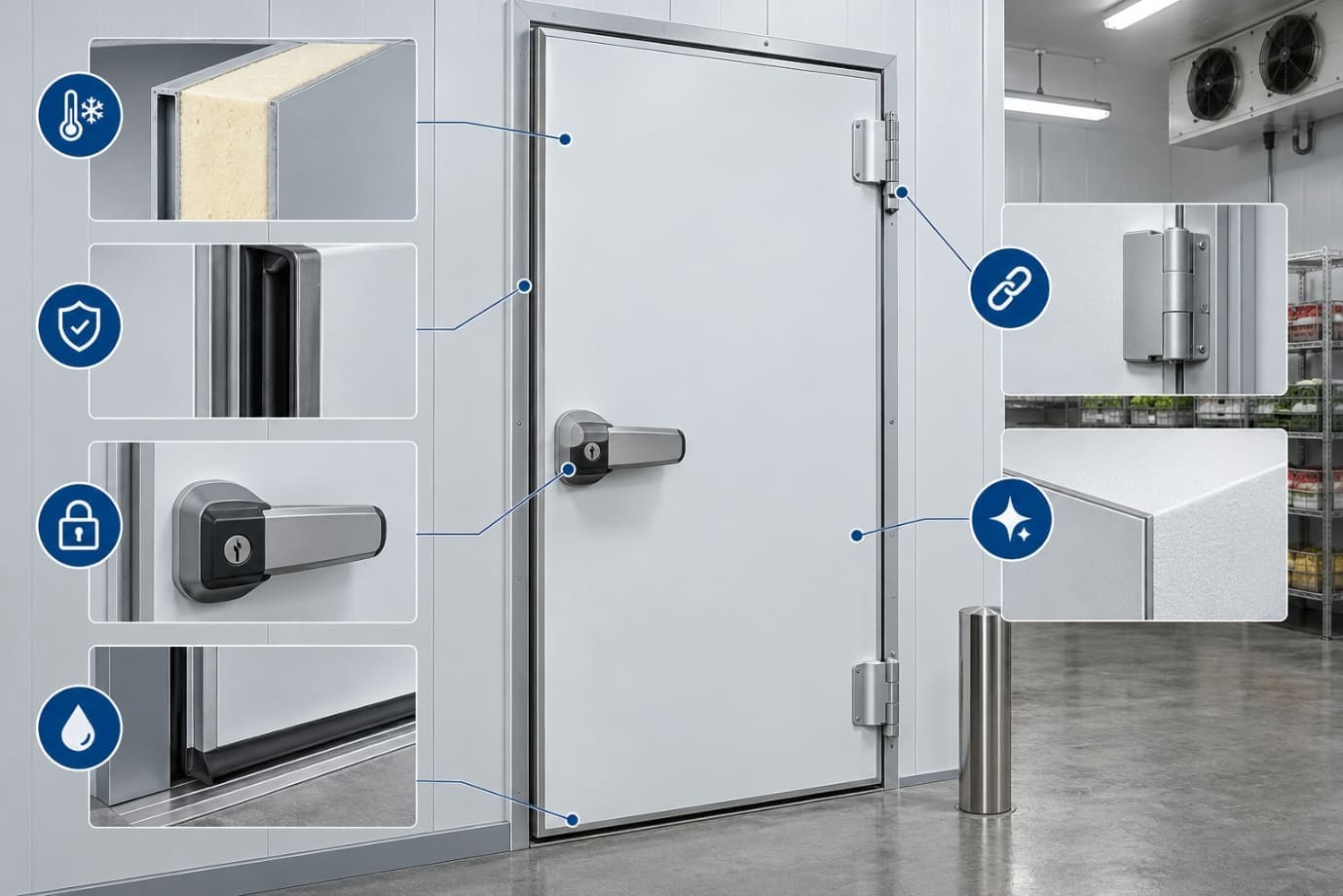
A PUF Panel Flush Door is designed to provide more than a clean, flat appearance. Its construction combines insulation, sealing, durable materials and practical hardware, making it suitable for cold rooms, food-processing facilities, pharmaceutical areas, clean rooms and other controlled environments. Some of its key features include:
➤ Thermal Insulation
The PUF insulated core helps reduce heat transfer between the room and surrounding area. This makes the door suitable for applications where maintaining a controlled temperature is important.
➤ Airtight Sealing
A properly designed flush door frame, along with quality perimeter gaskets, helps minimize unwanted air leakage. Correct flush door fitting is therefore important for achieving effective sealing.
➤ Smooth Flush Surface
The flat surface of a flush door provides a clean and simple appearance and is relatively easy to clean. This is particularly useful in hygiene-sensitive industrial environments.
➤ Moisture Resistance
With suitable metal facing and properly installed seals, PUF doors can perform well in humid and controlled environments. The exact material should be selected according to the application.
➤ Durable Facing Options
PPGI, GI and stainless-steel facing options can be selected based on the required durability, hygiene, corrosion resistance and finish.
➤ Customizable Dimensions
A PUF door can be manufactured according to the required opening and project specifications. Both single leaf flush door and double leaf flush door configurations can be considered.
➤ Durable Construction
The combination of the insulated core, protective metal skin, frame, sealing system and appropriate hardware provides a robust solution for repeated industrial use.
➤ Flexible Door Configurations
Depending on the application, customers can select different sizes, hardware and opening arrangements. A flush sliding door may also be considered where space or operational requirements make a sliding configuration more practical.
When choosing the best flush door for an industrial project, factors such as insulation, sealing, materials and application should take priority over appearance alone. Likewise, flush door price should be evaluated based on the complete door system rather than only the shutter.
Applications of PUF Panel Flush Doors
PUF Panel Flush Doors are used in facilities where a normal door is not enough to maintain insulation, hygiene and controlled environmental conditions. Their insulated construction and smooth surface make them suitable for a wide range of industrial and commercial applications.
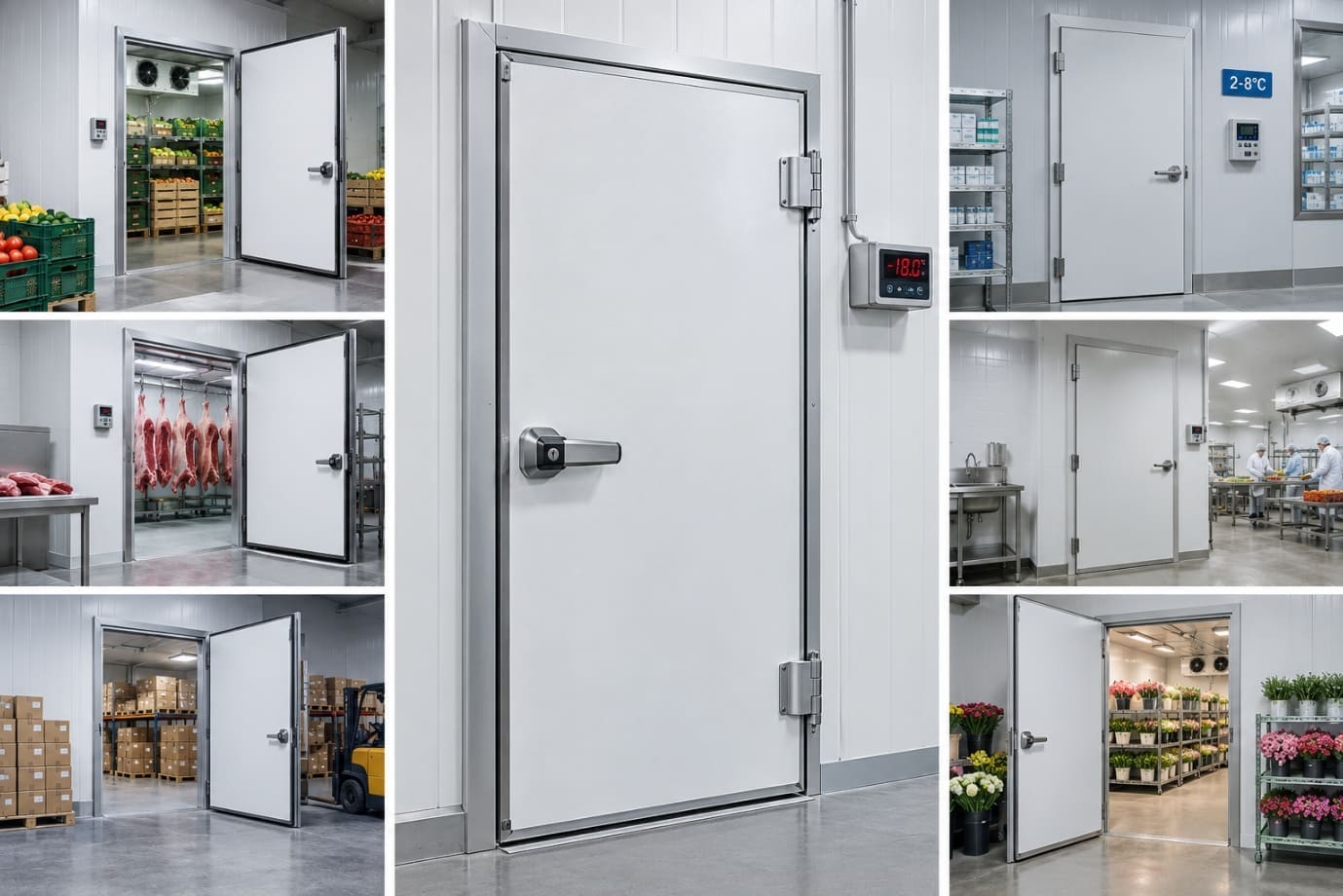
- Cold Storage Facilities: In cold storage facilities, these doors help maintain the insulated boundary between the cold room and surrounding areas. Proper sealing can help reduce unwanted air exchange and support temperature control. For more details, you can go through our dedicated page on Cold Storage solutions.
- Food Processing Plants: Food-processing areas often require cleanable surfaces and controlled temperatures. A flush door with suitable metal facing can provide a practical solution for processing rooms, storage areas and production zones.
- Pharmaceutical Facilities: Pharmaceutical manufacturing and storage areas may require controlled environments and hygienic surfaces. The door specification should be selected according to the facility's particular operational and regulatory requirements rather than assuming one configuration suits every application.
- Clean Rooms: In clean-room applications, door construction, sealing, surface finish and hardware should be matched with the overall room design and applicable standards. Proper flush door fitting is particularly important for maintaining the intended room conditions. You can also read our comprehensive page on PUF Panel Clean Rooms for detailed information.
- Dairy and Meat Processing Units: Dairy and meat facilities commonly require both temperature control and easy-to-maintain surfaces. PUF doors can be configured according to the specific hygiene, traffic and temperature requirements of the facility.
- Ripening Chambers: Controlled-temperature environments such as fruit ripening chambers can use insulated doors to help maintain the desired internal conditions and minimize unnecessary air movement. Also go through our in-depth blog on PUF Panel Banana Ripening chambers.
- Warehouses and Industrial Facilities: Insulated sections within warehouses and industrial buildings can benefit from single leaf flush door or double leaf flush door configurations, depending on opening size and movement requirements.
- Walk-In Chillers and Freezers: For walk-in chillers and freezers, selecting the appropriate insulated door, frame and sealing system is essential. A suitable flush door frame and gasket arrangement can help maintain the separation between conditioned and ambient areas. You can also read our detailed blog on walk-in cold rooms for better understanding.
Unlike a residential flush interior door, external flush door or flush exterior door, PUF doors are designed around insulation and controlled-environment requirements. When considering the best flush door, buyers should evaluate application, insulation, sealing, durability and hardware, not simply flush door price.
PUF Panel Flush Door Specifications
Choosing the right PUF Panel Flush Door requires more than looking at its appearance or flush door price. The door should be selected according to the room temperature, opening size, operating conditions, hygiene requirements and expected usage. Specifications can vary between manufacturers and projects, so the final configuration should always be confirmed according to the application.
Parameter | Typical Consideration |
Core | Polyurethane Foam (PUF) |
Door thickness | Selected according to application and temperature |
Core density | Common industry specification around 40 ± 2 kg/m³ |
Facing | PPGI, GI or stainless steel, depending on requirement |
Facing thickness | Selected according to project conditions |
Configuration | Single or double leaf |
Surface | Smooth flush finish |
Frame | GI, stainless steel or aluminium, depending on design |
Sealing | Perimeter gasket for improved air sealing |
Hardware | Hinges, handles, locks and optional accessories |
Size | Standard or customized |
Application temperature | Depends on door design and insulation thickness |
The PUF core provides the main thermal insulation, while the metal facing protects the door and provides a durable surface. The flush door frame, gasket and hardware also contribute to proper sealing and operation. Depending on the opening, a single leaf flush door or double leaf flush door can be selected.
How to Choose the Right PUF Panel Flush Door?
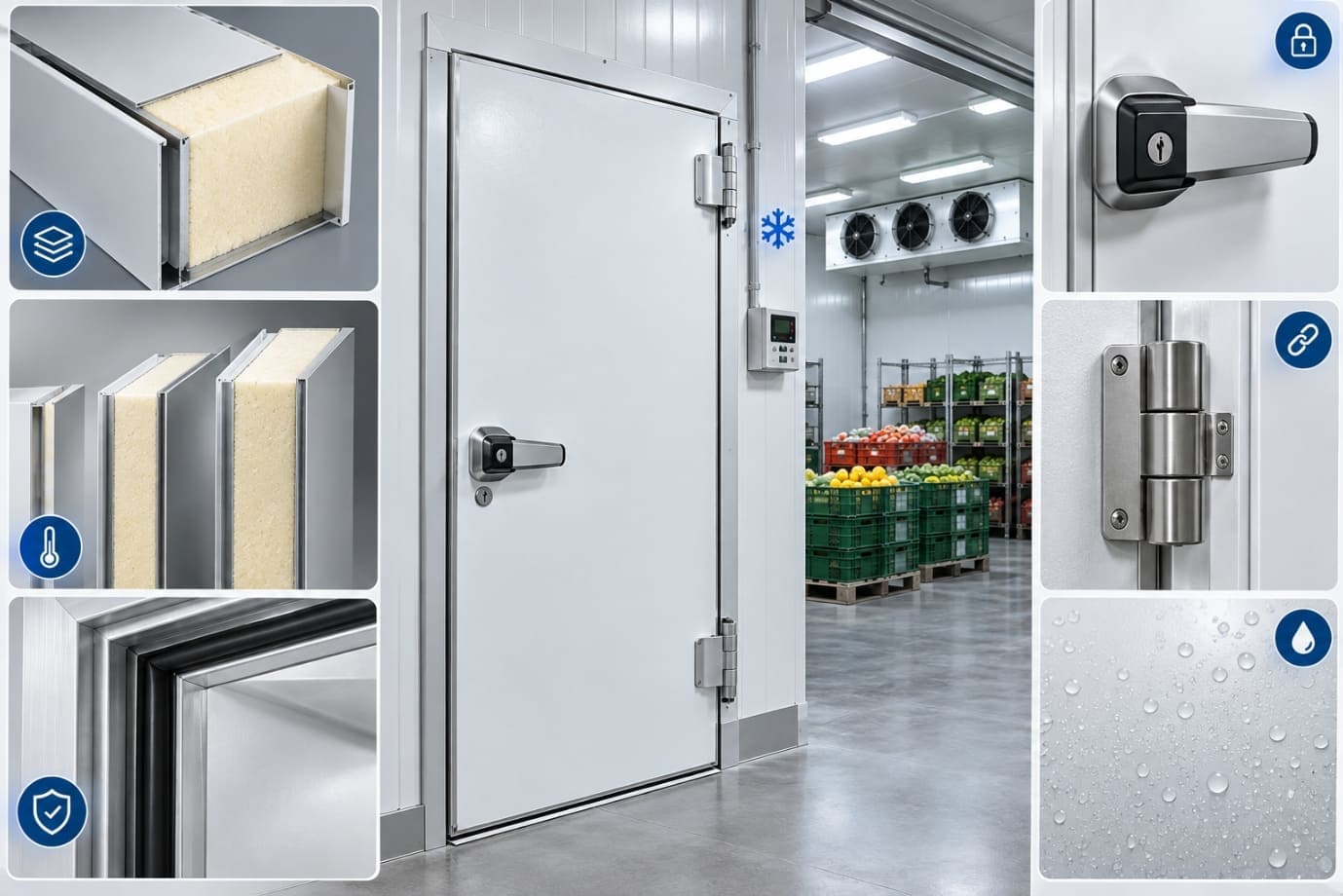
Selecting the right PUF Panel Flush Door is important because every facility has different insulation, temperature, hygiene and operational requirements. Instead of choosing a door only by appearance or price, consider the following factors to find a solution that matches your project.
1. Identify the Application
Start by understanding where the PUF Panel flush door will be installed. A cold room, freezer, clean room, food-processing area and general industrial space can all require different door specifications.
2. Check the Operating Temperature
Temperature plays a major role in door selection. A chilled room may have different requirements from a low-temperature freezer. The insulation of PUF Panel flush door should therefore be selected according to the actual operating conditions.
3. Select the Right Door Thickness
There is no single thickness of PUF Panel flush door that works for every application. Consider the room temperature, surrounding insulated panels, frequency of door opening and required insulation performance before choosing the thickness.
4. Choose the Facing Material
PPGI can be suitable for many general industrial applications, while stainless steel may be preferred where hygiene, frequent cleaning or corrosion resistance is important. The facing should suit the environment and expected usage.
5. Check the Sealing System
The flush door frame and perimeter gasket are essential for effective sealing. Proper alignment and accurate flush door fitting can help minimize air leakage and improve the overall performance of the insulated space.
6. Consider Door Traffic
A door used frequently needs suitable hardware and a configuration designed for regular operation. Depending on the opening, you may choose a single leaf flush door, double leaf flush door or flush sliding door.
7. Consider Safety
For walk-in cold rooms and freezers, safety features such as an internal emergency-release mechanism may be required. Hardware should always match the application and operating conditions.
8. Confirm Installation Requirements
The door should integrate properly with the surrounding insulated panel system. Correct installation ensures that the flush door frame, seals and door leaf work together effectively.
The best flush door is not necessarily the one with the lowest price. Unlike a flush interior door or flush exterior door, an industrial PUF door should be selected for its insulation, sealing, durability and safety.
Maintenance Tips for PUF Panel Flush Doors
Regular maintenance helps PUF Panel Flush Doors remain efficient, durable and easy to operate. A few simple checks can prevent minor issues from affecting insulation and sealing performance.

- Keep the surface clean: Wipe the flush door regularly with a suitable cleaning solution to remove dust, dirt and residue without damaging the facing.
- Inspect the gaskets: Check the perimeter seals periodically for cracks, hardening or gaps. Damaged gaskets should be replaced promptly to maintain proper sealing.
- Check hinges and hardware: Inspect hinges, handles, locks and other hardware for looseness or wear, particularly on frequently used doors.
- Ensure complete closing: The PUF Panel flush door should close smoothly and sit properly against the frame. Incomplete closing can lead to air leakage.
- Inspect the facing: Look for dents, scratches, corrosion or damage to the metal surface of the flush door and address problems early.
- Check the frame and edges: During routine flush door fitting inspections, look for gaps around the frame, seals or surrounding panels.
- Avoid prolonged opening: Keeping a cold-room door open unnecessarily can increase air exchange and place additional load on temperature-control systems.
- Maintain the sealing system: Replace worn or damaged sealing components as soon as possible to preserve the door's performance.
- Maintain the sealing system: Replace worn or damaged sealing components as soon as possible to preserve the door's performance.
These practices are applicable whether the installation uses a single leaf flush door, double leaf flush door or another insulated configuration.
Why Proper Installation Matters
Even a high-quality PUF Panel Flush Door can underperform if it is not installed correctly. In temperature-controlled facilities, installation is an important part of the complete insulated door system, not just the final step.
Proper installation should ensure:
- Correct frame alignment: The flush door frame must be accurately positioned so the door opens, closes and seals properly.
- Proper gasket placement: Seals should sit evenly without twists, gaps or loose sections.
- Minimal gaps: Open spaces around the flush door frame can allow unwanted air movement and affect insulation.
- Correct hardware adjustment: Hinges, locks, handles and closers should be aligned for smooth operation.
- Complete door closure: The flush door should close firmly against its seals without unnecessary force.
- Proper panel integration: The door should connect correctly with the surrounding PUF panels to maintain the insulated boundary.
- Proper panel integration: The door should connect correctly with the surrounding PUF panels to maintain the insulated boundary.
This is why door selection, fabrication and flush door fitting should be considered as one complete process. Whether you choose a single leaf flush door or double leaf flush door, correct installation helps support long-term performance.
When evaluating flush door price, installation quality should also be considered. Unlike a flush interior door or flush exterior door, a PUF door forms part of a controlled environment where insulation and sealing are critical.
Also Read: Common Mistakes in Installing PUF Panels
Why Choose MAKS Engineering for PUF Panel Flush Doors?
Choosing a PUF Panel Flush Door is about more than buying a door. The solution should match your application, insulation requirements, opening size and operating conditions. MAKS Engineering can provide application-focused solutions for insulated and prefabricated industrial environments.
- Industrial expertise: Suitable solutions for cold rooms, industrial facilities and controlled environments.
- Customized solutions: Door size, configuration, materials and hardware can be selected according to project needs.
- PUF panel integration: Doors can be planned alongside PUF panels and cold-room systems for a more consistent insulated setup.
- Project-specific engineering: Selection can consider temperature, door traffic, opening dimensions and operating conditions.
- Installation support: Proper flush door fitting, frame alignment and sealing are considered important parts of the installation.
- Installation support: Proper flush door fitting, frame alignment and sealing are considered important parts of the installation.
Whether you need a single leaf flush door or double leaf flush door, the focus should be on application, insulation, sealing and durability rather than flush door price alone. MAKS Engineering’s broader experience with prefabricated and insulated solutions can help customers plan the door as part of the overall project instead of treating it as an isolated component.
FAQs:
Q1. What is a PUF Panel Flush Door?
A. A PUF Panel Flush Door is an insulated door made with a rigid Polyurethane Foam (PUF) core enclosed between protective metal sheets. It is designed to provide thermal insulation, durability and effective sealing for controlled environments such as cold rooms, clean rooms and food-processing areas.
Q2. What is the purpose of a PUF flush door?
A.The main purpose of a PUF flush door is to help reduce heat transfer and unwanted air movement between two areas. Its insulated construction makes it suitable for temperature-controlled spaces where maintaining the internal environment is important.
Q3. Where are PUF Panel Flush Doors used?
A. PUF Panel Flush Doors are commonly used in cold storage rooms, freezer rooms, food-processing plants, pharmaceutical facilities, clean rooms, ripening chambers, dairy and meat-processing units, and temperature-controlled warehouses. Industry suppliers also list these doors for blast freezers and pre-cooling rooms.
Q4. Can PUF Panel Flush Doors be customized?
A. Yes, PUF Panel Flush Doors can be customized according to the required size, thickness, facing material, hardware and configuration. Depending on the opening, a single leaf flush door or double leaf flush door can be selected. Some projects may also require sliding configurations.
Q5. Is a PUF Panel Flush Door better than a conventional flush door?
A. A PUF Panel Flush Door is designed for applications where thermal insulation and controlled environments are important. A conventional flush door is generally intended for residential, office or general interior use. The suitable option depends on the application rather than one door being universally better.
Conclusion
Choosing the right PUF Panel Flush Door is an important decision for any facility where temperature control, hygiene, insulation and reliable day-to-day operation matter. Whether you are developing a cold room, freezer, food-processing plant, pharmaceutical facility, clean room, ripening chamber or temperature-controlled warehouse, the door should be selected according to the actual requirements of the space.
A well-designed flush door is more than a flat panel. The PUF insulated core, metal facing, frame, perimeter gasket and hardware all work together to create an effective door assembly. Factors such as operating temperature, door thickness, opening size, traffic frequency, facing material and sealing requirements should therefore be considered before finalizing the specification.
At the same time, flush door price should not be the only factor when comparing options. The overall cost of flush door should be evaluated against the construction, insulation, durability, flush door fitting, hardware and expected application. A configuration such as a single leaf flush door, double leaf flush door or flush sliding door can then be selected according to the available space and operational needs.
MAKS Engineering can help you evaluate the appropriate door configuration based on your project requirements, dimensions and application. Instead of choosing a conventional flush door simply on appearance, you can consider an engineered PUF solution designed as part of the overall insulated system.
For more information regarding our services, you can explore our Homepage.