
Continuous vs Discontinuous Panel Lines: Differences, Benefits & Applications

The construction industry is increasingly adopting modern, energy-efficient building solutions to meet the growing demands of industrial and commercial infrastructure. Insulated sandwich panels have become a popular choice for warehouses, factories, cold storage facilities and commercial buildings because of their excellent thermal insulation, durability and versatility. Understanding the difference between a continuous panel line and a discontinuous panel line is important when selecting the right insulated panel solution for a project.
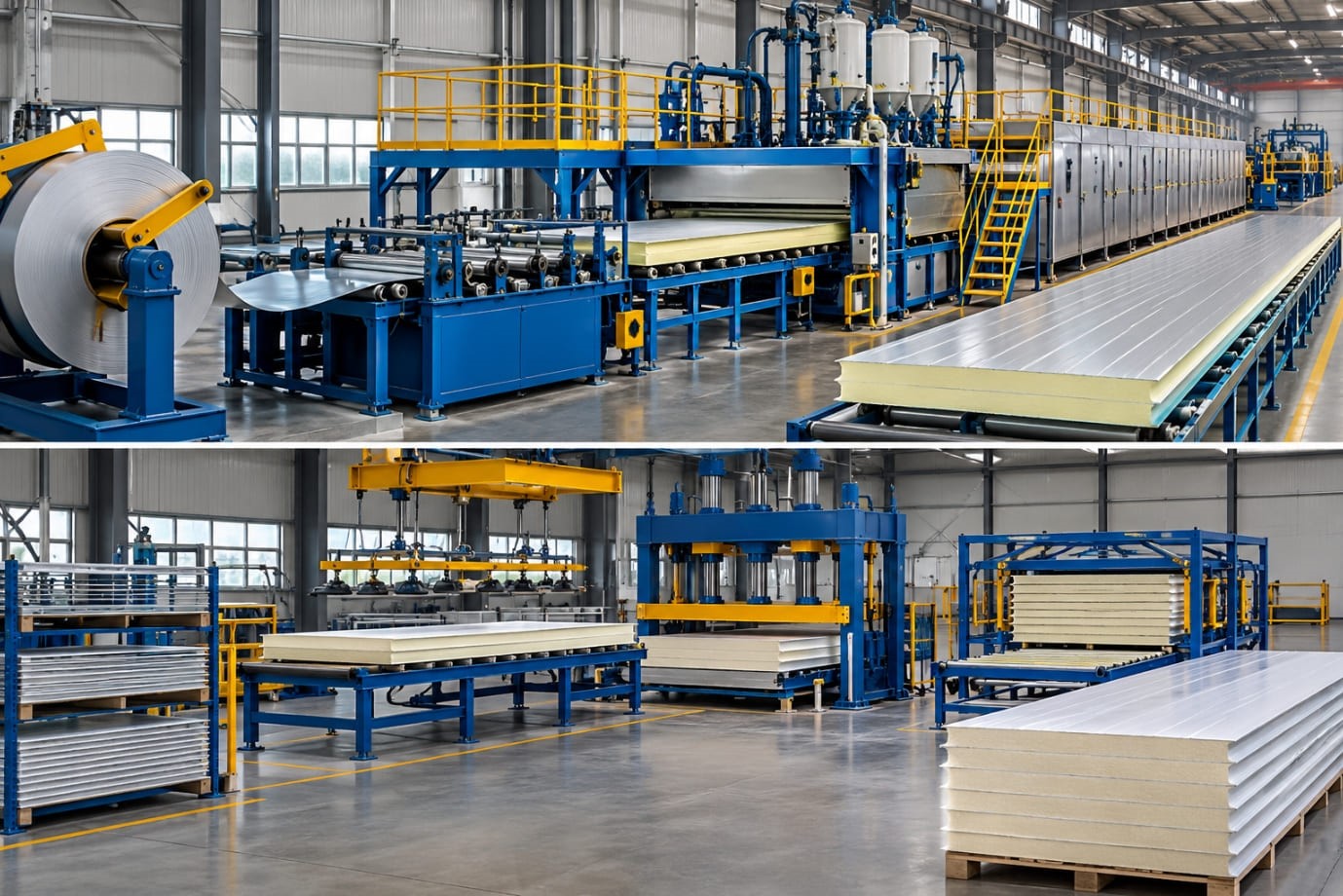
Continuous Sandwich Panel Line vs Discontinuous Panel Line

PUF (Polyurethane Foam) sandwich panels are particularly valued for their ability to minimize heat transfer and maintain stable indoor temperatures. A continuous sandwich panel line supports the production of standardized insulated panels with consistent specifications, making it suitable for large-scale industrial and commercial applications. These panels are commonly used for roofing, wall cladding and building insulation.

On the other hand, a discontinuous panel line offers greater flexibility in panel dimensions, thicknesses and customized configurations. This makes it a suitable option for projects with specialized requirements, including cold rooms, insulated doors and temperature-controlled facilities.

Although a continuous and discontinuous panel line serves the same basic purpose of producing insulated sandwich panels, both technologies differ in their characteristics, flexibility and application suitability. Choosing between them requires careful consideration of project requirements, insulation performance, building design and intended use.

In this blog, we will explore their key differences, benefits and applications to help you make an informed decision.

What Is a Continuous Sandwich Panel Line?

A continuous sandwich panel line refers to a production system used to create insulated sandwich panels with consistent dimensions, profiles and specifications. These panels are made by combining two outer metal facings with an insulating core, commonly made from Polyurethane Foam (PUF) or Polyisocyanurate (PIR), depending on the intended application. This combination creates a strong and lightweight panel that offers effective thermal insulation and supports modern industrial and commercial construction requirements.
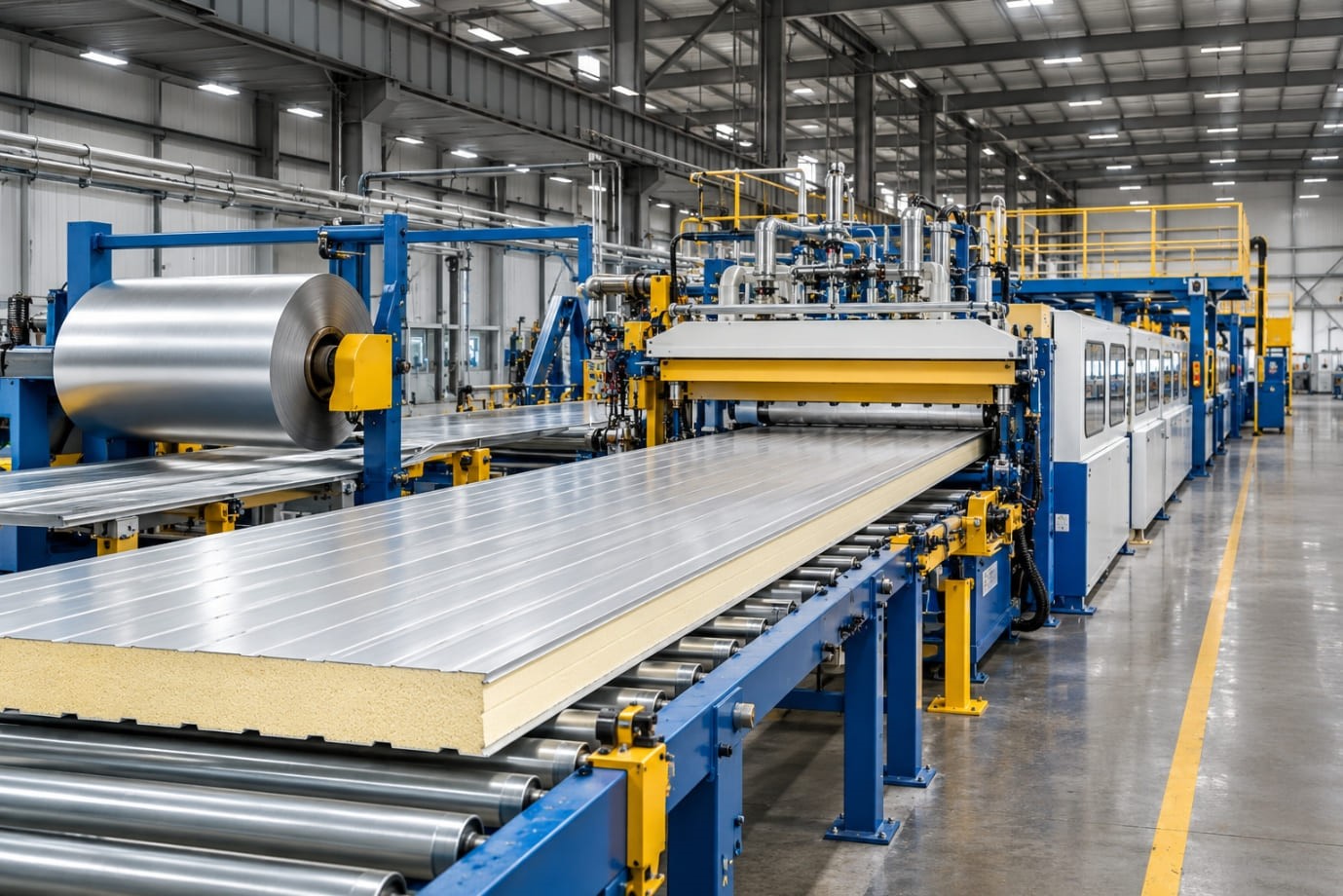
Continuous Sandwich Panel Line

PUF Panels produced through a continuous panel line are generally available in different thicknesses, colours, surface profiles and dimensions to meet various building requirements. They are widely used in industrial roofing, wall cladding, warehouses, factories and large commercial buildings where consistent panel specifications and reliable insulation performance are important.

Important Characteristics of Continuous Sandwich Panel Line

Unlike a discontinuous panel line, which allows greater flexibility for specialized configurations, a continuous system is generally suited to standardized panel requirements. Understanding both options helps businesses choose the right solution when evaluating a continuous and discontinuous panel line for their project.

What Are Discontinuous Panel Lines?

A discontinuous panel line refers to a system used to produce insulated sandwich panels in separate batches rather than through a continuous production process. These panels typically consist of two separate metal facing sheets with an insulating core, such as Polyurethane Foam (PUF) or Polyisocyanurate (PIR), placed between them. This panel structure provides thermal insulation, durability and strength while allowing greater flexibility in product design and specifications.
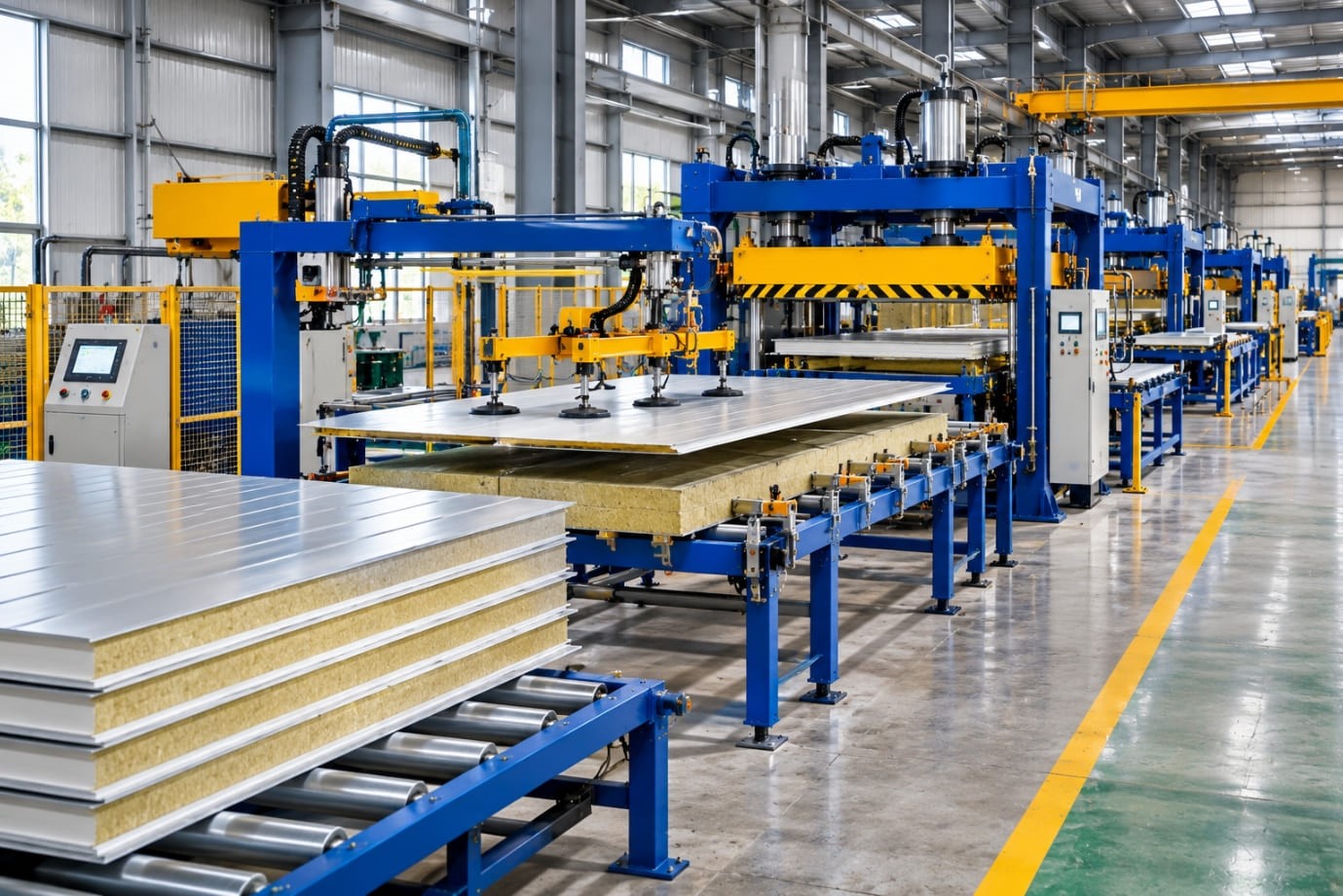
Discontinuous Panel Line

One of the major advantages of discontinuous panel line is their ability to accommodate customized requirements. Depending on the equipment and panel design, manufacturers can produce panels in different thicknesses, dimensions, shapes and configurations. This makes them suitable for projects where standard panel specifications may not fulfil specific application needs. They are commonly used in cold rooms, cold storage facilities, insulated doors and specialized industrial environments where proper temperature control and customized insulation solutions are essential.

Important Characteristics of Continuous Sandwich Panel Line

Unlike a continuous sandwich panel line, which generally focuses on standardized panel configurations, a discontinuous panel line offers more customization options. Understanding both technologies helps businesses evaluate the right solution for their requirements.

Continuous vs Discontinuous Panel Lines: Key Differences

A continuous panel line generally produces panels in standardized configurations, while a discontinuous panel line often offers greater flexibility in dimensions, thicknesses and designs. Both systems can produce insulated sandwich panels with PUF or PIR cores.
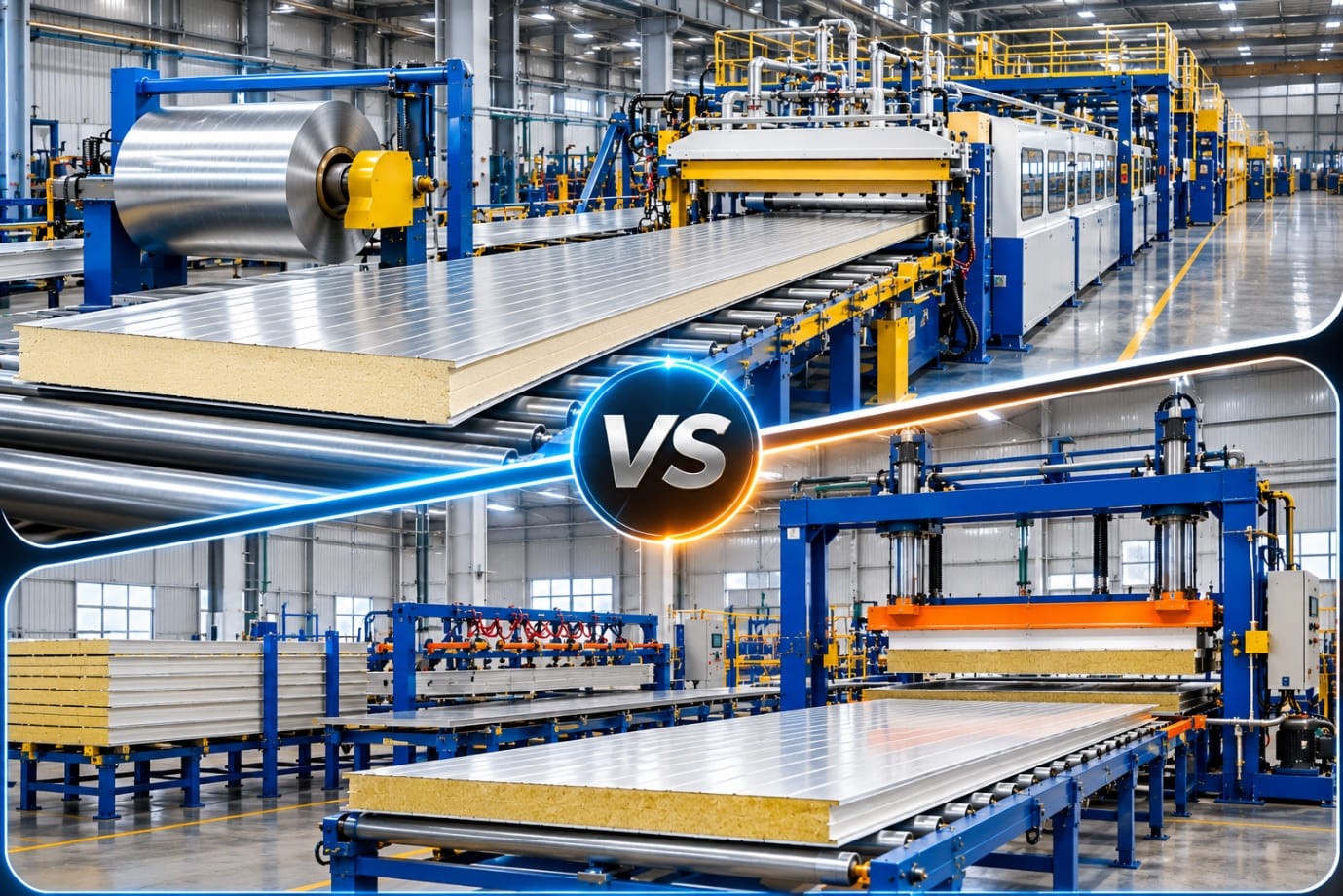
Continuous vs Discontinuous Panel Lines Important Differences
The suitability of continuous and discontinuous panel line depends on project specifications, building requirements and customization needs. The table below highlights their key differences.
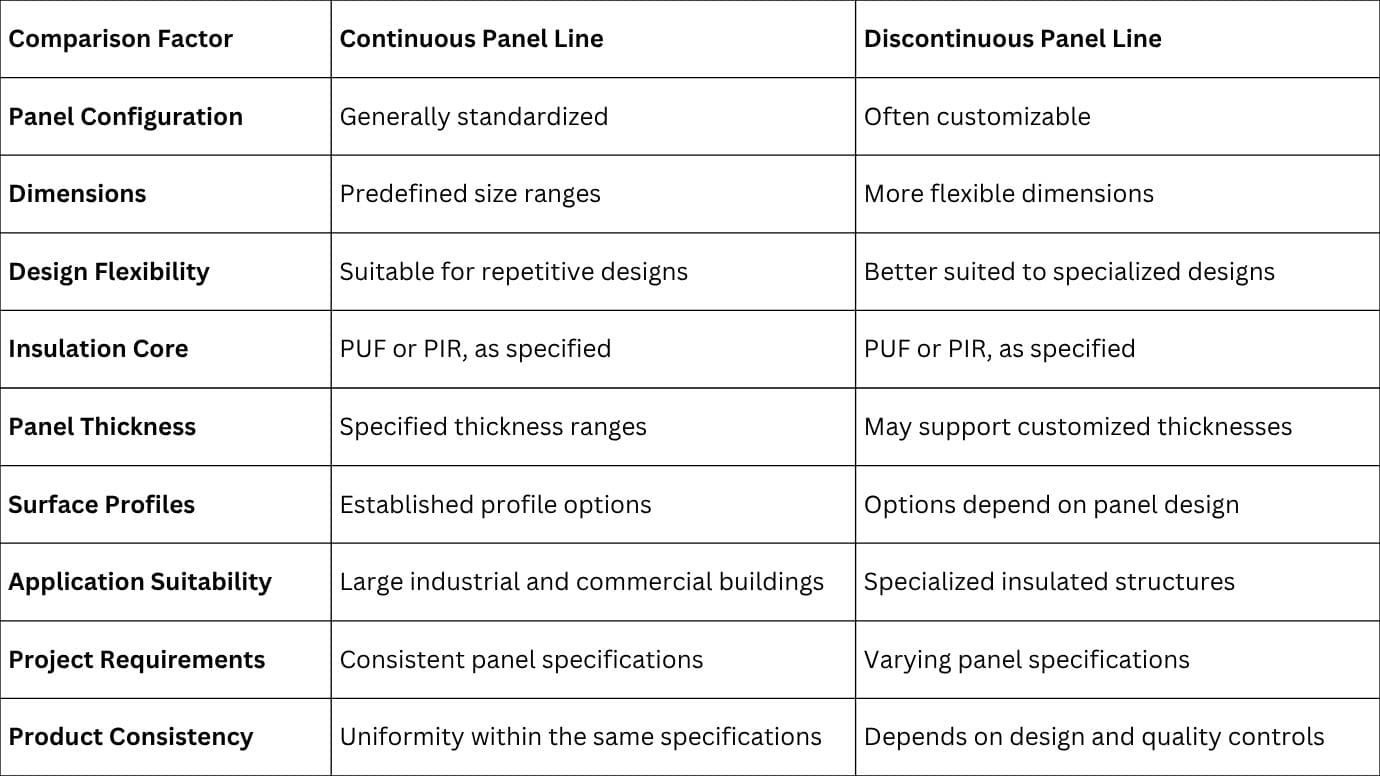
Continuous vs Discontinuous Panel Lines Key Comparison

Both continuous sandwich panel line and discontinuous panel line can provide effective insulation and structural performance when properly designed and installed. The right choice depends on panel specifications, building requirements, customization needs and project budget.

Advantages of Continuous Sandwich Panel Line

Continuous sandwich panels are a popular choice for large industrial and commercial buildings because they offer consistent specifications and efficient coverage. Produced through a continuous panel line, these panels are particularly useful for projects that require uniform designs across extensive areas.

Key advantages include:

Compared with a discontinuous panel line, continuous systems are often preferred when projects prioritize uniformity and standardized requirements. The choice between continuous and discontinuous panel line solutions ultimately depends on the project’s design and performance needs.

Advantages of Discontinuous Panel Lines

Discontinuous sandwich panels are often preferred for projects that require specific dimensions, designs or insulation features. A discontinuous panel line can offer greater customization, making it easier to meet the needs of specialized buildings where standard panel sizes may not be suitable.

Key advantages of it include:

While a continuous sandwich panel line generally supports standardized panel configurations, discontinuous systems can provide greater design flexibility, depending on the available specifications. Choosing between continuous and discontinuous panel line solutions should therefore depend on the project’s dimensions, insulation needs and intended application.

Applications of Continuous and Discontinuous Panel Lines

Both continuous and discontinuous panel lines are widely used in industrial and commercial construction. The choice depends on building size, insulation requirements, panel dimensions and project specifications. While each system has its common applications, their uses can overlap depending on the design.
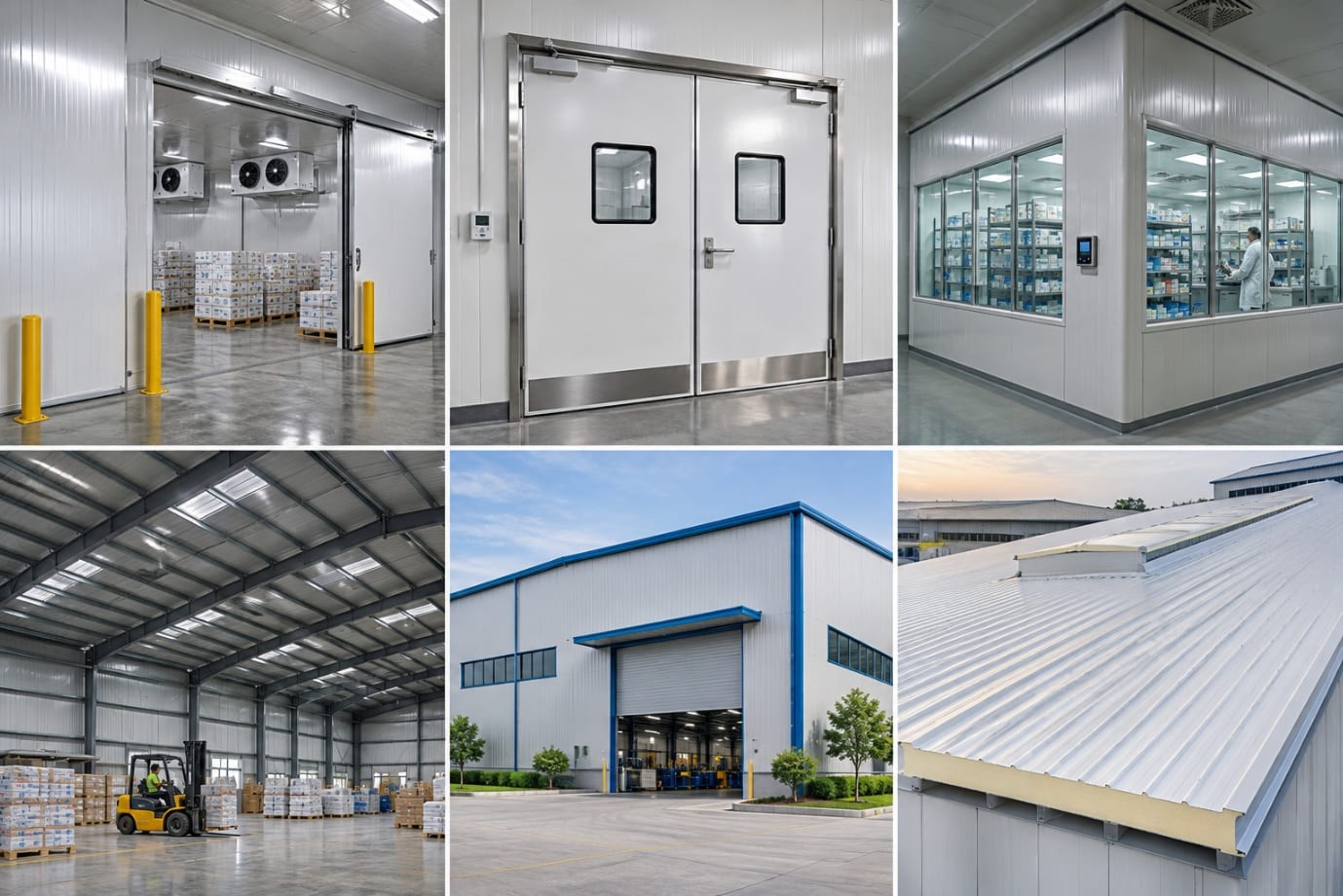
Applications of Continuous and Discontinuous Panel Lines

Applications of Continuous Panel Line

Panels produced through a continuous panel line are often suitable for large projects that require consistent dimensions and profiles. Common applications include:

A continuous sandwich panel line can be a practical option for projects with repetitive panel requirements and standardized designs.

Applications of Discontinuous Panel Line

A discontinuous panel line is often considered when projects need customized dimensions or specialized panel configurations. Typical applications include:

These applications may require specific insulation thicknesses, joint details and temperature-control performance.

Ultimately, continuous and discontinuous panel line systems can support many of the same industries. The right panel solution should be selected according to the building’s functional needs, environmental conditions and technical specifications rather than industry type alone.

Factors to Consider When Choosing Between Continuous and Discontinuous Panel Lines

Selecting between continuous and discontinuous panel line solutions requires more than comparing their production methods. The panel should match the building’s purpose, insulation needs and installation conditions. Consider these six important factors before making a decision:

A continuous panel line may suit projects with repetitive specifications, while a discontinuous panel line can be useful when greater customization is needed. However, the right choice should always be based on the overall project requirements, not simply the product category.

FAQs:

Q1. What is a continuous sandwich panel line?

A. A continuous sandwich panel line is a production system that forms insulated panels with metal facings and an insulating core in a continuous process, generally supporting standardized panel configurations.

A. A discontinuous panel line is used to produce sandwich panels in separate production cycles. It can accommodate customized dimensions, thicknesses and configurations for specialized building requirements.

A. A continuous panel line generally produces panels in standardized configurations, while a discontinuous panel line allows greater flexibility in panel dimensions, thicknesses and customized designs.

A. Yes. PUF Panels of discontinuous panel lines can be used in industrial buildings, cold rooms, food processing facilities, pharmaceutical storage areas and other applications requiring customized insulated panels.

A. Yes. PUF sandwich panels of continuous panel lines are commonly used for warehouse roofing and wall cladding because their standardized configurations can suit large building areas.

A. Compare your project dimensions, insulation requirements, structural specifications, environmental conditions and installation needs. Choose the system that best meets the overall project requirements, either continuous or discontinuous panel line.

Conclusion

Choosing between continuous and discontinuous panel lines for PUF Panels is an important step in planning an efficient and durable building. Both options offer useful benefits, but the right solution depends on the project’s specific needs. Panels produced through a continuous panel line are generally suitable for large-scale industrial and commercial buildings where standardized dimensions, consistent profiles and extensive coverage are required. In comparison, a discontinuous panel line offers greater flexibility for projects that need customized dimensions, specialized configurations or specific insulation requirements.

Both continuous sandwich panel line and discontinuous panel line can deliver effective thermal insulation when the core material, panel thickness, metal facings, joints and installation details are properly selected. Factors such as thermal performance, structural requirements, environmental conditions, building dimensions and intended applications should guide the final decision. Understanding the differences between continuous and discontinuous panel line systems helps businesses choose panels that support their operational needs and long-term building performance.

At MAKS Engineering Company, we provide PUF panels manufactured using discontinuous panel lines, along with insulated doors, cold storage solutions and prefabricated engineering systems for diverse industrial and commercial requirements. Our solutions are designed to address different project needs, including thermal insulation and specialized building applications.

Looking for reliable insulated panel solutions for your next project? Connect with MAKS Engineering Company to discuss your requirements and find a suitable panel solution for your facility.

For more information regarding our services, you can explore our Homepage.

Call Now Button