
Decking Sheet vs PPGI/PPGL Sheet PUF Panels
The demand for insulated roofing systems has increased significantly as industries look for durable, energy-efficient and cost-effective construction solutions. Whether you’re considering a decking sheet, or PPGI/PPGL Sheet, selecting the right outer sheet is crucial to the overall performance of a PUF panel. It influences structural strength, thermal insulation, durability and maintenance requirements. Factors such as price, load-bearing capacity and project specifications should also be evaluated before making the right roofing decision.
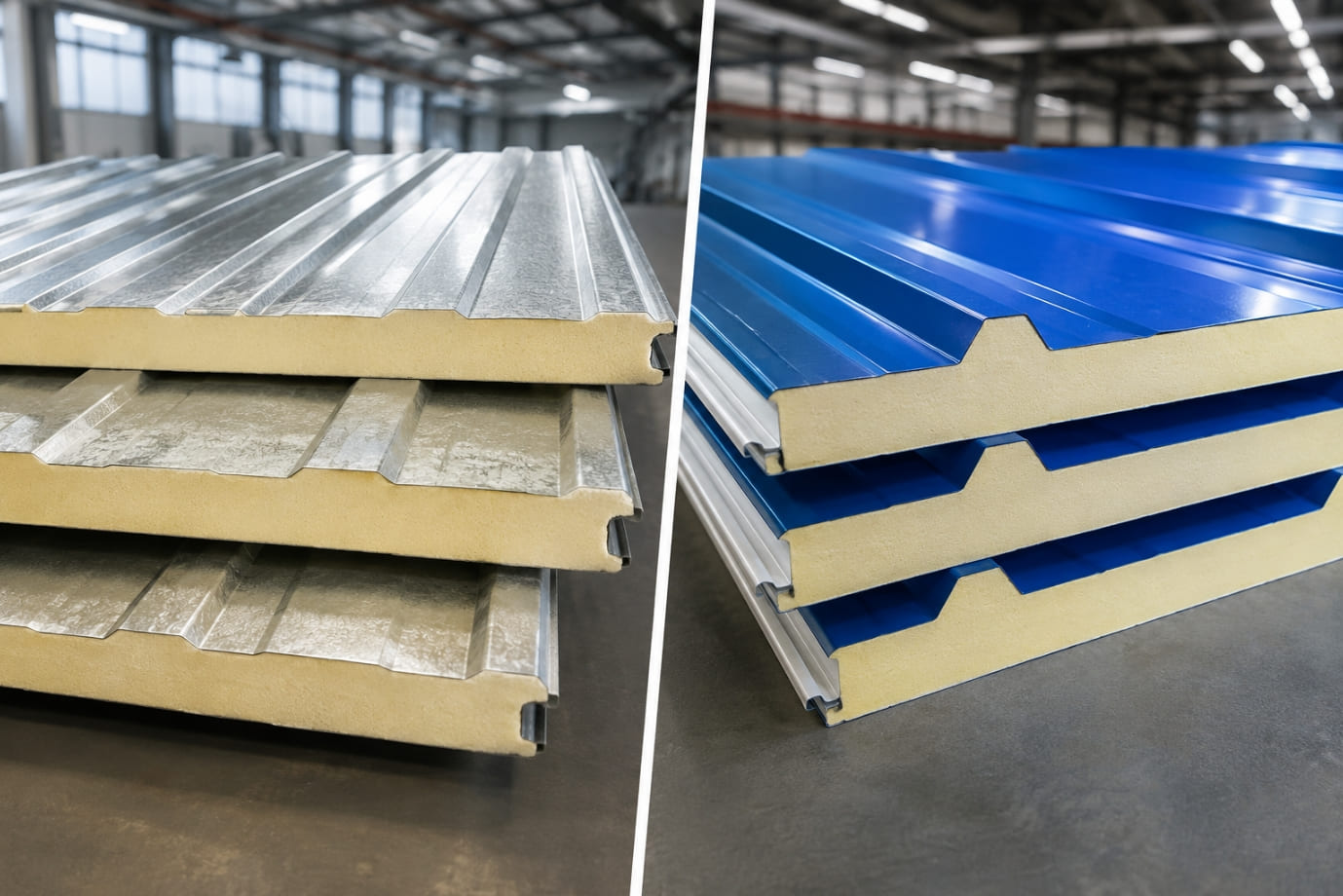
Decking Sheet and PPGI/PPGL Sheet PUF Panels are among the most popular options. Decking Sheet PUF Panels feature a profiled steel surface that offers excellent structural stability, making them ideal for industrial sheds, warehouses and long-span roofing applications. Available in profiles like deck profile sheet, corrugated deck sheet, roller deck sheet and composite deck sheets, they are designed to withstand heavy loads while providing outstanding insulation. They are also widely used in construction for faster installation and enhanced structural performance. In contrast, PPGI and PPGL Sheet PUF Panels are valued for their superior corrosion resistance, attractive finish and weather durability, making them suitable for commercial buildings, cold storage facilities and other demanding environments.
Choosing the right outer sheet is about more than just cost, it directly impacts structural integrity, energy efficiency, maintenance and the overall lifespan of the roofing system. In this blog, we’ll compare decking sheet and PPGI/PPGL Sheet PUF Panels based on construction, strength, insulation, durability, applications and cost, helping you select the ideal roofing solution for your project.
What Are PUF Panels and Why Are They Used in Modern Construction?
As the demand for energy-efficient and durable buildings continues to rise, PUF (Polyurethane Foam) Panels have become one of the most preferred construction materials for industrial, commercial, and institutional projects. Whether used with a decking sheet, steel deck sheet, or metal decking sheets, these insulated sandwich panels provide an ideal combination of structural strength, thermal insulation, and long-lasting performance. Their versatility makes them suitable for warehouses, manufacturing units, cold storage facilities, commercial complexes, and prefabricated buildings.
For more information, read our dedicated page on PUF Panels.
Understanding Decking Sheet PUF Panels
Decking Sheet PUF Panels are among the most reliable and high-performance roofing solutions used in modern industrial and commercial construction. Designed to combine the strength of a profiled steel sheet with the superior insulation of polyurethane foam, these panels provide exceptional durability, thermal efficiency and structural stability. Whether used for factories, warehouses, logistics centers or commercial buildings, they offer an ideal balance of performance and cost-effectiveness. Their ability to withstand heavy loads while reducing energy consumption has made them a preferred choice for large-scale construction projects.
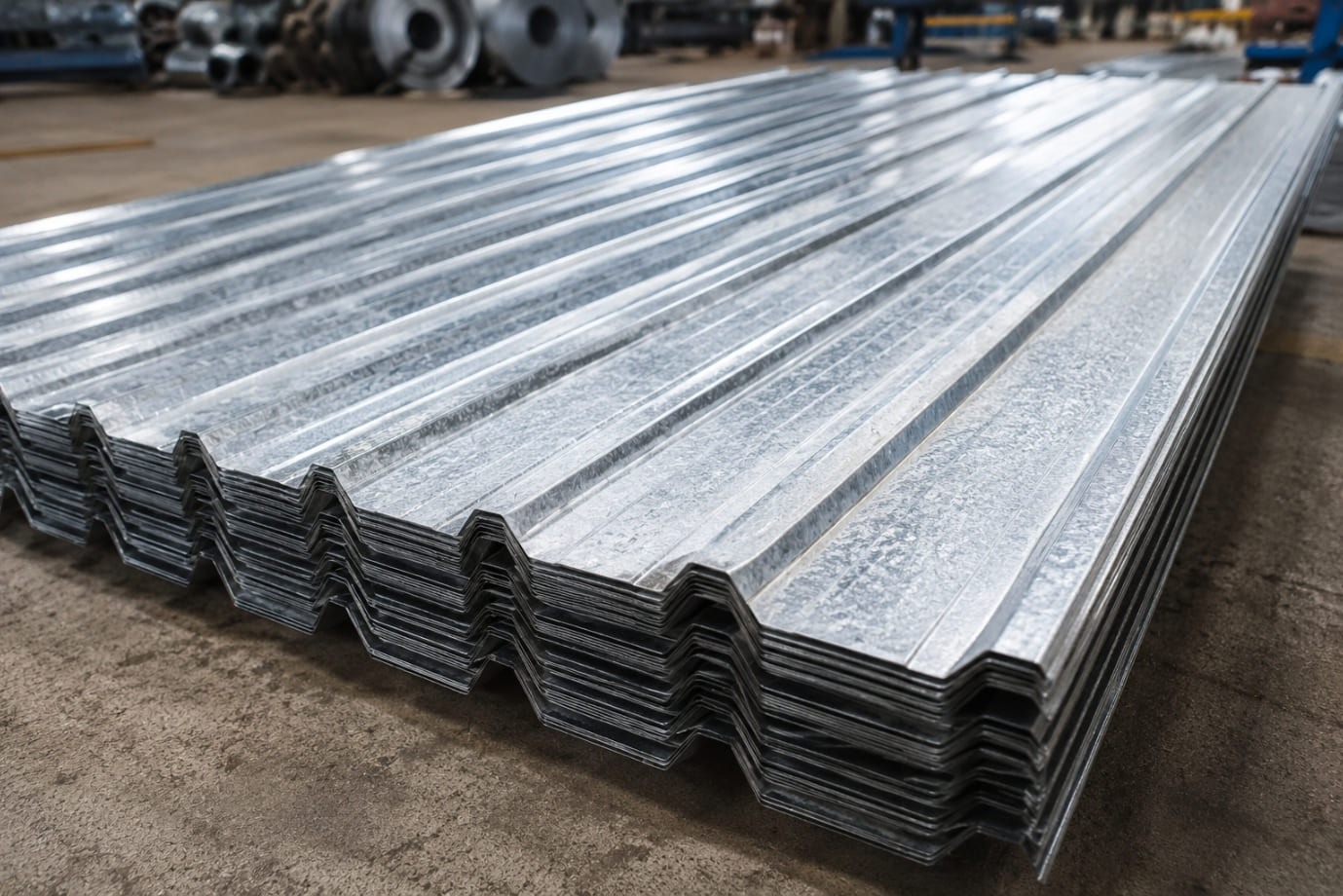
What Is a Decking Sheet?
A decking sheet is a profiled steel sheet specially engineered to provide excellent structural support for roofs, floors and mezzanine systems. Unlike conventional flat sheets, a decking sheet features deep ribs or embossed profiles that significantly increase its load-bearing capacity without adding excessive weight. Available in various designs such as metal decking sheets, steel deck sheet, deck profile sheet, corrugated deck sheet, roller deck sheet and TR 60 deck sheet, these sheets are selected based on project-specific structural and architectural requirements. They are widely used because they improve construction speed while reducing the overall steel and concrete requirement.
Construction of Decking Sheet PUF Panels
A Decking Sheet PUF Panel consists of three primary layers that work together to deliver strength, insulation and durability. The outer layer is a high-quality steel deck sheet or profiled metal sheet that provides exceptional structural support and protects the panel against external weather conditions. The core consists of rigid polyurethane foam (PUF), which acts as an excellent thermal insulator and minimizes heat transfer. The inner sheet, usually made of pre-coated steel, adds stability and provides a clean, durable interior finish. This integrated sandwich construction creates a lightweight yet extremely strong roofing system capable of performing efficiently in demanding industrial environments.
How the Ribbed Profile Enhances Structural Strength
One of the biggest advantages of a deck profile sheet is its ribbed design. The deep ribs distribute loads more evenly across the roof, increasing bending strength and minimizing deformation under heavy loads. This unique profile enables longer unsupported spans, reducing the number of supporting beams required during construction. Whether using composite deck sheets for composite floor systems or corrugated deck sheet profiles for roofing, the ribbed structure enhances stability, improves wind resistance and provides greater safety for industrial buildings. It also allows the roofing system to support maintenance personnel, solar panels, HVAC equipment, and other rooftop installations with confidence.
Key Features of Decking Sheet PUF Panels
- High Load-Bearing Capacity: The profiled design of a decking sheet significantly increases its ability to support static and dynamic loads. This makes Decking Sheet PUF Panels ideal for industrial facilities where heavy equipment, suspended utilities, or rooftop installations require a structurally strong roofing system.
- Excellent Spanning Capability: A TR 60 deck sheet and other high-profile decking sheets are designed to span greater distances without requiring frequent structural supports. This reduces steel consumption, lowers construction costs and creates larger unobstructed interior spaces.
- Better Structural Rigidity: The combination of profiled steel and rigid polyurethane foam results in a highly stable roofing panel with exceptional stiffness. This minimizes movement under varying loads and enhances the overall structural integrity of the building.
- Reduced Roof Deflection: Thanks to their engineered ribbed profile, metal decking sheets effectively distribute loads, reducing roof sagging and deflection even under heavy wind, rain or snow conditions. This ensures better long-term structural performance and safety.
- Long-Lasting Performance: Manufactured using premium-grade steel and protective coatings, Decking Sheet PUF Panels are highly resistant to corrosion, weather exposure, and mechanical wear. Their durable construction minimizes maintenance requirements and delivers reliable performance for decades, making the deck sheet price a worthwhile long-term investment.
Best Applications of Decking Sheet PUF Panels
- Industrial Sheds: Decking Sheet PUF Panels provide the structural strength and thermal insulation needed for large industrial sheds where durability and energy efficiency are essential.
- Manufacturing Plants: These benefit from decking sheet PUF panels because they maintain stable indoor temperatures while supporting heavy rooftop equipment and services.
- Warehouses: The excellent spanning capability of deck sheet roofing systems allows warehouses to have large column-free storage areas, improving operational efficiency.
- Logistics Hubs: Fast installation, lightweight construction and long-span performance make these decking sheet PUF panels ideal for logistics parks and distribution centers where rapid project completion is critical.
- Multi-Level Industrial Buildings: Applications involving deck sheet slab, deck slab sheet and composite deck sheets provide strong floor and roof systems for multi-storey industrial structures while reducing overall construction time.
- Heavy-Duty Roofing Projects: For projects requiring exceptional structural strength and long-term durability, including factories, engineering workshops, power plants and processing facilities, decking sheet PUF panels offer one of the most dependable roofing solutions available today.
Understanding PPGI and PPGL Sheet PUF Panels
PPGI and PPGL Sheet PUF Panels are among the most widely used insulated roofing and wall panel solutions in modern industrial and commercial construction. These sandwich panels combine pre-coated metal sheets with a rigid polyurethane foam (PUF) core to deliver outstanding thermal insulation, corrosion resistance and durability. While decking sheet PUF panels are preferred for projects requiring higher structural strength, PPGI and PPGL Sheet PUF Panels are an excellent choice for applications where aesthetics, weather resistance and long-term protection are equally important.
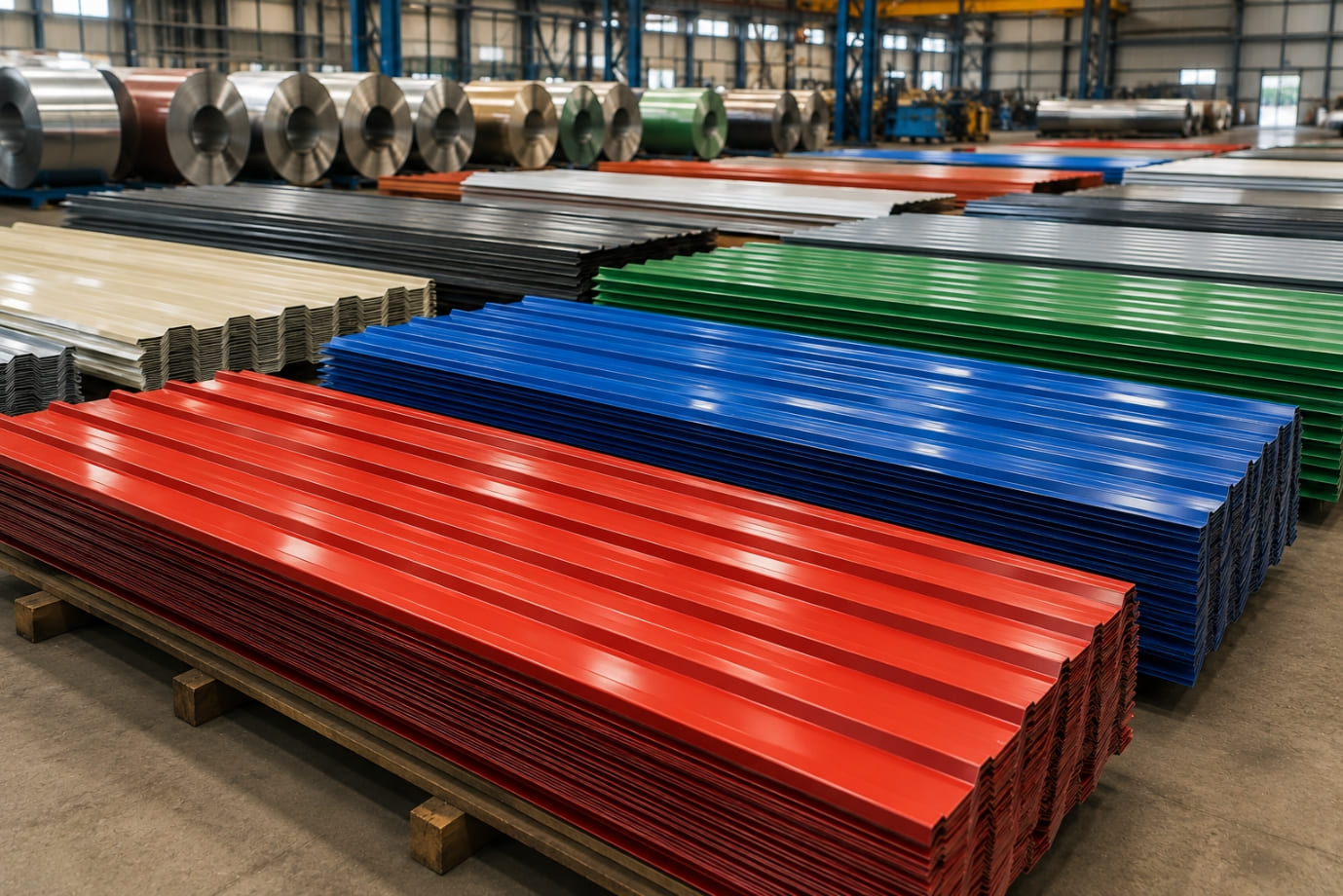
What Is PPGI Sheet?
A PPGI (Pre-Painted Galvanized Iron) Sheet is a galvanized steel sheet coated with high-quality paint layers to improve its resistance against corrosion, moisture and environmental damage. The protective coating also provides an attractive finish, making these sheets suitable for roofing and wall cladding in industrial, commercial and institutional buildings. Their excellent durability and smooth appearance make them a popular choice for insulated PUF panels.
What Is PPGL Sheet?
A PPGL (Pre-Painted Galvalume) Sheet is manufactured using a steel sheet coated with an aluminium-zinc alloy before being painted. This coating offers superior corrosion resistance and enhanced protection against harsh weather conditions compared to conventional galvanized sheets. PPGL sheets are particularly suitable for coastal regions, high-humidity environments and industrial areas where long-term durability is essential.
Construction of PPGI/PPGL Sheet PUF Panels
PPGI and PPGL Sheet PUF Panels are manufactured by bonding two pre-coated metal sheets with a rigid polyurethane foam core under controlled conditions. The outer sheet provides strength and environmental protection, while the insulation core minimizes heat transfer and improves energy efficiency. The inner sheet offers additional support and creates a smooth interior finish. Although they differ from metal decking sheets, these panels provide an excellent balance of lightweight construction, durability and thermal performance.
Why Protective Coatings Matter
The quality of the protective coating significantly influences the lifespan of a PUF panel. Premium coatings protect the steel surface from rust, chemicals, moisture, UV exposure and weathering while maintaining colour retention and surface finish. As a result, PPGI and PPGL panels require less maintenance and continue to perform efficiently even in demanding environments.
Key Features
- Excellent Corrosion Resistance: High-quality protective coatings prevent rust formation, making these panels ideal for humid, chemical and coastal environments.
- Smooth and Attractive Finish: The pre-painted surface provides a clean, modern appearance, making PPGI and PPGL panels suitable for projects where aesthetics are important.
- Lightweight: Compared to traditional roofing systems, these panels are lightweight, making transportation, handling and installation easier while reducing the structural load on the building.
- Weather Resistant: Designed to withstand rain, humidity, temperature fluctuations and harsh environmental conditions, these panels ensure reliable long-term performance.
- UV Protection: Advanced paint coatings resist fading and degradation caused by prolonged sunlight exposure, helping maintain the panel's appearance for years.
- Low Maintenance: The protective finish minimizes corrosion, dirt accumulation and surface damage, reducing maintenance costs throughout the panel's service life.
Best Applications
- Cold Storage: PPGI and PPGL Sheet PUF Panels provide superior thermal insulation, helping maintain consistent temperatures and improve energy efficiency in cold storage facilities. For more details, you can go through our dedicated page on Cold Storage Solutions.
- Clean Rooms: Their smooth, hygienic, and easy-to-clean surface makes them ideal for clean rooms where contamination control is essential. For more information, read our comprehensive page on PUF Panel Clean Rooms.
- Food Processing Plants: These panels create insulated and hygienic environments that support food safety standards while resisting moisture and corrosion.
- Pharmaceutical Facilities: The excellent insulation, clean finish, and durability of PPGI and PPGL panels make them suitable for pharmaceutical manufacturing and storage areas.
- Commercial Buildings: Commercial offices, retail spaces, and institutional buildings benefit from their attractive appearance, weather resistance and long service life.
- Prefabricated Offices: PPGI and PPGL Sheet PUF Panels are widely used in prefabricated office structures because they offer quick installation, excellent insulation and a professional finish. Unlike applications requiring deck sheet slab systems for structural flooring, these panels are designed to provide efficient roofing and wall solutions with minimal maintenance. Read more about Portable Office Cabins.
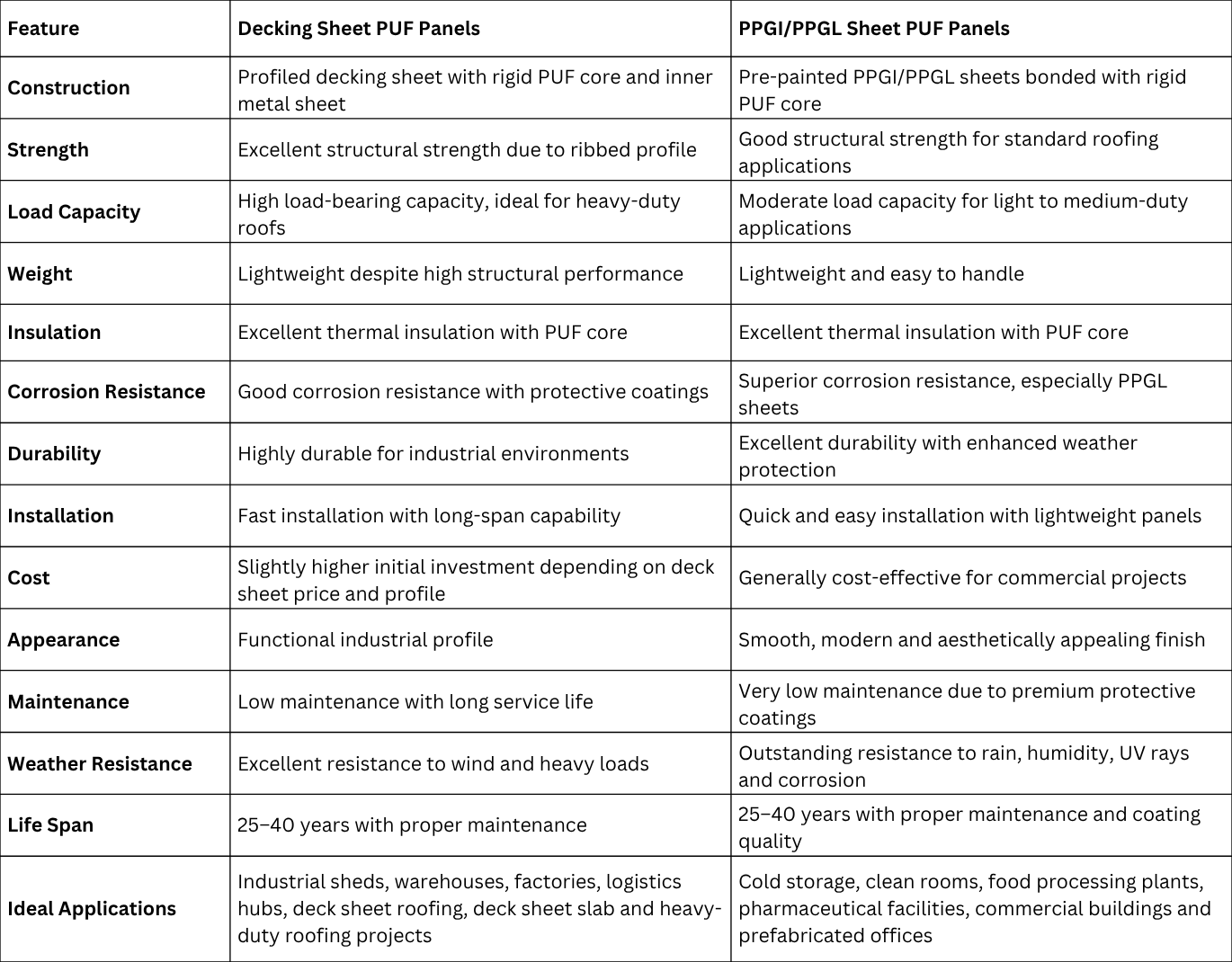
Difference between Decking Sheet and PPGI/PPGL Sheet PUF Panels
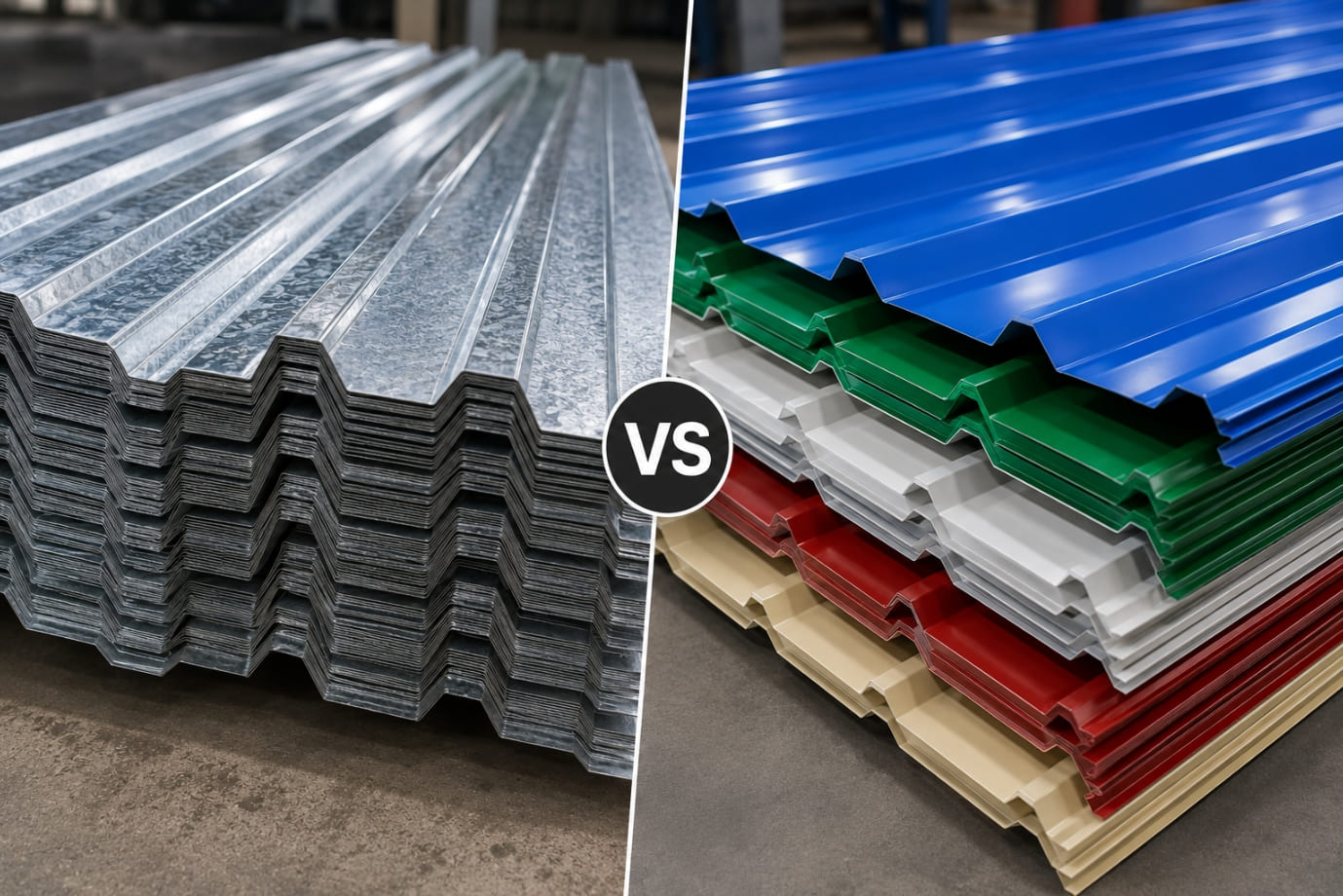
Both decking sheet and PPGI/PPGL Sheet PUF Panels provide excellent thermal insulation and energy efficiency, but they are designed for different construction needs. Decking sheet panels, including metal decking sheets, steel deck sheet, deck profile sheet, corrugated deck sheet, roller deck sheet and TR 60 deck sheet, are preferred for projects requiring superior structural strength and high load-bearing capacity. In contrast, PPGI/PPGL Sheet PUF Panels are ideal for applications that demand excellent corrosion resistance, weather protection, and an attractive finish. The comparison below highlights the key differences between these two roofing solutions to help you choose the right panel for your project.
How to Choose the Right Sheet for Your PUF Panel Project
Selecting the right outer sheet is essential for maximizing the performance and lifespan of your PUF panel. While a decking sheet is ideal for heavy-duty structural applications, PPGI/PPGL Sheets are often the preferred choice due to their excellent corrosion resistance, attractive finish and long-term durability.
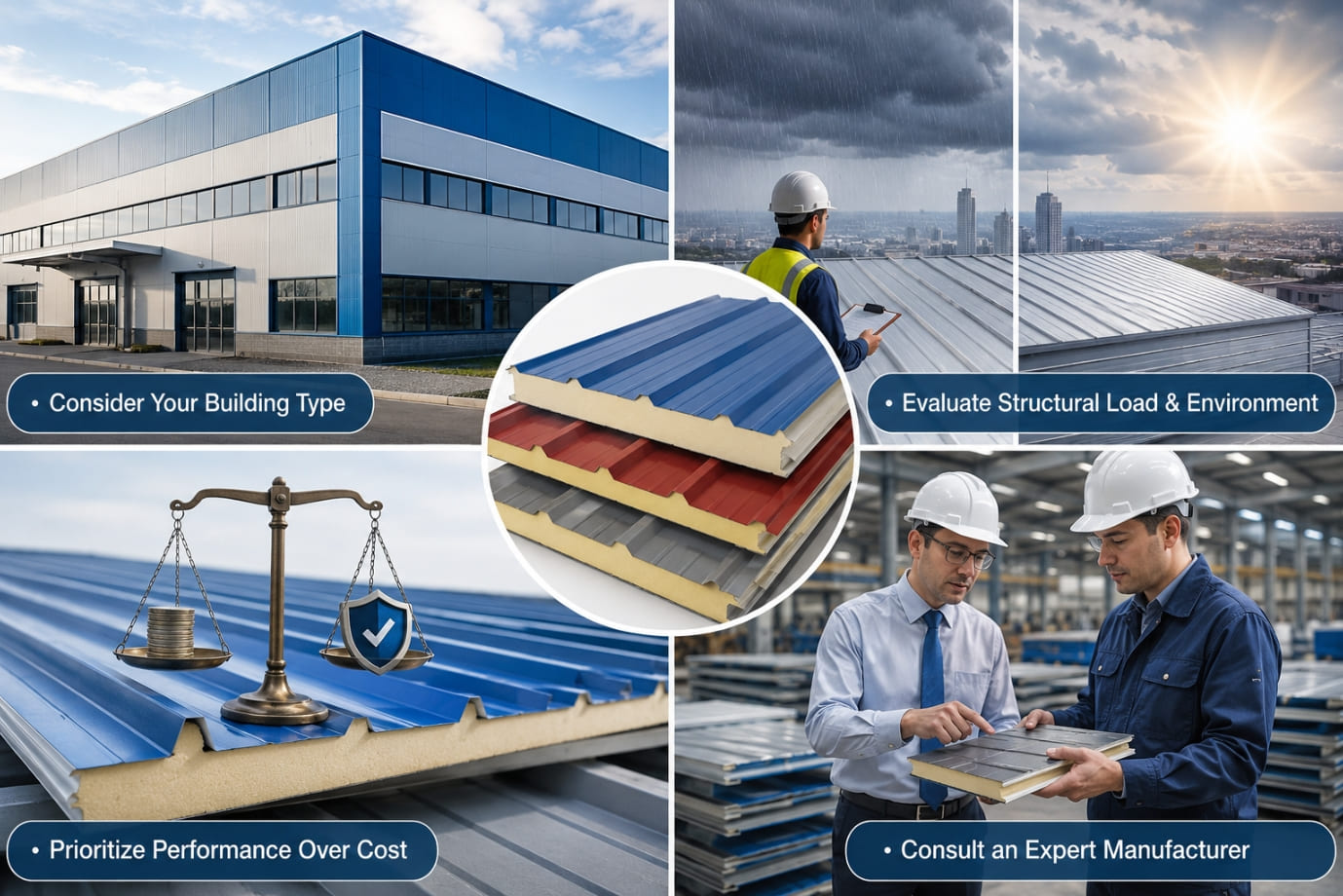
- Consider Your Building Type: Use deck sheet PUF Panels for warehouses and factories requiring high structural strength. For commercial buildings, cold storage facilities, clean rooms, food processing units and prefabricated offices, PPGI/PPGL Sheet PUF Panels offer better protection and aesthetics.
- Evaluate Structural Load & Environment: If your project involves heavy roof loads, long spans or frequent maintenance access, profiles like steel deck sheet, TR 60 deck sheet, corrugated deck sheet and roller deck sheet provide superior support. In coastal, humid, or industrial environments, PPGL Sheet PUF Panels are recommended for enhanced corrosion resistance.
- Prioritize Performance Over Cost: Instead of focusing only on the price, evaluate insulation, maintenance, durability and energy savings. Both options work efficiently with the PUF core, but premium PPGI/PPGL Sheets deliver better long-term value through reduced maintenance and longer service life.
- Consult an Expert Manufacturer: An experienced PUF panel manufacturer, like MAKS Engineering Company, can recommend the right sheet profile, coating and panel thickness for your project. Whether your application requires metal decking sheets, deck slab sheet, composite deck sheets or premium PPGI/PPGL Sheets, expert guidance ensures optimal structural performance, energy efficiency and long-term reliability.
Common Mistakes to Avoid When Selecting Decking Sheet or PPGI/PPGL Sheet PUF Panels
Selecting the right PUF panel involves more than comparing specifications or the price. A poor choice can lead to higher maintenance costs, reduced energy efficiency and a shorter roof lifespan. Avoid these common mistakes to ensure your investment delivers long-term value.
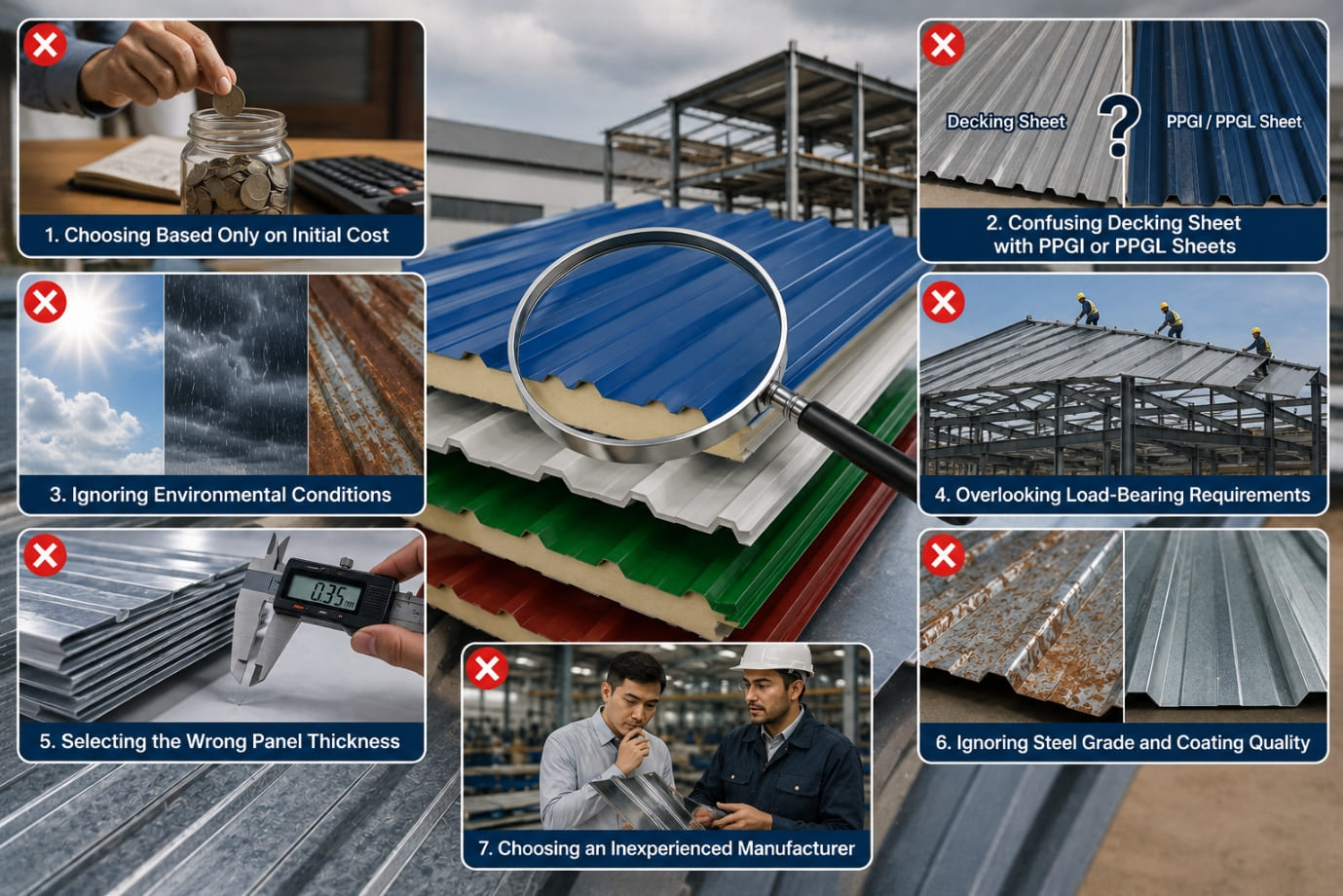
- Choosing Based Only on Initial Cost: Don't select a panel solely because it has the lowest price. Consider durability, maintenance and energy savings, as a premium panel often provides better long-term returns.
- Confusing Decking Sheet with PPGI or PPGL Sheets: A decking sheet refers to the sheet profile, while PPGI and PPGL describe the protective coating. Choosing the right combination is essential for achieving both structural strength and corrosion resistance.
- Ignoring Environmental Conditions: Coastal areas, high humidity, industrial pollution and heavy rainfall require corrosion-resistant PPGI/PPGL Sheets, whereas metal decking sheets are better suited for heavy structural applications.
- Overlooking Load-Bearing Requirements: Projects requiring heavy roof loads or long spans should use profiles such as steel deck sheet, TR 60 deck sheet, deck profile sheet, corrugated deck sheet or roller deck sheet for enhanced structural performance.
- Selecting the Wrong Panel Thickness: Incorrect panel thickness can reduce insulation, weaken structural stability and increase energy consumption.
- Ignoring Steel Grade and Coating Quality: High-quality steel and protective coatings improve durability, weather resistance and the lifespan of both roofing and wall panels.
- Compromising on PUF Core Density: Low-density insulation affects thermal performance and reduces the overall strength of the PUF panel system.
- Choosing an Inexperienced Manufacturer or Installer: Whether your project involves deck sheet roofing, deck sheet slab, deck slab sheet or composite deck sheets, always choose an experienced manufacturer and installer to ensure proper specifications, quality workmanship and long-term performance.
FAQs:
Q1. Which is better for modern industrial buildings: Decking Sheet PUF Panels or PPGI/PPGL Sheet PUF Panels?
A. The answer depends on your project requirements. A decking sheet is ideal for heavy-duty industrial structures requiring high load-bearing capacity. However, for most commercial, industrial and institutional buildings, PPGI/PPGL Sheet PUF Panels are often preferred because they offer excellent corrosion resistance, superior weather protection, an attractive finish and lower maintenance costs.
Q2. Are Metal Decking Sheets necessary for every roofing project?
A. No, metal decking sheets are mainly recommended for projects requiring greater structural strength and long roof spans. For commercial buildings, cold storage units, pharmaceutical facilities and prefabricated offices, PPGI/PPGL Sheet PUF Panels are generally a more practical and economical choice.
Q3. Is a higher Deck Sheet Price always an indication of better quality?
A. Not necessarily, A higher deck sheet price may reflect better steel quality, coating thickness or profile design. Instead of comparing prices alone, evaluate corrosion resistance, insulation performance, durability and expected service life before making a decision.
Q4. Is a Roller Deck Sheet necessary for every warehouse project?
A. Not always, A roller deck sheet is recommended when the roof is expected to carry heavy loads or span large distances. For warehouses focused on thermal insulation, moisture resistance and long-term operational savings, PPGI/PPGL Sheet PUF Panels are often sufficient.
Q5. How does Deck Sheet Roofing improve industrial building performance?
A. Deck sheet roofing improves structural stability by supporting heavier loads and reducing the need for additional structural members. However, if your primary goal is energy efficiency, weather protection and minimal maintenance, PPGI/PPGL Sheet PUF Panels offer a more balanced roofing solution.
Conclusion
Choosing between decking sheet and PPGI/PPGL Sheet PUF Panels depends on the specific requirements of your project. If your building demands superior structural strength, high load-bearing capacity and long-span performance, a decking sheet is an ideal option. Profiles such as steel deck sheet, TR 60 deck sheet, deck profile sheet, corrugated deck sheet and roller deck sheet are designed to deliver excellent stability for industrial roofing. They are also widely used in warehouses, factories and other heavy-duty applications.
On the other hand, PPGI/PPGL Sheet PUF Panels are better suited for projects where corrosion resistance, weather protection, aesthetics and low maintenance are the top priorities. Their protective coatings provide long-lasting performance in commercial buildings, cold storage facilities, pharmaceutical units and food processing plants, while maintaining excellent thermal insulation and energy efficiency.
When selecting the right roofing system, avoid making your decision based only on the deck sheet price. Consider structural requirements, environmental conditions, expected roof loads, maintenance needs and long-term operating costs. In many projects, metal decking sheets offer unmatched structural support, while PPGI/PPGL Sheets provide greater durability in challenging environments.
Consulting an experienced PUF panel manufacturer, like MAKS Engineering Company, is the best way to ensure you choose the right sheet profile, coating and panel specifications.
For more information, explore our Homepage.
