
UPVC Roofing Sheets vs PUF Panel Roofing
Choosing the right roofing material is one of the most important decisions when constructing an industrial, commercial or residential building. A roofing system does much more than protect a structure from external weather conditions, it directly affects thermal insulation, structural strength, energy efficiency, indoor comfort and long-term maintenance costs. Whether you are planning a warehouse, factory, commercial complex, agricultural facility or institutional building, selecting between a UPVC roofing sheet and a PUF panel roofing system can significantly influence your building’s overall performance and operational expenses for years to come.
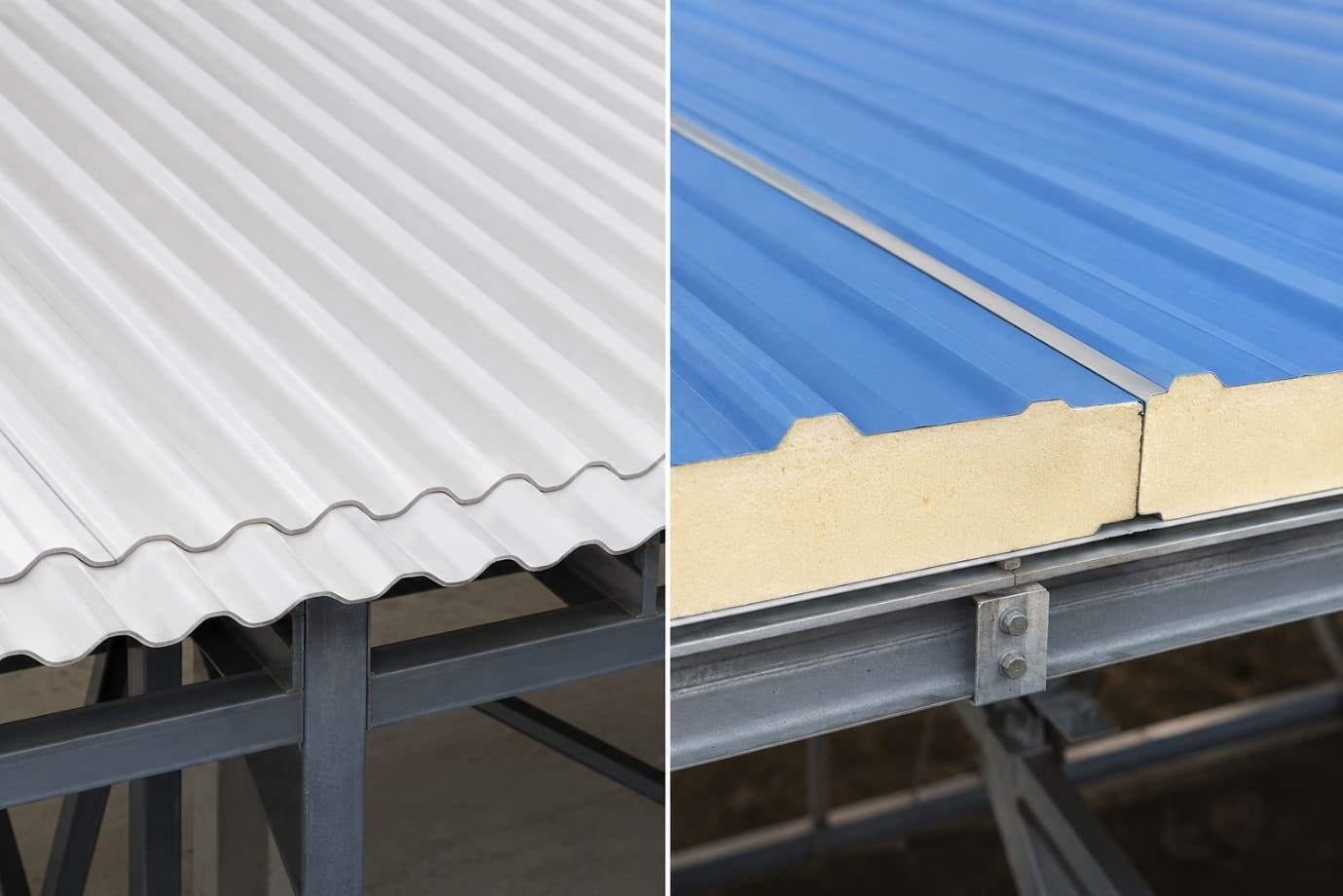
As businesses increasingly prioritize sustainable construction and energy conservation, the demand for modern roofing solutions has grown rapidly. Today, UPVC roofing sheet systems and PUF panel roofing sheets are among the most preferred choices because they offer durability, weather resistance and reduced maintenance requirements. Before making an investment, buyers often compare factors such as UPVC roofing sheets price, insulation performance, lifespan and installation costs. They also evaluate options like corrugated UPVC roofing sheet, different UPVC roofing sheet size variants and advanced UPVC roof panels to determine the most suitable solution for their specific project requirements.
This comprehensive blog compares UPVC roofing sheet and PUF panel roofing sheets across essential factors, including material composition, thermal insulation, durability, weather resistance, maintenance, cost-effectiveness and ideal applications. Whether you are planning a new UPVC roof, replacing an existing roofing system or exploring different UPVC sheet options, this blog will help you make a well-informed decision. While both roofing materials offer distinct advantages, the right choice ultimately depends on your building’s purpose, local climate, insulation needs, operational requirements and long-term investment goals.
Understanding UPVC Roofing Sheet
A UPVC roofing sheet is a durable roofing material manufactured using Unplasticized Polyvinyl Chloride (UPVC), a rigid form of PVC that does not contain plasticizers. Unlike conventional roofing materials, UPVC is engineered to provide superior strength, weather resistance and long-lasting performance while remaining lightweight. Because of these qualities, a UPVC sheet has become a preferred choice for industrial, commercial, agricultural and residential roofing projects where durability and minimal maintenance are essential.
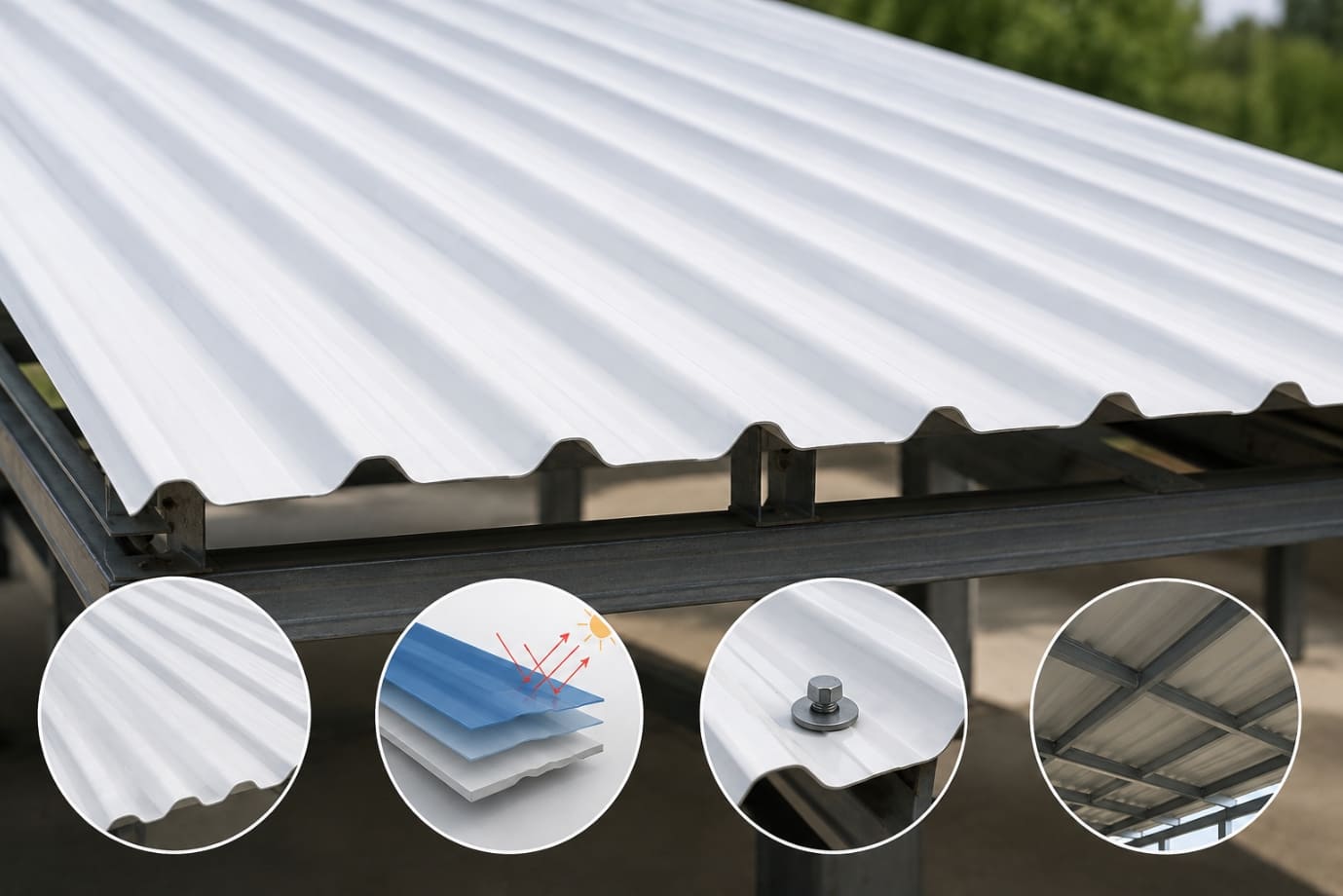
The manufacturing process of a UPVC roofing sheet involves advanced co-extrusion technology, where multiple protective layers are fused together to create a strong, uniform sheet. These layers improve the sheet’s resistance to UV radiation, moisture, chemicals and temperature fluctuations. Depending on the project requirements, manufacturers offer various UPVC roofing sheet size options, profiles and thicknesses. Products such as corrugated UPVC roofing sheet, UPVC roof panels, UPVC roof tile and UPVC plain sheets are designed to meet different structural and architectural needs. While evaluating roofing materials, many buyers also compare UPVC roofing sheets price to select a solution that balances performance with budget.
Key Features of UPVC Roofing Sheets
- Lightweight: A UPVC roofing sheet is significantly lighter than many traditional roofing materials, reducing the structural load on buildings and making transportation and installation easier. Its lightweight construction also speeds up project completion while lowering labour costs.
- Waterproof: The non-porous composition of a UPVC sheet prevents water absorption, ensuring excellent protection against rain, leaks and moisture-related damage. This makes it an ideal choice for regions experiencing heavy rainfall or high humidity.
- Corrosion Resistant: Unlike metal roofing, a UPVC roof does not rust or corrode when exposed to moisture, industrial pollutants or saline environments. This characteristic extends its service life and minimizes maintenance requirements.
- UV Resistant: Modern UPVC roof panels are manufactured with UV-stabilized layers that resist prolonged sunlight exposure. This helps maintain their strength, colour and performance even in harsh outdoor conditions.
- Chemical Resistant: A corrugated UPVC roofing sheet offers excellent resistance to acids, alkalis and various industrial chemicals, making it suitable for factories and processing facilities where corrosive substances are present. It is also commonly paired with interior UPVC cladding to create durable and hygienic industrial environments.
- Easy Installation: Available in multiple size options, these UPVC roofing sheets are easy to handle, cut and install. Their precise dimensions reduce installation time and material wastage, making them a practical roofing solution for projects of all sizes.
Common Applications of UPVC Sheet
- Warehouses: A UPVC roofing sheet provides reliable weather protection and long-term durability, making it suitable for warehouse roofing where low maintenance and structural efficiency are important.
- Factories: Industrial facilities use UPVC roof panels because they offer corrosion resistance, chemical protection and dependable performance in demanding environments.
- Parking Sheds: A lightweight UPVC roof sheet is widely used for parking sheds as it protects vehicles from rain, sunlight and harsh weather while requiring minimal upkeep.
- Agricultural Buildings: Barns, poultry farms, dairy units and storage facilities benefit from corrugated UPVC roofing sheet solutions due to their moisture resistance, durability and long service life in agricultural conditions.
- Chemical Plants: Chemical manufacturing and processing units often choose UPVC sheet roofing because of its exceptional resistance to corrosive chemicals and industrial fumes. Combined with interior UPVC cladding, it helps create a durable and low-maintenance infrastructure capable of withstanding harsh operating environments.
Understanding PUF Roofing Panels
A PUF panel roofing sheet is an advanced insulated roofing solution designed to provide exceptional thermal performance, structural strength, and long-term durability. PUF stands for Polyurethane Foam, a high-performance insulating material that is sandwiched between two protective metal sheets to form a robust roofing panel. Unlike a traditional UPVC roofing sheet, which primarily focuses on weather protection and corrosion resistance, PUF panel roofing offers both superior insulation and structural integrity, making it an ideal choice for temperature-controlled and energy-efficient buildings.
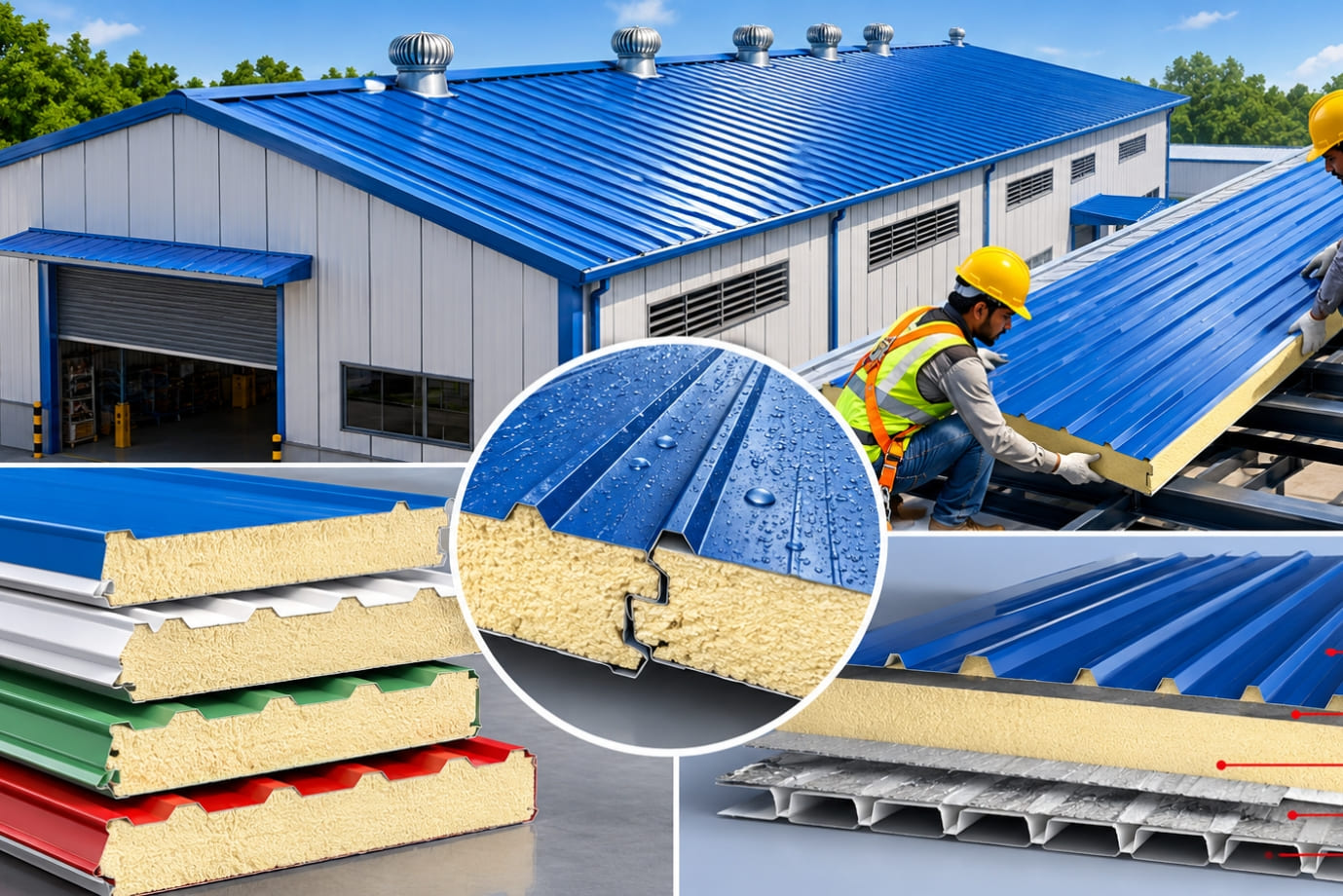
The construction of a PUF panel follows a sandwich panel design, where a rigid polyurethane foam core is bonded between two high-quality pre-painted galvanized steel (PPGI) or galvanized iron (GI) sheets. This multi-layer construction creates a lightweight yet highly durable roofing system capable of withstanding harsh weather conditions while maintaining stable indoor temperatures. The insulated foam core minimizes heat transfer, helping reduce dependence on air-conditioning and lowering energy costs. While many buyers compare UPVC roofing sheets price based on initial investment, PUF panels often deliver greater long-term value through energy savings and reduced operational expenses. For detailed information, you can go through our dedicated page on PUF Panels.
Key Features of PUF Panel Roofing
- Thermal Insulation: The polyurethane foam core provides outstanding thermal insulation by significantly reducing heat transfer. This helps to maintain comfortable indoor temperatures throughout the year, making PUF roofing panels ideal for buildings that require climate control.
- Fire-Resistant Options: PUF roofing panels are available with fire-retardant insulation cores that improve building safety by slowing the spread of flames and meeting industry-specific fire safety requirements.
- Moisture Resistance: The closed-cell polyurethane foam resists water absorption and prevents moisture penetration, helping protect the building from leaks, mold growth and structural deterioration.
- High Structural Strength: Despite being lightweight, PUF panels offer excellent load-bearing capacity due to their sandwich panel construction. The outer steel sheets provide rigidity and durability, enabling the roofing system to withstand wind loads and challenging environmental conditions more effectively than many conventional roofing materials, including a standard UPVC roof.
- Energy Efficiency: One of the biggest advantages of PUF panel roofing is its ability to reduce energy consumption. By minimizing heat gain during summer and heat loss during winter, these panels contribute to lower electricity bills and improved operational efficiency compared to conventional roofing systems, including UPVC roof panels in applications where insulation is a priority.
- Noise Reduction: The dense polyurethane foam core also acts as an effective sound barrier, reducing external noise from rain, machinery and traffic. This creates a quieter and more comfortable indoor environment for employees and occupants.
Common Applications
- Cold Storage: PUF panel roofing is widely used in cold storage facilities because it maintains precise temperature conditions while minimizing energy loss. For detailed information, you can go through our dedicated page on Cold Storage Solutions.
- Food Processing: Food processing plants rely on PUF panels to create hygienic, temperature-controlled environments that support food safety and operational efficiency.
- Pharmaceutical Units: Pharmaceutical manufacturing facilities use insulated PUF roofing to maintain controlled environmental conditions essential for product quality and regulatory compliance.
- Clean Rooms: PUF panels help create clean rooms with stable temperatures, controlled humidity and contamination-resistant interiors required in healthcare, electronics and biotechnology industries. For more details, read our comprehensive page on PUF Panel Clean Rooms.
- Industrial Sheds: Large manufacturing units and warehouses benefit from PUF roofing due to its durability, insulation performance and ability to lower cooling costs over the building's lifespan. In-depth information can be seen in our dedicated blog on PUF Panel Industrial Sheds.
- Commercial Buildings: Commercial complexes, office spaces, and institutional buildings increasingly prefer PUF panel roofing because it offers superior comfort, energy efficiency and long-term cost savings. While UPVC roofing sheet remain suitable for many applications, PUF panels are often the preferred choice for projects where insulation and energy performance are key priorities.
UPVC Roofing Sheet vs PUF Panel Roofing Sheet – Differences
Both UPVC roofing sheet and PUF panel roofing systems are widely used in industrial and commercial construction, but they are designed to serve different requirements. A UPVC sheet is known for its lightweight construction, corrosion resistance and cost-effectiveness, whereas PUF panels excel in thermal insulation, energy efficiency and structural performance. Buyers often compare factors such as UPVC sheet price, durability and maintenance before selecting the right roofing solution. The comparison below provides a quick overview to help you understand which roofing material best suits your project.
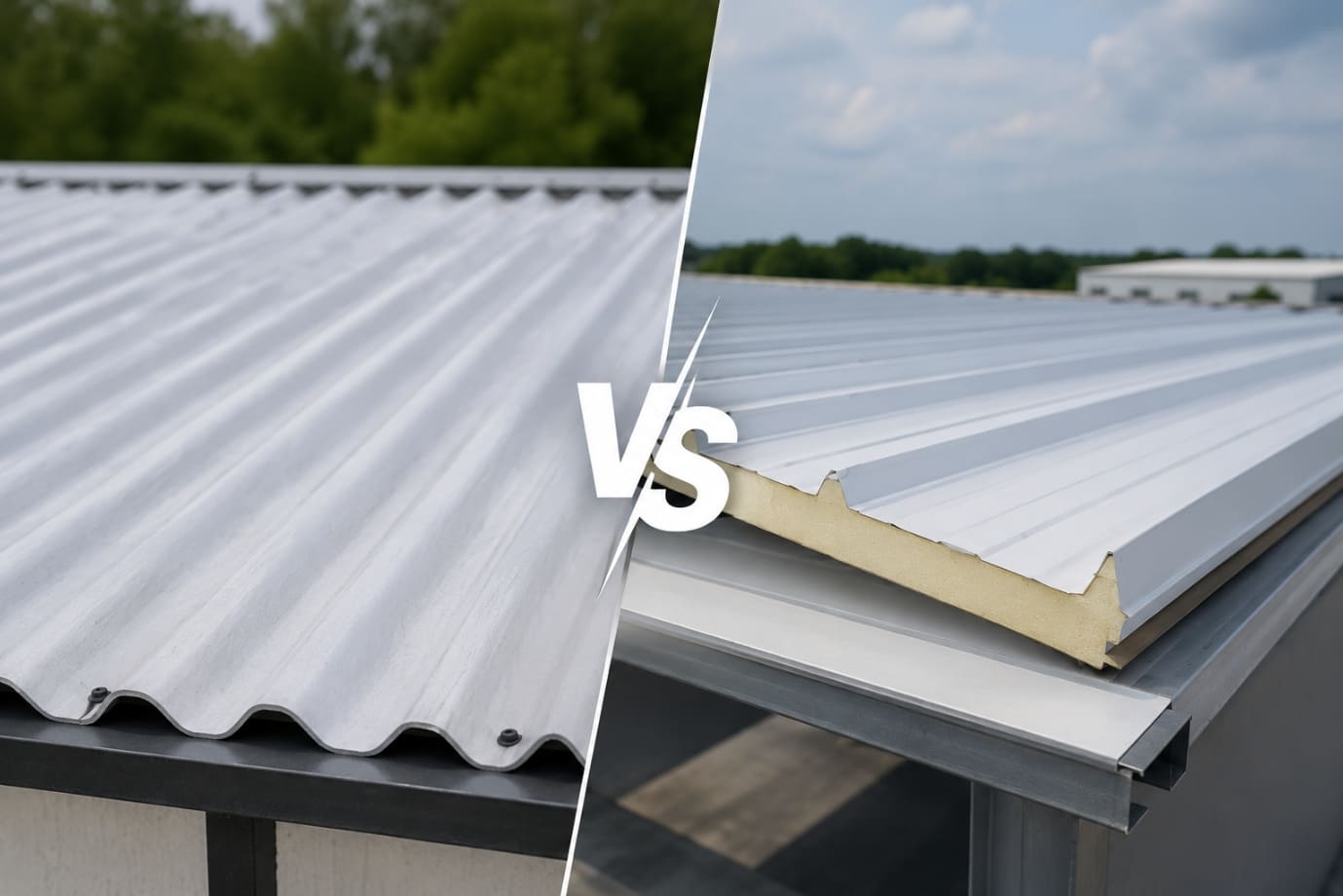
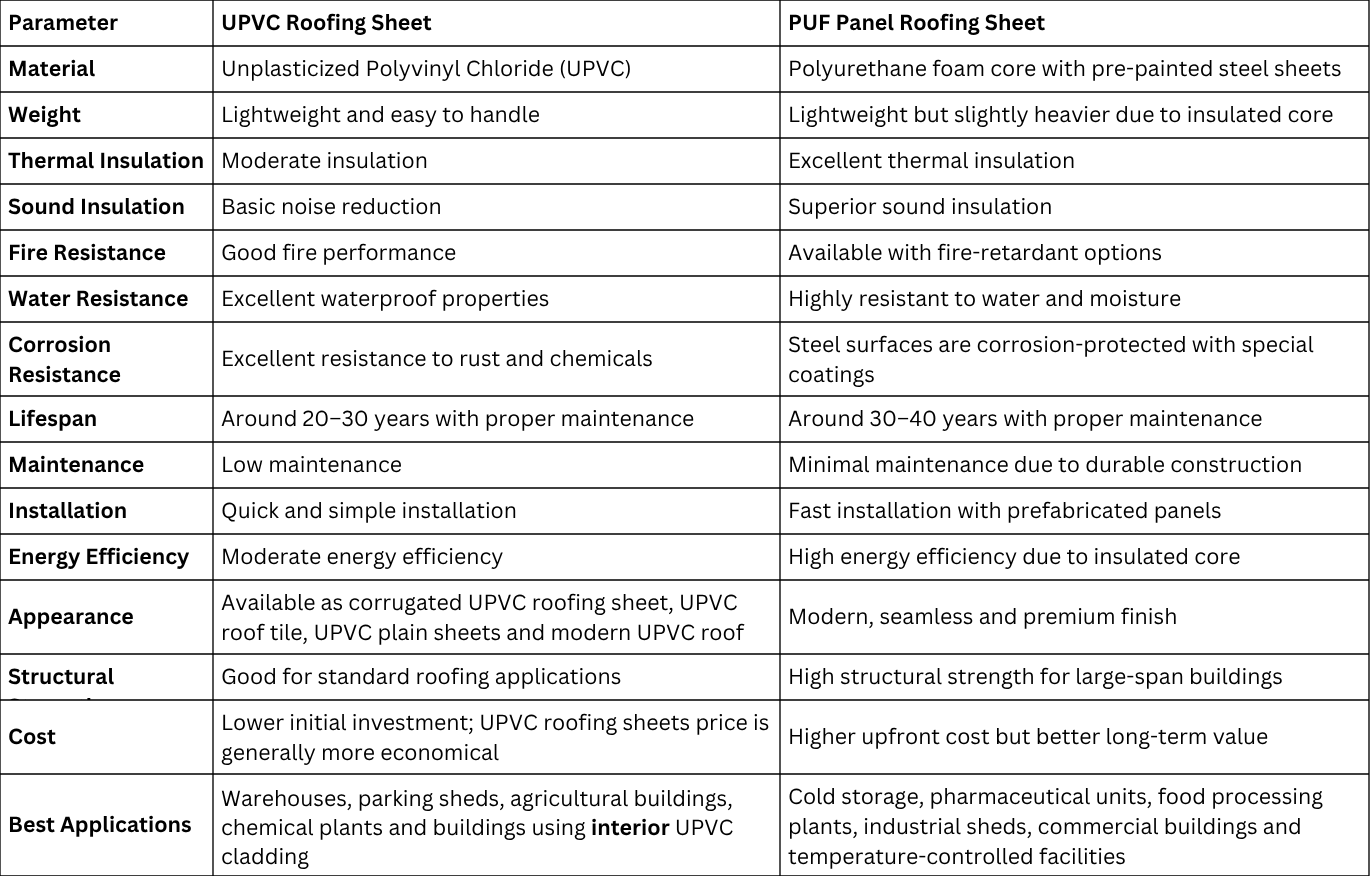
While a UPVC roof is an economical and durable solution for projects requiring weather resistance and low maintenance, PUF panel roofing is a better investment where thermal insulation, energy savings and superior structural performance are priorities. The ideal choice depends on your building type, climate conditions, operational needs and long-term budget.
Sometimes users also go for decking sheets. For detailed information, read our dedicated blog on Decking Sheet PUF Panels vs PPGI/PPGL Sheet PUF Panels.
Factors to Consider Before Choosing Roofing Material: UPVC Roofing Sheet or PUF Panel Roof
Selecting the right roofing material requires more than simply comparing UPVC roofing sheet or PUF Panel roofing sheet. The ideal roofing solution should align with your project’s functional requirements, environmental conditions and long-term operational goals. Before choosing between a UPVC roofing sheet and a PUF panel roofing system, consider the following key factors.
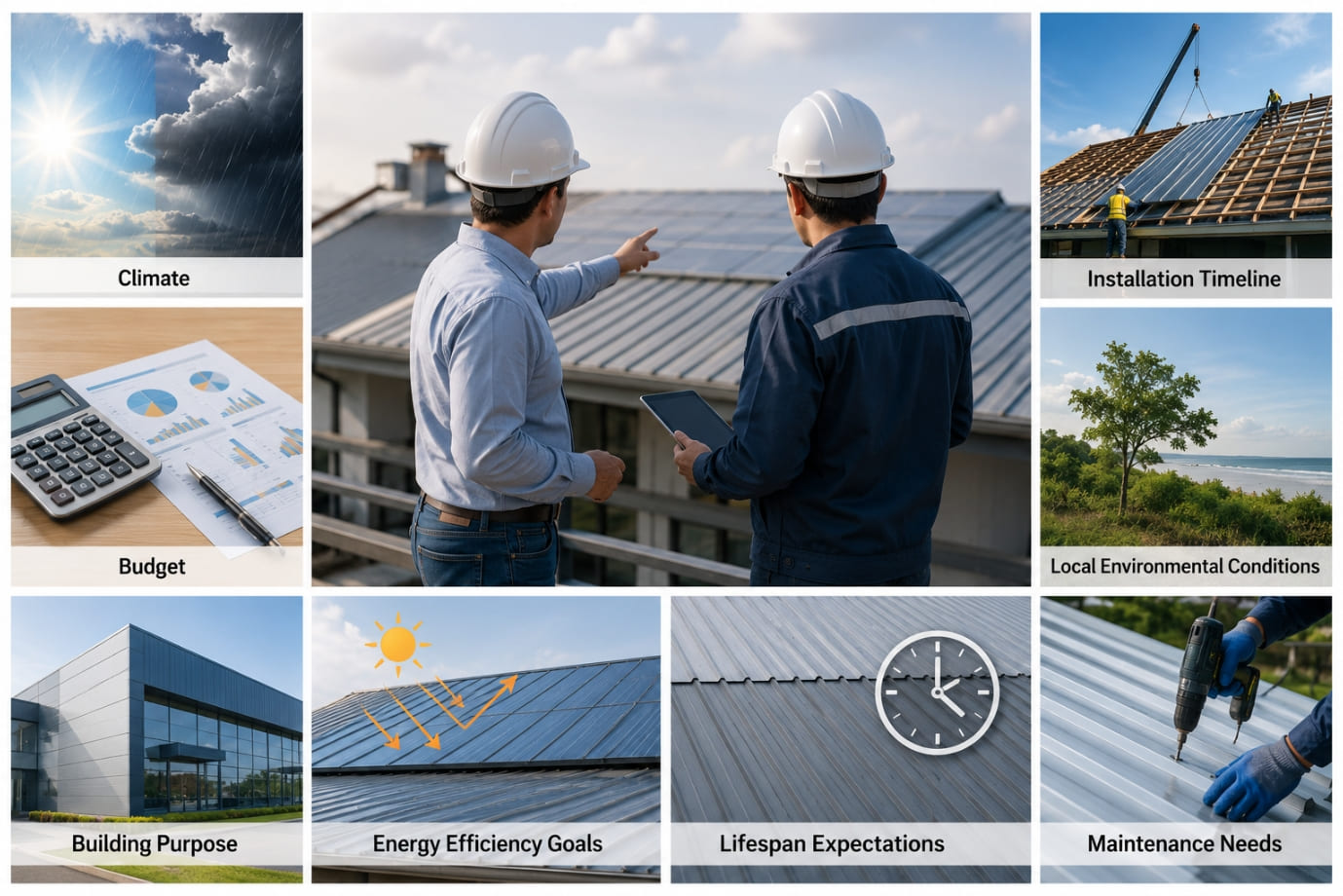
- Climate: The local climate plays a major role in roofing performance. A UPVC roof performs well in humid, coastal, and chemically exposed environments, while PUF panels are better suited for regions with extreme temperatures due to their superior insulation.
- Budget: Your budget should include both the initial investment and long-term operating costs. While a UPVC sheet generally has a lower upfront cost, insulated roofing systems may offer better savings over time through reduced energy consumption.
- Building Purpose: The intended use of the building determines the most suitable roofing material. Warehouses, parking sheds and agricultural structures often benefit from corrugated UPVC roofing sheet, whereas cold storage and pharmaceutical facilities require insulated PUF panels.
- Energy Efficiency Goals: If reducing cooling and heating expenses is a priority, choose roofing with excellent thermal insulation. Energy-efficient roofing can significantly lower utility costs over the building's lifetime.
- Lifespan Expectations: Evaluate the expected service life of the roofing system. Products such as UPVC roof panels, UPVC roof tile and UPVC plain sheets offer long-lasting durability, while insulated PUF panels provide extended performance with added thermal benefits.
- Maintenance Needs: Low-maintenance roofing minimizes repair costs and operational disruptions. Both UPVC roofing sheet systems and PUF panels require relatively little maintenance when installed correctly.
- Installation Timeline: Projects with tight deadlines should consider roofing materials that are easy to transport and install. Selecting the appropriate UPVC roofing sheet size can simplify installation and reduce construction time.
- Local Environmental Conditions: Factors such as heavy rainfall, coastal salt exposure, industrial pollution and chemical fumes should influence your decision. In corrosive environments, combining interior UPVC cladding with a durable roofing system can further improve the building's longevity and overall performance.
Why Many Modern Industrial Projects Prefer PUF Panel Roofing over UPVC Roofing Sheet
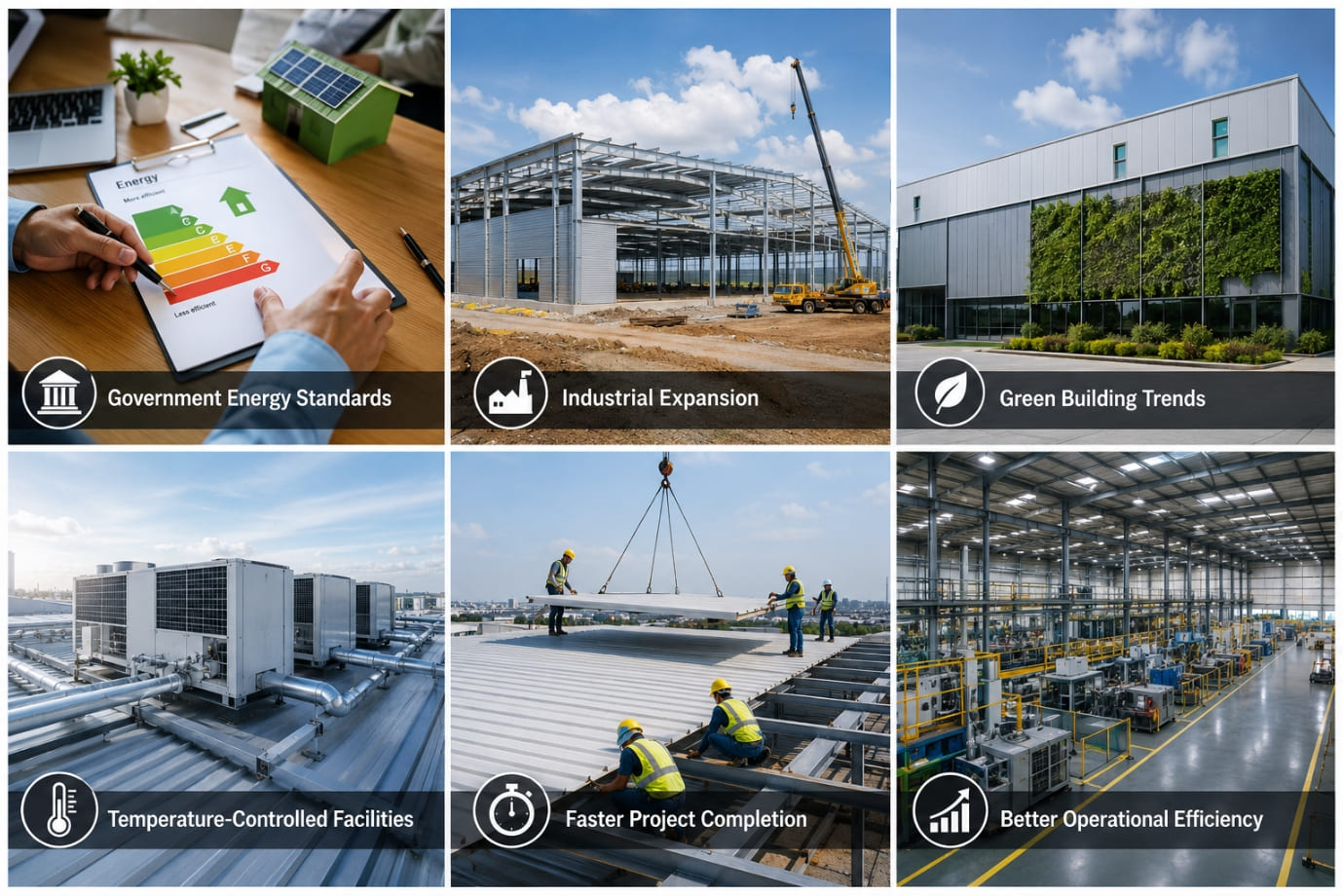
As industries increasingly focus on energy efficiency, sustainability and long-term operational savings, PUF panel roofing has become the preferred choice for modern construction projects. Although a UPVC roofing sheet remains excellent option for many standard applications, industries requiring superior insulation and climate control often choose PUF panels for their advanced performance.
Government Energy Standards
Governments and regulatory bodies are encouraging the adoption of energy-efficient building materials to reduce carbon emissions and electricity consumption. PUF panels help businesses meet these standards by minimizing heat transfer and improving overall building efficiency.
Industrial Expansion
Rapid industrial growth has increased the demand for durable roofing systems that can be installed quickly while supporting large-span structures. While businesses often compare UPVC roofing sheets price during project planning, many opt for PUF panels because they offer better long-term value through lower operating costs.
Green Building Trends
Sustainable construction has become a key priority across industries. PUF panels contribute to green building initiatives by reducing energy usage and improving indoor environmental performance, making them an environmentally responsible roofing solution.
Temperature-Controlled Facilities
Industries such as food processing, pharmaceuticals, logistics and cold storage require consistent indoor temperatures. PUF panel roofing provides excellent thermal insulation, delivering significantly better temperature control than a conventional UPVC sheet or UPVC roof in insulation-sensitive applications.
Faster Project Completion
PUF panels are factory-manufactured and supplied in ready-to-install sections, reducing on-site construction time. Although products like corrugated UPVC roofing sheet, UPVC roof tile, UPVC plain sheets also support efficient installation, PUF panels simplify large-scale industrial roofing projects even further.
Better Operational Efficiency
Superior insulation helps reduce HVAC loads, improve employee comfort and lower energy bills throughout the building’s lifecycle. For projects that also utilize interior UPVC cladding, combining it with insulated PUF roofing creates a durable, hygienic and energy-efficient industrial environment that supports long-term productivity.
FAQs:
Q1. Which UPVC roofing sheet lasts longer, UPVC or PUF panel?
A. A high-quality UPVC roofing sheet typically lasts 20–30 years with proper maintenance, while PUF panel roofing can last 30–40 years due to its insulated sandwich construction. The actual lifespan depends on installation quality, climate and maintenance practices.
Q2. Is PUF panel roofing waterproof like a UPVC sheet?
A. Yes, PUF panel roofing is highly waterproof when installed correctly. However, a UPVC sheet is also an excellent choice for protecting buildings from rain and moisture because of its non-porous and corrosion-resistant properties.
Q3. Can a corrugated UPVC roofing sheet reduce indoor heat?
A. A corrugated UPVC roofing sheet helps reflect sunlight and performs better than many traditional roofing materials. However, if maximum thermal insulation is required, PUF panel roofing offers superior temperature control.
Q4. Which roofing sheet requires less maintenance?
A. Both UPVC roofing and PUF Panel roofing options require minimal maintenance. A UPVC roof tile is resistant to rust, moisture and chemicals, while PUF panels also require very little upkeep due to their durable insulated construction.
Q5. Which UPVC roofing sheet size should I choose for my project?
A. The ideal UPVC roofing sheet size depends on your roof design, structural span and installation requirements. Choosing the correct sheet size helps reduce material wastage, minimizes joints and speeds up installation.
Conclusion
Choosing between a UPVC roofing sheet and a PUF panel roofing sheet ultimately depends on your project’s specific requirements rather than simply comparing UPVC sheet price. While a UPVC sheet is an excellent choice for projects requiring a lightweight, corrosion-resistant, and cost-effective roofing solution, PUF panel roofing stands out for applications that demand superior thermal insulation, energy efficiency and long-term operational savings. Both roofing materials offer unique advantages, making them suitable for different industrial, commercial and agricultural environments.
Before making a final decision, evaluate important factors such as your building’s purpose, local climate, insulation requirements, maintenance expectations and future operating costs. Products like corrugated UPVC roofing sheet, UPVC roof panels, UPVC roof tile, UPVC plain sheets and different UPVC roofing sheet size options provide versatile solutions for standard roofing applications. However, facilities such as cold storage units, food processing plants, pharmaceutical facilities and temperature-controlled warehouses generally benefit more from the enhanced insulation offered by PUF panels. Similarly, combining interior UPVC cladding with an appropriate roofing system can further improve durability, hygiene and overall building performance.
Rather than focusing solely on the initial investment, consider the long-term value that a roofing system delivers through durability, reduced maintenance and lower energy consumption. Investing in the right roofing solution today can significantly improve operational efficiency and minimize lifecycle costs for years to come.
If you’re still unsure whether a UPVC roof or a PUF panel roofing system is the right fit for your project, the experts at Maks Engineering Co. are here to help. Contact our team today for professional consultation, customized roofing recommendations and high-quality roofing solutions tailored to your industrial or commercial requirements.
For more information, you can explore our Homepage.
