
PUF Panel Joints: Types, Applications, Installation & Benefits
PUF (Polyurethane Foam) sandwich panels have become an important part of modern construction due to their excellent thermal insulation, lightweight design and quick installation. They are widely used in cold storage facilities, industrial buildings, warehouses, cleanrooms and prefabricated structures where maintaining proper insulation is essential. However, the overall performance of these structures depends not only on the quality of the panels but also on how effectively they are connected. This is where PUF Panel Joints play a crucial role.
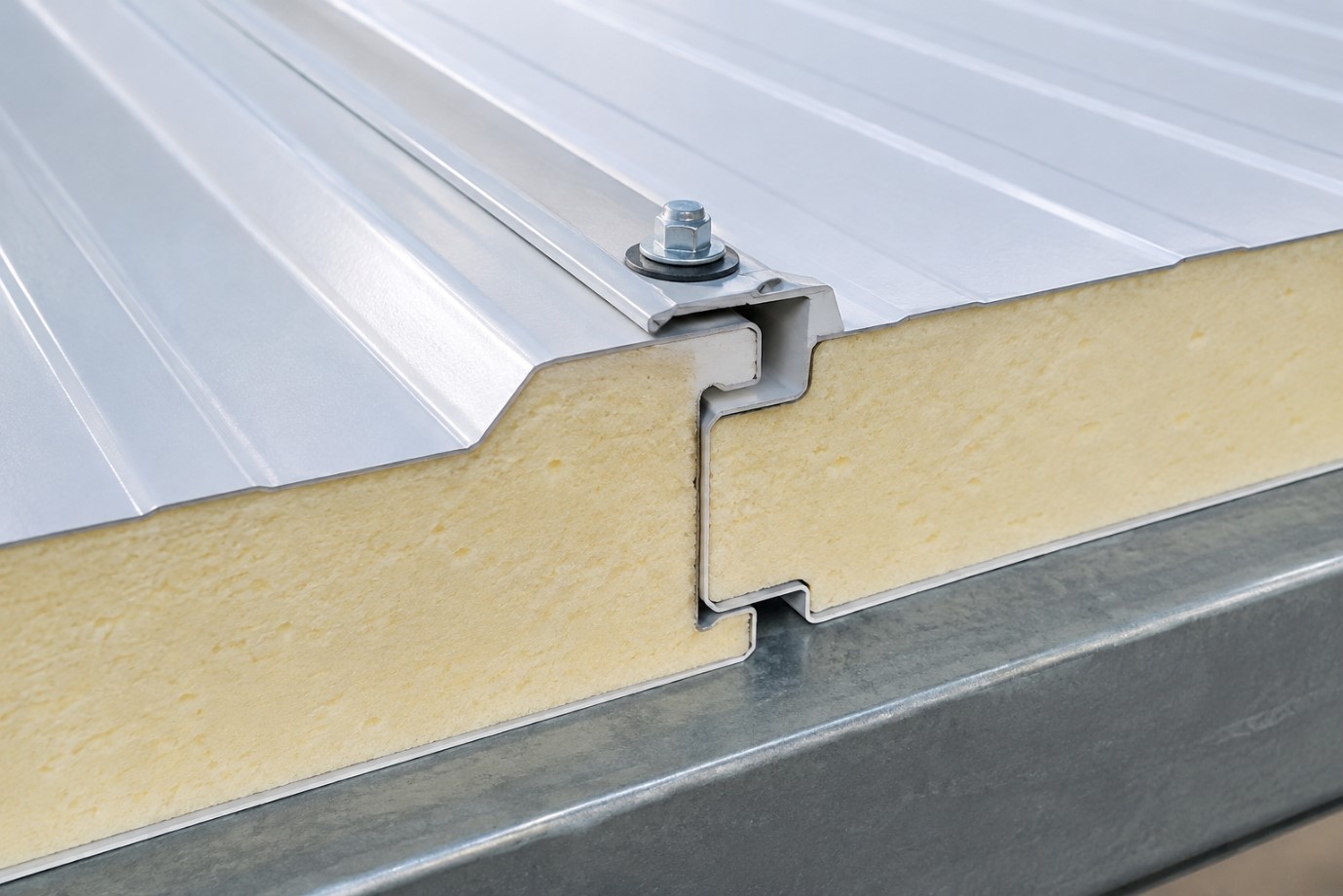
During installation, individual PUF panels are connected to create continuous insulated walls, ceilings and roofs. Properly designed PUF Panel Joints ensure a secure connection between adjoining panels while maintaining insulation continuity and minimizing unwanted air leakage, heat transfer and moisture entry. They also help improve the overall durability and energy efficiency of the insulated structure, making joint design an important consideration in any PUF panel installation.
Different joining mechanisms are used depending on the panel design and application requirements. The most common systems include tongue and groove joints and the cam lock joint, both of which help achieve proper panel alignment and secure connections. These systems are widely used in interlocking wall panels, roof panels and ceiling panels, while specially designed profiles are also available for roofing applications.
Selecting the right PUF panel interlocking system is important for achieving reliable insulation and long-term performance. In this blog, we will explore the different types of sandwich panel joints, their applications, installation methods and benefits, along with the factors to consider when choosing suitable joints for your project.
What Are PUF Panel Joints?
PUF Panel Joints are specially designed connections used to join two or more Polyurethane Foam (PUF) sandwich panels to create a continuous insulated surface. These joints use specially shaped panel edges or mechanical locking arrangements that allow adjoining panels to fit together securely. They help maintain proper panel alignment, insulation continuity and overall installation quality.
Depending on the panel design and application, different joining mechanisms are used. Tongue and groove joints connect panels through matching projections and grooves, while a cam lock joint uses an integrated locking mechanism to pull adjoining panels tightly together. These systems are commonly used in interlocking wall panels, interlocking ceiling panels and other insulated structures.
A properly designed joint should provide three essential features: a secure panel connection, continuous insulation and effective air and moisture sealing. These factors are particularly important in cold storage facilities, industrial buildings and prefabricated structures, where maintaining temperature and insulation performance is essential.
Whether used in interlocking panels for walls or interlocking roof panels, the right PUF panel interlocking system helps minimize gaps and improve overall building performance. Properly installed sandwich panel joints also contribute to better insulation, durability and long-term efficiency.
Also Read in detail about: PUF Panels
Different Types of PUF Panel Joints
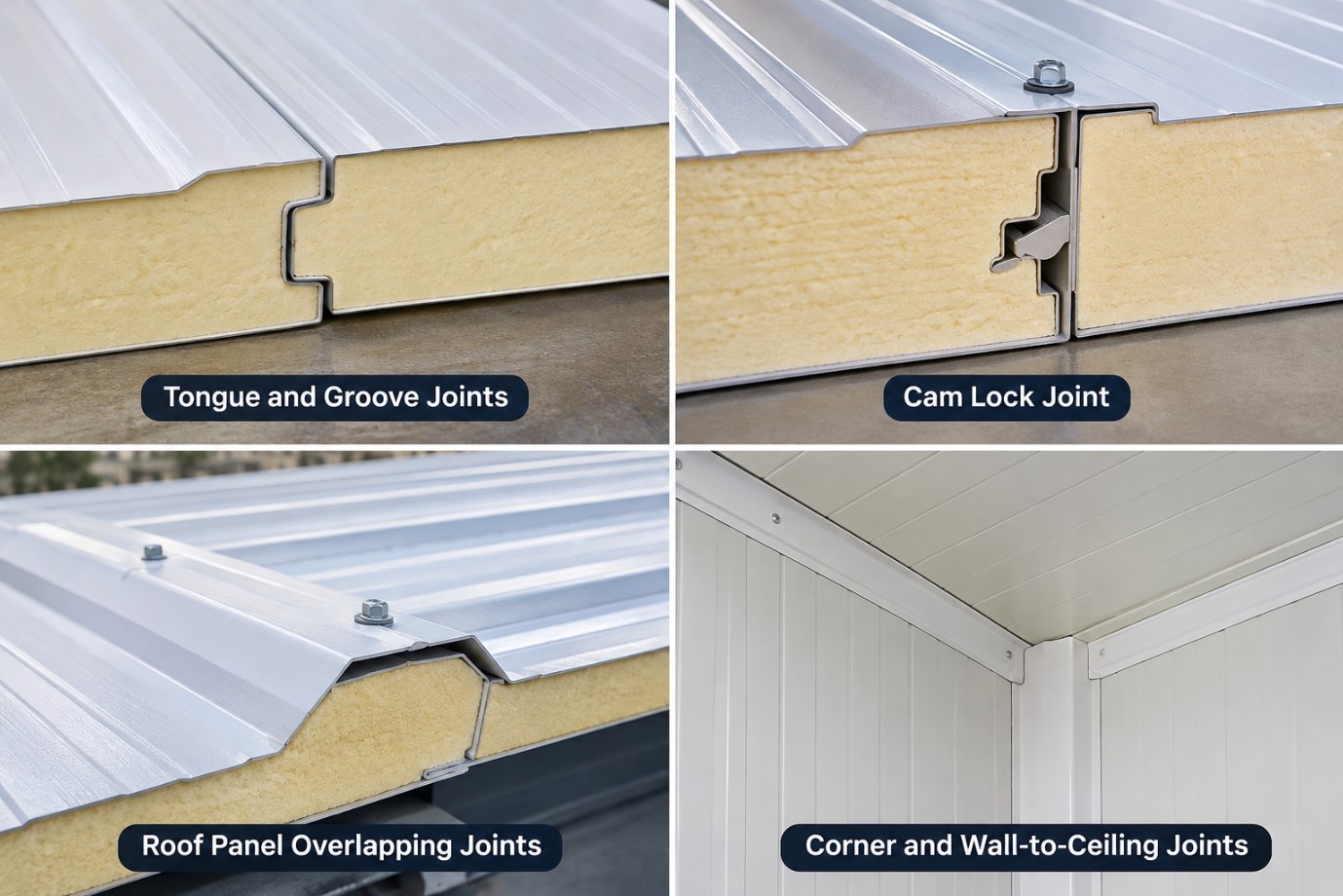
Different types of PUF panel joints are designed to connect insulated panels securely while maintaining proper alignment and insulation continuity. The choice of joint depends on the panel design, building structure and intended application. Some joints use interlocking edge profiles, while others rely on mechanical locking arrangements or overlapping connections. Let’s understand the most commonly used types of sandwich panel joints and their applications.
Tongue and Groove Joints
A tongue and groove joints are a commonly used connection system in insulated panel construction. In this arrangement, one edge of the panel has a projecting section called the tongue, while the adjoining panel has a matching recessed section called the groove. During installation, the tongue fits into the groove, allowing the two panels to connect closely and maintain proper alignment.
These joints are useful for creating continuous insulated surfaces in wall and roof applications, depending on the panel profile. They are commonly incorporated into interlocking wall panels, roof panels and interlocking ceiling panels, helping reduce visible gaps between adjoining sections. However, suitable sealants or sealing materials may still be required to achieve the desired air and moisture protection.
Cam Lock Joint
A cam lock joint is a mechanical joining system commonly used in cold storage and modular insulated panel installations. In this system, special locking components are fitted inside the edges of the PUF panels. When two panels are positioned together, a compatible cam-lock key or hex key is used to activate the mechanism, pulling the adjoining panels tightly against each other.
This creates a firm connection and helps maintain close contact between the panel edges. Cam-lock systems are particularly useful for cold rooms, freezers, ripening chambers and pharmaceutical storage facilities, where maintaining controlled temperatures is important. Another advantage is that compatible modular panel structures can often be dismantled and reassembled when required, making this system useful for relocatable or expandable facilities.
Roof Panel Overlapping Joints
Roof panel overlapping joints are designed to connect adjoining insulated roofing panels through specially shaped overlapping edges, commonly known as side laps. Unlike tongue and groove or cam-lock connections, this system uses the roofing panel profile to create an overlap between adjoining sheets.
Proper installation involves suitable fasteners, sealing washers and compatible sealing materials to help prevent rainwater from entering through the connections. The overlapping arrangement also supports proper alignment across the roof surface. In buildings using interlocking roof panels, correct side-lap installation and suitable flashing details are important for weather protection. Following the manufacturer’s installation guidelines is essential to achieve reliable roofing performance.
Corner and Wall-to-Ceiling Joints
Apart from connecting straight panel sections, special attention is also required at corners and junctions where different surfaces meet. Corner and wall-to-ceiling joints connect two adjoining walls or join a wall panel with a ceiling panel to create a continuous insulated enclosure.
These connections generally use suitable corner flashings, compatible sealants and insulation infill wherever required. Properly finished wall panel joints help minimize gaps, thermal leakage and unwanted air infiltration. Similarly, wall-to-ceiling and wall-to-floor junctions must be sealed correctly to maintain insulation continuity throughout the structure.
Whether installing interlocking panels for walls or constructing a complete cold storage facility, properly designed corner connections are essential for maintaining the overall insulation performance and durability of the building.
Why Are Proper PUF Panel Joints Important?
Properly designed and installed PUF panel joints are essential for maintaining the insulation performance, strength and durability of any insulated structure. Even high-quality PUF panels may not deliver their expected performance if the connections between adjoining panels are poorly fitted or improperly sealed. Here are some important benefits of having properly installed panel joints:
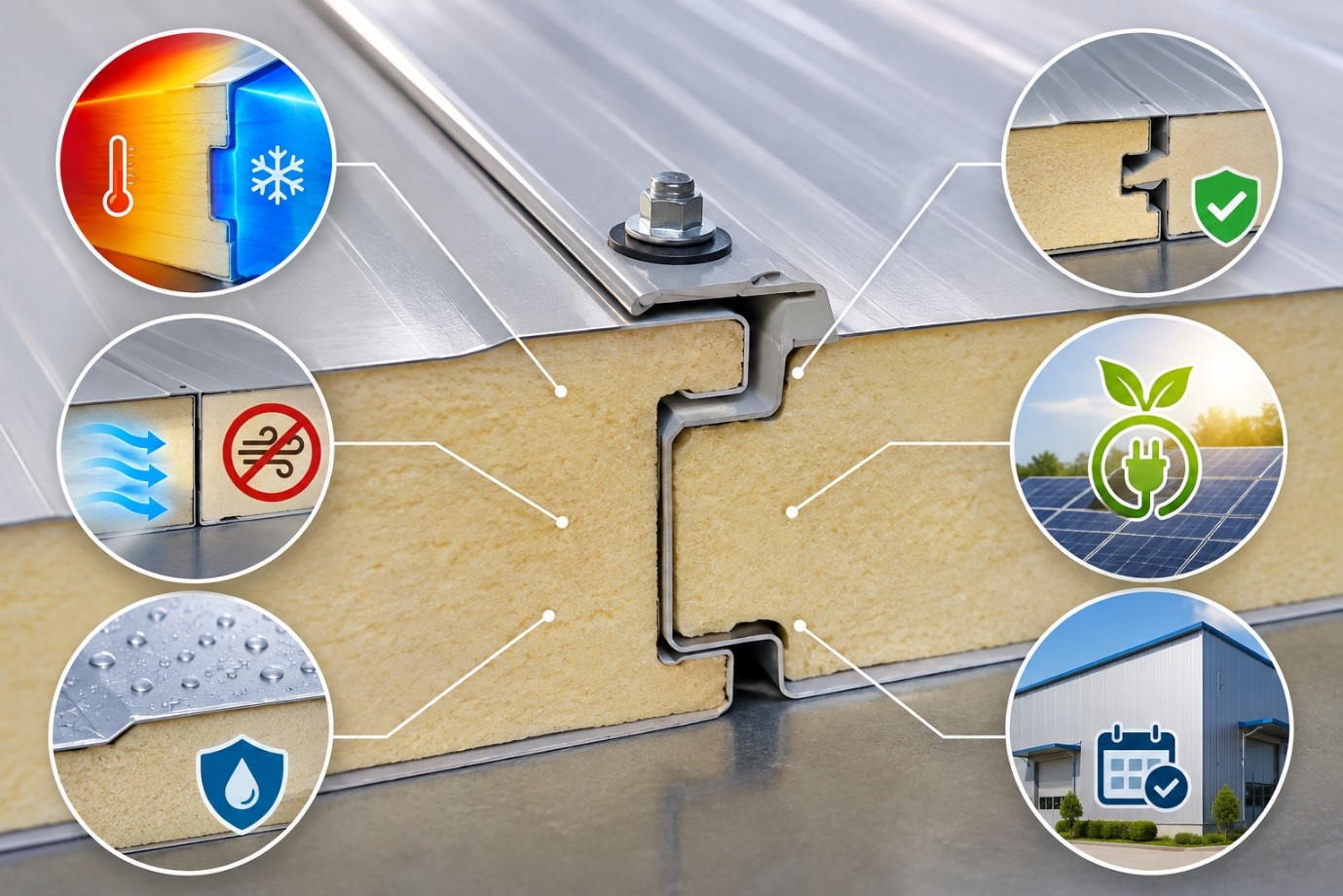
- Better Thermal Insulation: Well-fitted sandwich panel joints help maintain insulation continuity and reduce unwanted heat transfer between indoor and outdoor environments.
- Air Leakage Control: Properly sealed PUF panel joints minimize unwanted air exchange, which is particularly important in cold storage facilities, freezers and other temperature-controlled spaces.
- Moisture Protection: Suitable sealing materials help prevent moisture from entering panel connections, reducing the risk of condensation and damage to adjoining components.
- Improved Energy Efficiency: Reducing air leakage and thermal bridging can lower the workload on refrigeration and air-conditioning systems, helping improve energy efficiency.
- Long-Term Durability: Properly installed interlocking wall panels, interlocking ceiling panels and interlocking roof panels help maintain the overall performance of the building while reducing problems caused by gaps and poor sealing.
Overall, choosing the right PUF panel interlocking system and ensuring proper installation of joints can make a significant difference in the performance and service life of an insulated building.
How Are PUF Panel Joints Installed and Sealed?
Proper installation and sealing are essential to ensure that PUF panel joints provide effective insulation, secure connections and long-term durability. Poorly fitted joints can create gaps that allow unwanted air and moisture to enter, affecting the overall performance of an insulated structure. Therefore, every installation step should be carried out carefully according to the manufacturer’s guidelines.
Basic Installation Process
The installation of PUF panels generally involves the following steps:
- Surface Preparation: : Ensure that the supporting structure or floor is clean, level and properly prepared before starting the installation.
- Panel Positioning: Place the first panel according to the approved installation drawings to establish the correct alignment for subsequent panels.
- Panel Alignment: Position adjoining panels carefully, ensuring that their edge profiles match correctly. Proper alignment is important when installing interlocking wall panels, roof panels and ceiling panels.
- Joint Connection: Connect the panels using the appropriate mechanism. In tongue and groove joints, the projecting edge fits into the matching groove. In a cam lock joint system, a compatible key is used to activate the locking mechanism.
- Joint Sealing: Apply suitable sealing materials wherever required to prevent unwanted air and moisture entry.
- Corner Finishing: Install appropriate flashings, trims and accessories at wall corners, roof edges and ceiling junctions.
- Final Inspection: Check panel alignment, connection tightness, sealing continuity and visible gaps to ensure proper installation.
Materials Used for Joint Sealing
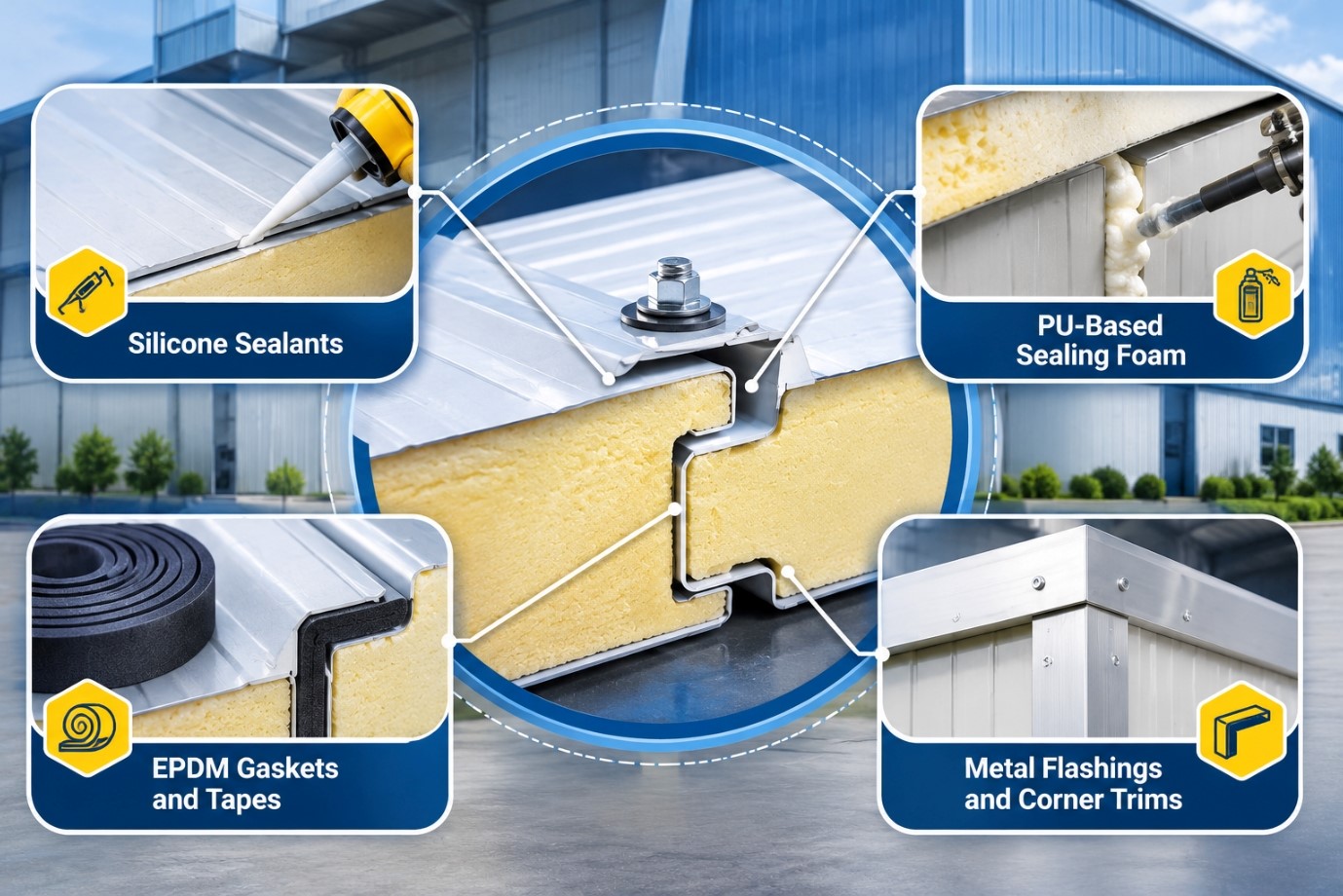
Different materials are used for sealing sandwich panel joints, depending on the application and panel design.
- Silicone Sealants: Help seal suitable joints against air and moisture entry.
- PU-Based Sealing Foam: Fills suitable gaps and cavities to provide additional insulation and sealing.
- EPDM Gaskets and Tapes: Provide flexible sealing at selected panel connections.
- Metal Flashings and Corner Trims: Cover and protect exposed joints, particularly at corners and roof edges.
The choice of materials depends on operating temperature, environmental exposure and manufacturer specifications. Using the right PUF panel interlocking system and compatible sealing materials helps ensure reliable connections and better insulation performance.
Applications of PUF Panel Joints in Different Industries
PUF panel joints are widely used across different industries where thermal insulation, controlled environments and durable construction are important. The right joint system helps connect individual panels securely while maintaining insulation continuity and reducing unwanted air leakage. Some of their major applications include:
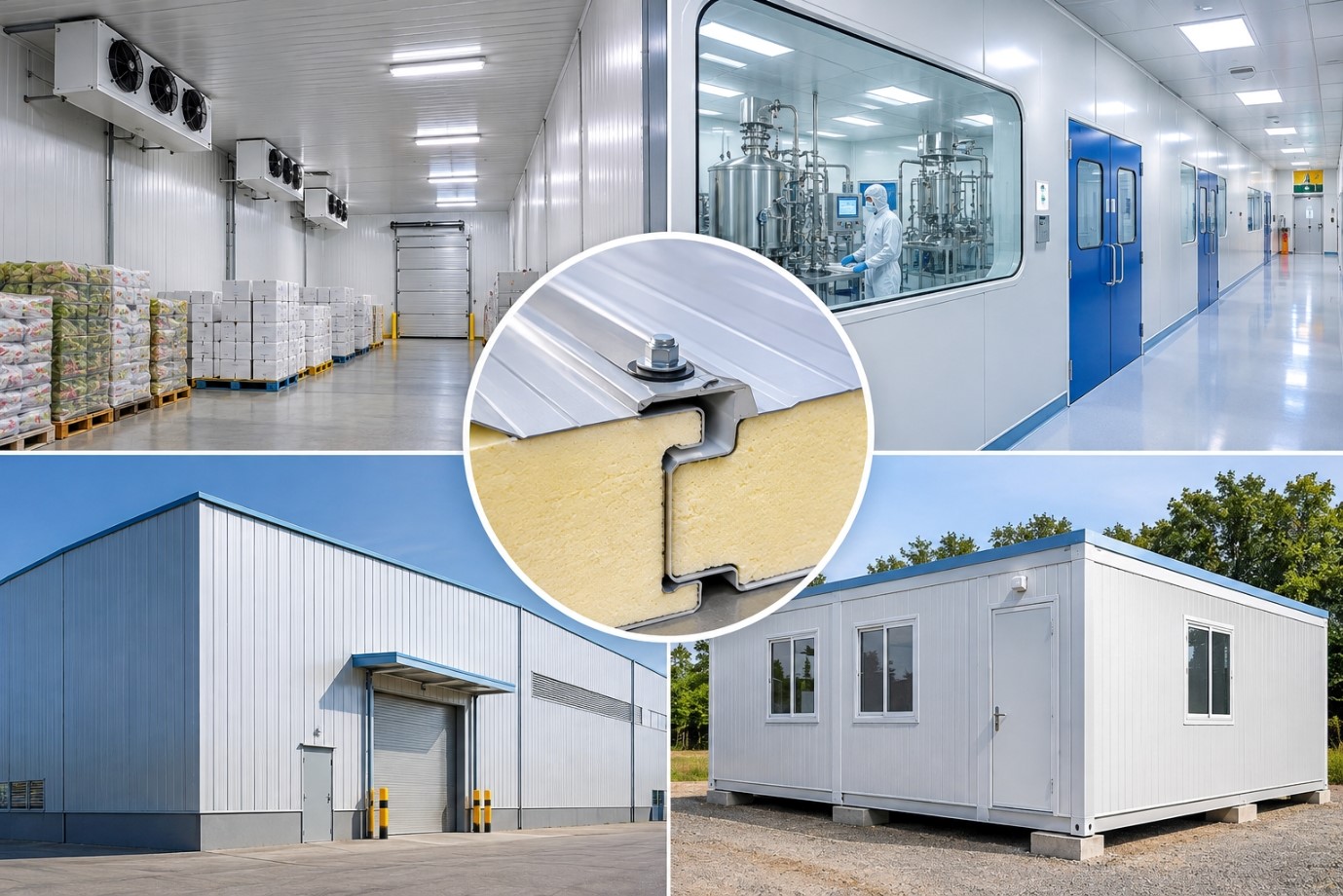
Cold Storage Facilities
Cold storage facilities require consistent temperatures to preserve food, vegetables, fruits and other perishable products. Properly sealed PUF panel joints, particularly those using a cam lock joint system, help minimize air leakage and unwanted heat transfer, supporting efficient temperature control. For more information, you can go through our dedicated page on Cold storage solutions.
Pharmaceutical and Cleanroom Facilities
Pharmaceutical units and cleanrooms require controlled environments with minimal air infiltration. Well-fitted PUF panel joints and ceiling connections help create smooth, properly sealed surfaces that support hygiene and environmental control. You can also read our dedicated page on PUF Panel Cleanrooms.
Industrial Buildings and Warehouses
Industrial facilities use interlocking wall panels and interlocking roof panels to create insulated building enclosures. Suitable tongue and groove joints help maintain proper panel alignment and insulation continuity. Also go through our comprehensive blog on PUF Panel Industrial Sheds.
Prefabricated Structures
Prefabricated buildings use interlocking panels for walls and roofs for faster assembly. A suitable PUF panel interlocking system makes panel connections more convenient while supporting reliable construction and long-term performance. You can also read our dedicated page on Prefabricated houses and shelters.
Common Mistakes to Avoid in PUF Panel Joints Installation
Proper installation is essential to ensure that PUF panel joints deliver effective insulation and long-term performance. However, small installation mistakes can create gaps, weaken connections and reduce the overall efficiency of an insulated structure. Some common mistakes to avoid include:
- Improper Panel Alignment: Misaligned panels can create uneven connections and gaps, affecting the performance of tongue and groove joints and other interlocking systems.
- Leaving Gaps Between Panels: Gaps between insulation cores can allow unwanted heat transfer and air leakage, reducing insulation efficiency.
- Using Incorrect Sealing Materials: Incompatible or insufficient sealants may fail to provide proper air and moisture protection at wall panel joints and ceiling connections.
- Incorrect Cam Lock Tightening: Improper operation of a cam lock joint can result in loose connections or damage to the locking mechanism.
- Ignoring Corners and Junctions: Neglecting flashings and sealing at corners, roof edges and ceiling connections can compromise weather protection.
- Damaging Panel Edges: Rough handling during installation can damage the edges of interlocking wall panels and interlocking roof panels, affecting their fit.
Avoiding these mistakes and following the recommended PUF panel interlocking system installation guidelines helps maintain insulation continuity, secure connections and overall building durability. For detailed information, you can also go through our in-depth blog on Common mistakes while installing PUF Panels.
FAQs:
Q1. What are PUF panel joints?
A. PUF panel joints are specially designed connections that join two or more PUF sandwich panels to create continuous insulated walls, ceilings and roofs. They use interlocking edge profiles or mechanical locking arrangements to maintain panel alignment, insulation continuity and secure connections.
Q2. What are the different types of PUF panel joints?
A. The commonly used types of PUF panel joints include tongue and groove joints, cam lock joints, roof panel overlapping joints and corner or wall-to-ceiling joints. Each type serves a different purpose depending on the panel design, installation requirements and building application.
Q3. What is the difference between tongue and groove joints and a cam lock joint?
A. Tongue and groove joints use matching projecting and recessed edges to connect adjoining panels. A cam lock joint, on the other hand, uses an internal mechanical locking mechanism to pull panels tightly together. Both systems provide secure connections but are designed for different panel systems and applications.
Q4. Why is joint sealing important in PUF panels?
A. Proper sealing of sandwich panel joints helps minimize unwanted air leakage, moisture entry and heat transfer between adjoining panels. It also supports insulation continuity and improves the overall performance of cold storage facilities, cleanrooms and other temperature-controlled environments.
Q5. Which one of PUF panel joints is best for cold storage?
A. A cam lock joint is commonly used in cold storage facilities because its mechanical locking arrangement helps pull adjoining panels tightly together. When combined with suitable sealing materials and proper installation, it supports temperature control and reduces unwanted air infiltration.
Q6. What materials are used for sealing PUF panel joints?
A. Common materials used for sealing PUF panel joints include silicone sealants, PU-based sealing foam, EPDM gaskets and sealing tapes. Metal flashings and corner trims are also used to cover and protect exposed connections. Material selection depends on the application and manufacturer’s recommendations.
Conclusion
Properly designed and installed PUF panel joints play an important role in the overall performance, insulation efficiency and durability of insulated buildings. While PUF panels provide excellent thermal insulation, the way individual panels are connected also makes a significant difference. Well-fitted joints help maintain insulation continuity, minimize unwanted air leakage and reduce the chances of moisture entering through panel connections.
Different joining systems serve different construction requirements. Tongue and groove joints provide an interlocking connection between adjoining panels, while a cam lock joint creates a firm mechanical connection, particularly in cold storage and modular applications. Similarly, overlapping joints are commonly used in insulated roofing systems to provide suitable connections and weather protection. Selecting the right system depends on the panel design, building structure and intended application.
Whether you are installing interlocking wall panels, interlocking ceiling panels or interlocking roof panels, proper alignment, suitable sealing materials and careful installation are essential for achieving reliable results. A well-selected PUF panel interlocking system not only improves the performance of individual sandwich panel joints but also contributes to the long-term efficiency of the entire structure.
At Maks Engineering Co., we understand the importance of quality insulated panel solutions for different construction requirements. We offer prefabricated engineering and insulated panel solutions for industrial, commercial and temperature-controlled applications.
Looking for reliable PUF panel solutions for your next project? Connect with Maks Engineering Co. to discuss your project requirements and explore suitable solutions for your building needs. Our team can help you understand the available options and identify an appropriate solution for your application.
For more information regarding our products and services, you can explore our Homepage.
