
Tin Roofs vs PUF Panel Roofs: Which Roofing Solution Is Better?

Choosing the right roof is about more than simply covering a building. The roofing system can affect indoor temperature, energy use, maintenance, comfort, and the long-term performance of the structure. Tin roofs have remained popular because they are easy to source, simple to install and comparatively economical. Modern tin roofing sheets, including galvanised tin roof sheets, corrugated sheets and coated metal sheets, can provide reliable protection from rain, sunlight and other weather conditions. For basic tin roofs, storage area or utility structure, they can be a practical choice.
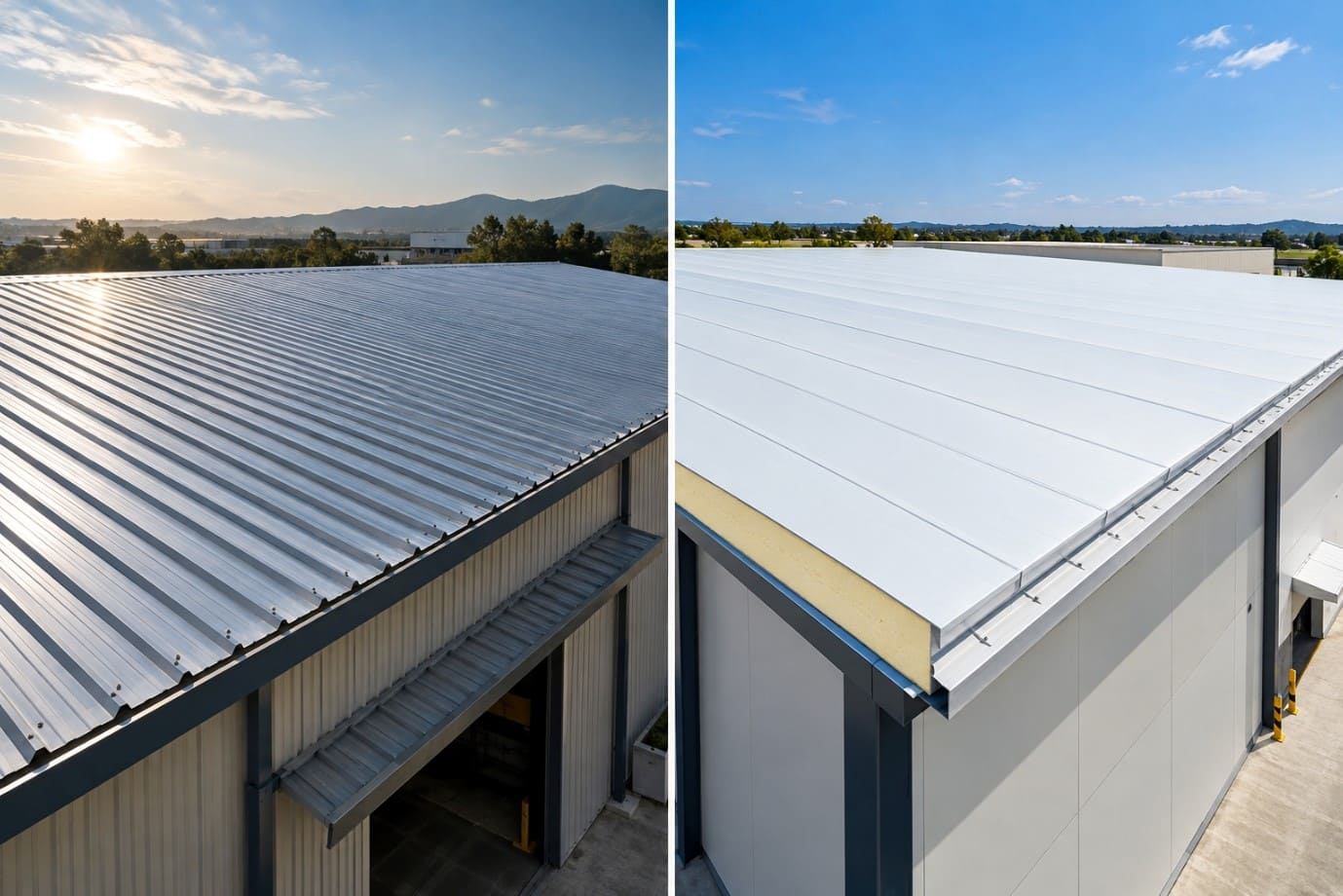
Tin Roofs vs PUF Panel Roof

However, conventional tin roofing mainly provides an outer protective layer. Metal sheets can absorb solar heat, increasing the temperature inside a building during hot weather. This can become a concern in factories, warehouses, commercial buildings and occupied spaces. A PUF panel roof offers a different approach. Instead of using only a tin roof sheet, PUF panels combine these sheets with a polyurethane foam insulation core. This integrated construction helps reduce heat transfer and provides better thermal insulation.

When comparing both options, it is important to look beyond the initial tin roof price. Different types of tin roofs, such as corrugated tin roofs and profile tin sheet systems, may work well when basic weather protection and upfront cost are the main priorities. PUF panels may be more suitable when insulation, temperature control and indoor comfort are important.

In this blog, we will compare tin roofs and PUF panel roofs in detail, covering their cost factors, insulation, durability, installation, maintenance, energy efficiency and applications. By the end, you will have a clearer understanding of which roofing solution is better suited to your building and requirements.

What Are Tin Roofs?

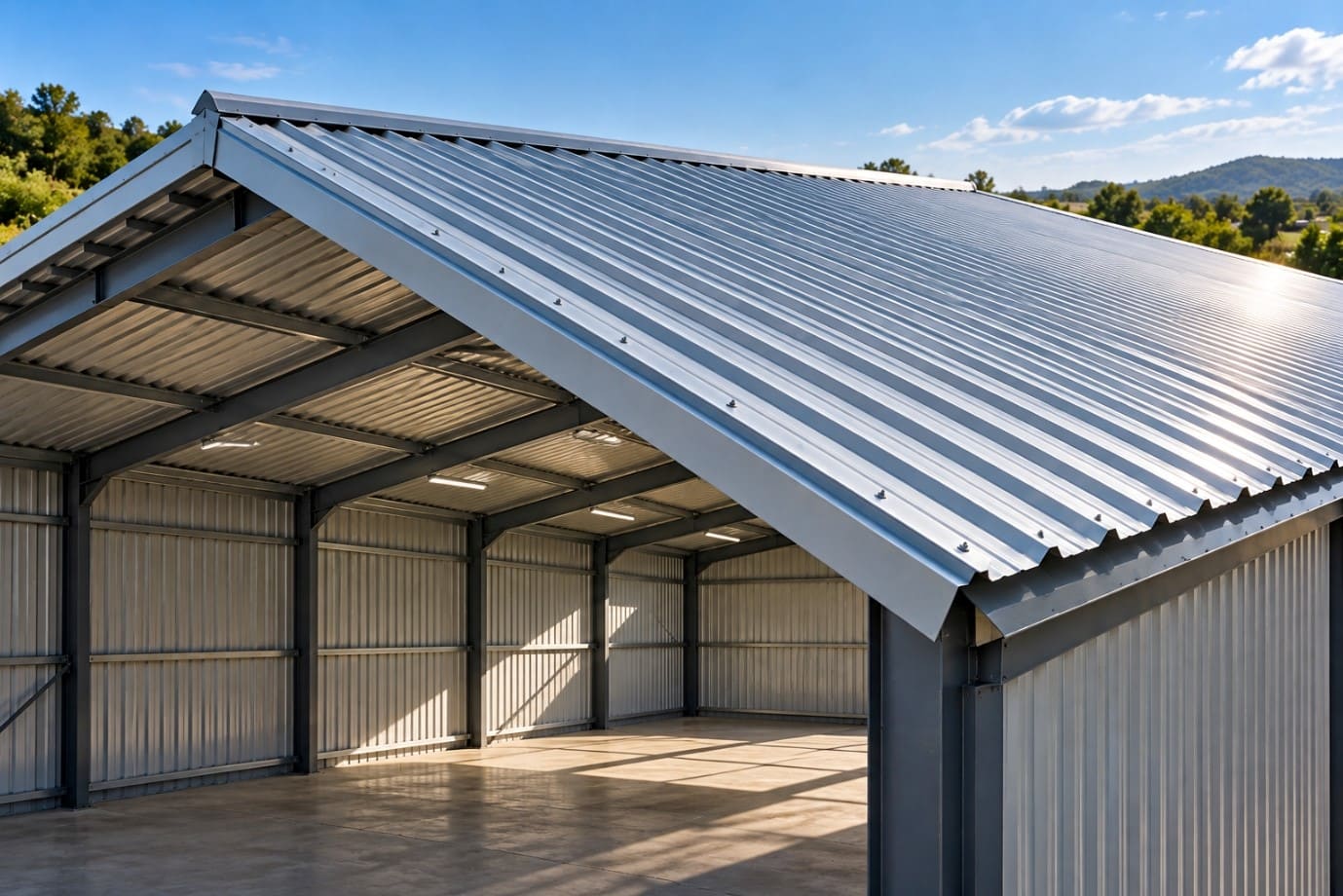
When people talk about tin roofs, they are usually referring to conventional metal roofing sheets rather than roofs made from pure tin. In modern construction, these roofs are generally made from materials such as galvanized steel, GI sheets, colour-coated steel or other coated metal products. They are available in different profiles and designs, making tin roofing a common choice for sheds, warehouses, workshops, agricultural structures and utility buildings.
What Are Tin Roofs

Common types of tin roofs include corrugated sheets, trapezoidal sheets and profile tin sheet systems. Galvanised tin roof sheets are particularly popular because the zinc coating helps protect the underlying steel from corrosion. Similarly, coated tin roofing sheets can offer improved durability and appearance when the right material and finish are selected.

How Does Conventional Tin Roofs Work?

Conventional tin roofs are generally installed over a structural framework. The basic arrangement is:

Structural frame → Purlins → Tin roof sheet → Fasteners → Overlaps & Flashings → Drainage

The tin sheet acts as the outer protective layer. Its main purpose is to keep rainwater out, shed water efficiently and protect the building from direct exposure to sunlight and weather. For a tin roof for shed or a basic storage structure, this straightforward construction can be economical and practical. Tin roofing sheets are also widely available in different thicknesses, profiles and coatings.

However, conventional tin roofs do not automatically provide significant thermal insulation. If the building requires better heat control, insulation generally needs to be added separately. This is an important difference to consider when comparing tin roofing with insulated systems such as PUF panel roofs.

What Is a PUF Panel Roof?

A PUF panel roof is an insulated roofing system designed to provide both weather protection and thermal insulation. PUF stands for Polyurethane Foam, a lightweight insulating material used as the core of the panel. Unlike conventional tin roofing sheets, where insulation may need to be installed separately, PUF panels combine the roof covering and insulation into one factory-made unit.

The basic construction is:

Outer Metal Sheet → PUF Insulation Core → Inner Metal Sheet

The metal sheets provide strength and protection, while the PUF core acts as a thermal barrier. This makes PUF panels suitable for factories, warehouses, commercial buildings, prefabricated structures and temperature-controlled facilities.

Why Does the PUF Core Matter?

A conventional tin roof sheet can become hot under direct sunlight, allowing heat to transfer into the building. The PUF core helps slow this heat transfer and provides better thermal insulation, which can support a more comfortable indoor environment.

However, PUF panels should not be viewed as a guaranteed way to achieve a specific energy saving. Actual performance depends on factors such as PUF panel thickness, climate, building design, openings, ventilation, HVAC usage and installation quality.

Therefore, comparing only the tin roof price does not tell the complete story. While corrugated tin roofs and other types of tin roofs can work well for basic structures, PUF panels offer an integrated insulation solution when thermal performance is an important requirement. For more details, you can read our dedicated page on PUF Panels.

Tin Roofs vs PUF Panel Roofs- Key Differences

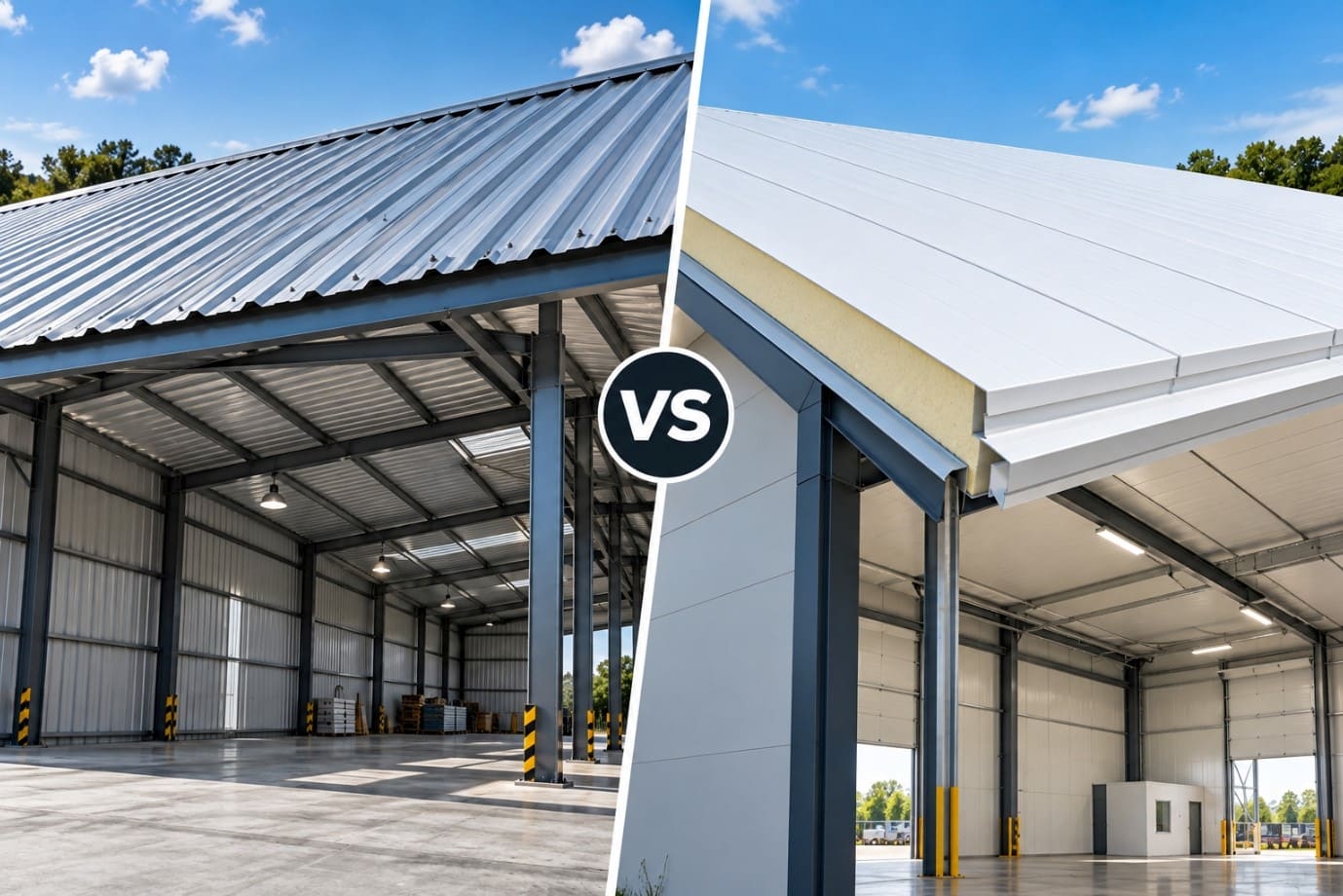
Choosing between tin roofs and PUF panel roofs depends on more than the initial material price. Both roofing systems can be useful, but they are designed to meet different building requirements. Conventional tin roofing sheets are commonly chosen for their simplicity, availability and lower upfront cost, while PUF panels combine roofing and insulation in a single system.
Tin Roofs vs PUF Panel Roofs- Key Differences
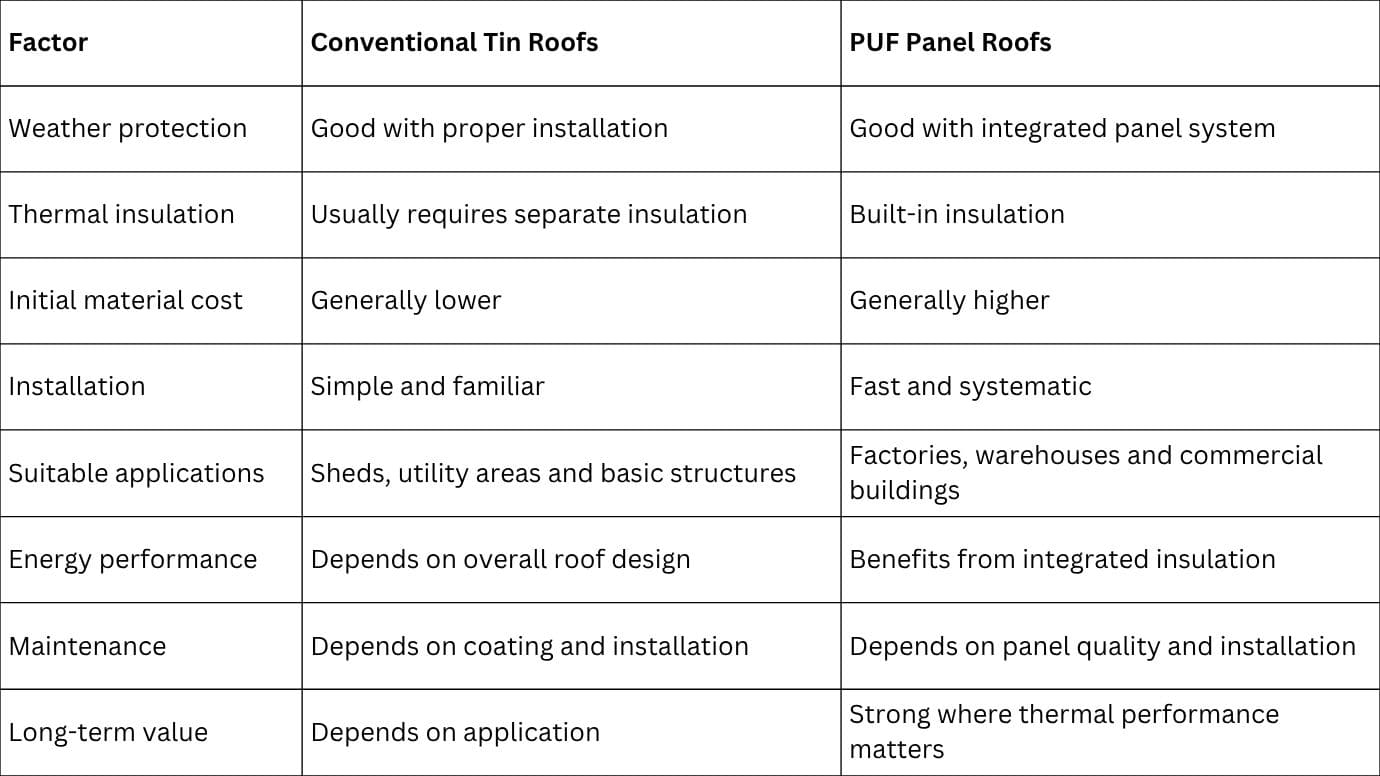
The key differences become clearer when factors such as thermal performance, installation, maintenance, application and long-term value are compared.
Tin Roofs vs PUF Panel Roofs- Differences
For example, corrugated tin roofs can be suitable for a basic shed or utility structure. The relatively lower price can also make conventional tin roofing sheets attractive when the initial budget is the primary concern.

However, when insulation and indoor temperature control are important, PUF panels offer a more integrated solution. Therefore, the cost of tin roofs should not be compared with PUF panels on material price alone. The building’s purpose, climate, insulation requirements, maintenance and operating conditions should all be considered before making a decision.

In simple terms, tin roofing can be practical for basic applications, while PUF roofing becomes more valuable when thermal performance is an important part of the building’s requirements.

Also Read: UPVC Roofing Sheet vs PUF Panel Roofing

Common Mistakes When Choosing Between Tin Roofs and PUF Roofing

Choosing a roofing system only by looking at the material or quoted price can lead to problems later. Whether you are considering tin roofing sheets, a PUF panel roof or another roofing solution, the decision should be based on how the building will actually be used. Here are some common mistakes worth avoiding.
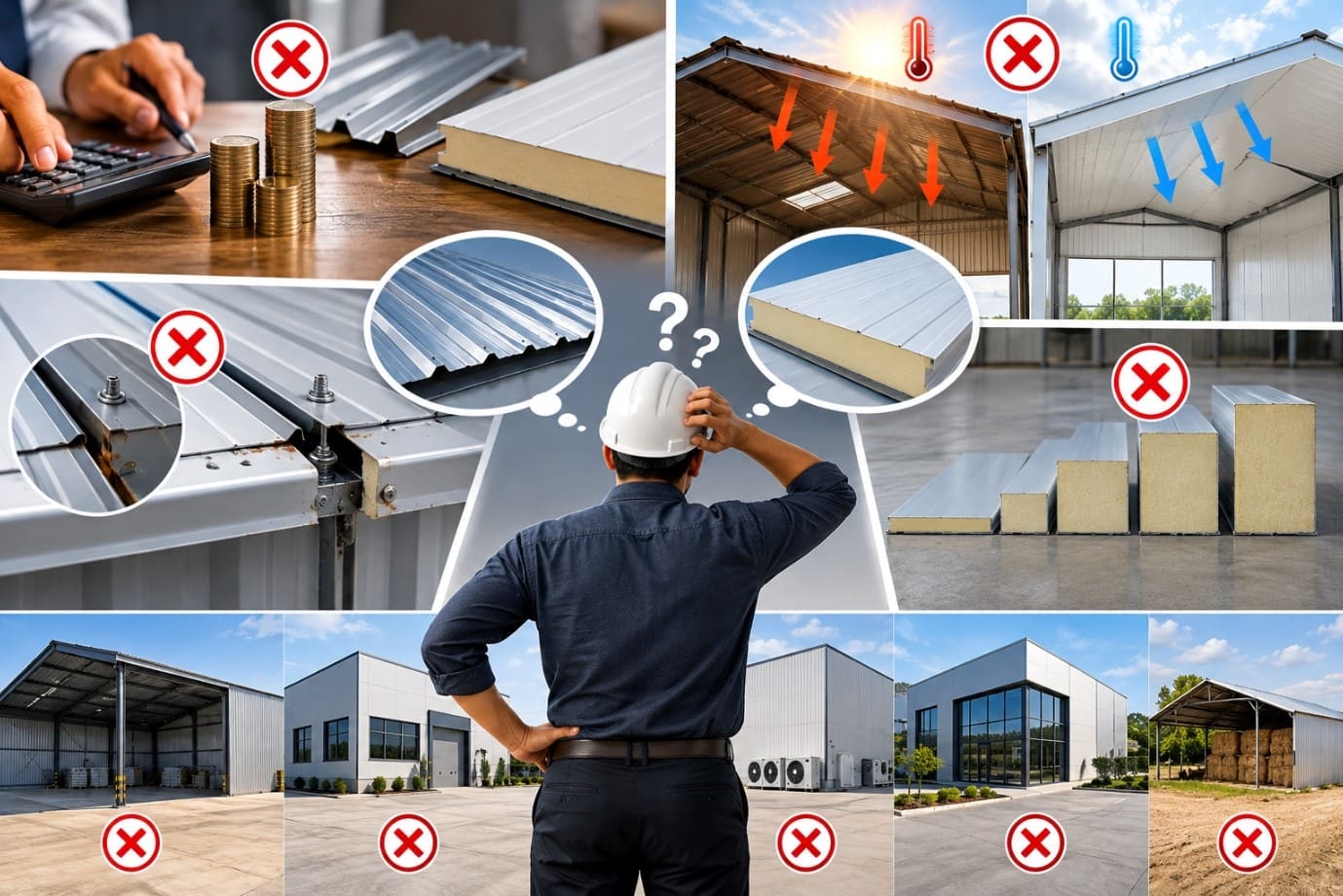
Common Mistakes When Choosing Between Tin Roofs and PUF Roofing

Which Is Better: Tin Roofs or PUF Panel Roofs?

There is no single roofing solution that works best for every building. The right choice depends on your budget, building use, climate and insulation requirements.

Choose Conventional Tin Roofing When:

Choose PUF Panel Roofing When:

In simple terms, tin roofing sheets can be a practical and economical option when basic weather protection is sufficient. PUF panels can be more suitable when insulation and thermal performance are important. Instead of comparing only the cost of tin roofs with PUF panels, consider installation, insulation, maintenance, operating conditions and long-term value before making the final decision.

Why Choose MAKS Engineering for PUF Panel Roofing?

Choosing the right roofing system is only the first step. The quality of the final building also depends on proper design, material selection, engineering, installation and execution. This is where working with an experienced engineering partner can make a difference.

MAKS Engineering provides PUF panels along with complete solutions for prefabricated and industrial construction. Whether you are replacing conventional tin roofing sheets or planning a new building, the team can help assess your requirements and recommend a suitable roofing solution based on the project’s application, size and insulation needs.

MAKS’s capabilities include:

For projects currently considering tin roofs, MAKS can help compare the requirements rather than focusing only on the initial tin roof price.

The goal is to help you select and implement a roofing system that suits the building, not just sell another tin roof sheet or panel. From individual PUF panels to complete PEB and prefabricated projects, MAKS can support the journey from planning to execution.

Don’t miss to read: Best PUF Panels Manufacturer in Delhi NCR

FAQs:

Q1. Is a PUF panel roof better than tin roofing?

A. A PUF panel roof can be better than tin roofing when thermal insulation and indoor temperature control are important. Conventional metal roofing mainly provides weather protection, while PUF panels combine the roof covering with an insulating core. However, the right choice depends on the building’s application, climate, budget and performance requirements.

A. The initial cost of PUF roofing is generally higher than a basic tin roof sheet because it includes integrated insulation. However, comparing only the material price can be misleading. The complete installed cost, additional insulation, maintenance, cooling requirements and long-term operating conditions should also be considered.

A. Common types of tin roofs include corrugated metal sheets, trapezoidal or profiled sheets, galvanized steel sheets and colour-coated metal roofing sheets. The appropriate type depends on the building design, structural requirements, climate, appearance and expected service conditions.

A. Tin roofs can be used for homes, extensions, farmhouses and utility structures, provided they are correctly designed and installed. For occupied spaces, insulation, ventilation, appearance and rain noise should also be considered.

A. Usually, no. The main advantage of PUF roofing is that the insulation is integrated into the panel. However, the required panel specification should be selected according to the project’s thermal requirements.

Conclusion

Choosing between tin roofs and PUF panel roofing ultimately depends on what your building needs from its roof. There is no single solution that works for every project. Conventional tin roofing sheets can be a practical option when the priority is basic weather protection, simple installation and a lower initial investment. For sheds, workshops, storage areas and utility structures, options such as corrugated tin roofs, galvanised tin roof sheets and profile tin sheet systems can be suitable.

However, buildings such as factories, warehouses, commercial facilities and cold storage units may require more than protection from rain and sunlight. When thermal insulation and better indoor temperature control are important, a PUF panel roof provides an integrated solution by combining the outer metal sheets with an insulating core.

Therefore, don’t make your decision based only on the tin roof price or initial cost of tin roofs. Consider the building’s purpose, climate, insulation requirements, installation, maintenance, energy use, and long-term operating conditions. A lower initial cost does not always mean better value over the life of the building.

If you are planning a new roofing or prefabricated construction project, MAKS Engineering can help you evaluate the available options based on your specific requirements. With solutions including PUF panels, PEB structures, prefabricated buildings, cold storage, insulated doors, installation and turnkey construction, MAKS can support projects from engineering and planning through execution.

Whether you need tin roofing for a basic shed or an insulated roofing system for an industrial facility, making the decision based on actual building requirements is the best way to achieve a durable, practical and cost-effective result.

For more information, you can explore our Homepage.

Call Now Button