
PUF Corner Panels
In modern prefabricated and insulated construction, PUF corner panels play a crucial role in delivering strength, durability, and superior thermal performance. Before understanding their importance, it is essential to know that PUF (Polyurethane Foam) panels are advanced insulated sandwich panels made with a rigid polyurethane foam core placed between two metal sheets. These PUF corner panels are widely used in industrial and commercial structures due to their excellent insulation, lightweight properties, and fast installation advantages.
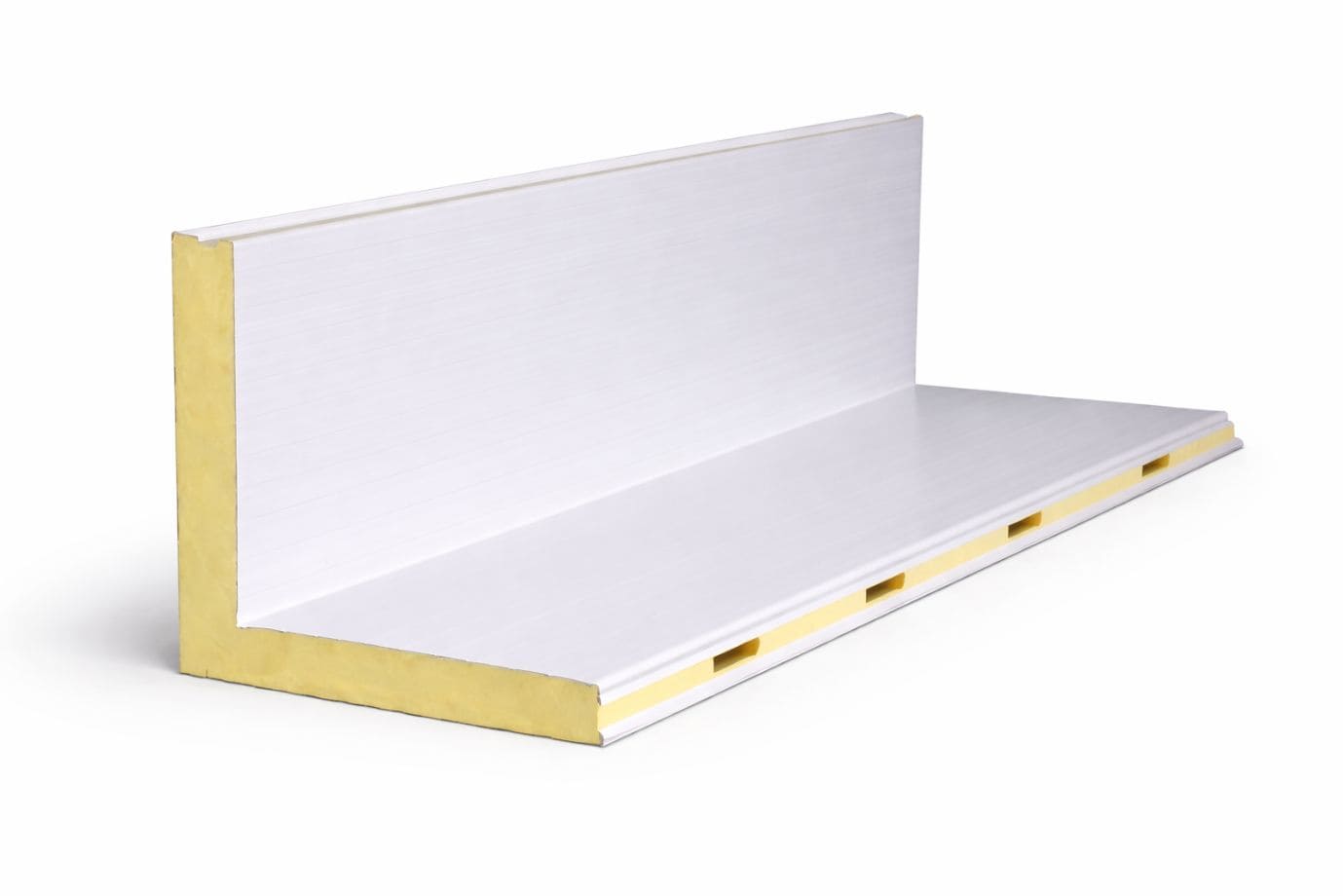
However, while standard wall panels provide insulation across flat surfaces, the real challenge in insulated structures lies at the corners. A poorly designed corner wall panel can lead to thermal bridging, air leakage, moisture seepage, and structural weakness. This is where a specially designed wall panel corner solution becomes essential. A high-quality panel corner ensures continuity of insulation and maintains structural alignment at 90-degree joints.
PUF Corner Sandwich Panels are engineered specifically to eliminate gaps and ensure seamless insulation at building edges. Whether used in cold rooms, pre-engineered buildings (PEB), poultry farms, or portable cabins, a properly fabricated corner enhances energy efficiency and improves the overall lifespan of the structure. A well-installed corner PUF panel not only strengthens the building envelope but also reduces operational energy costs by maintaining consistent internal temperatures.
In this blog, we will explore everything you need to know about PUF corner panels — their structure, benefits, applications and why choosing the right manufacturer is essential for long-term performance and energy savings.
What Are PUF Corner Panels?
These are specially engineered insulated panels designed to provide seamless thermal and structural continuity at building corners. Unlike standard flat wall panels, which are primarily used for straight wall installations, a corner wall panel is specifically fabricated to fit at 90-degree angles or customized corner configurations. These panels ensure that insulation remains consistent even at the most vulnerable points of a structure — the corners.
A standard wall panel may require additional joining components at edges, but a dedicated wall panel corner eliminates the need for excessive jointing and sealing work. A properly designed panel corner ensures airtight integration between adjoining walls, preventing thermal leakage and air infiltration. This makes these panels an essential component in insulated buildings.
Structurally, PUF corner panels follow the same sandwich construction principle as regular PUF panels. They consist of two high-strength metal sheets (typically pre-painted galvanized iron or aluminum) enclosing a rigid polyurethane foam core. This sandwich panel corner design provides excellent insulation, durability, and load-bearing capacity.
Many manufacturers produce L-shaped or custom-fabricated corner PUF panel units that are pre-molded to exact dimensions. This ensures precision fitting, faster installation, and superior thermal sealing. In airtight and temperature-controlled environments such as cold storage and clean rooms, a properly installed PUF corner panels system is critical for maintaining energy efficiency and preventing condensation or structural weakness.
Also Read our comprehensive page on PUF Panels.
Why Corners Matter in Insulated Structures
Corners are the most vulnerable points in any insulated building. While flat wall sections are easy to seal and insulate, the PUF panel corner is where structural alignment, insulation continuity, and airtight sealing must work together perfectly. Even a small gap at a corner can reduce energy efficiency and compromise the building’s durability. This is why properly engineered PUF corner panels are essential in modern insulated construction.
Thermal Bridging Problems
- Thermal bridging occurs when heat transfers through poorly insulated joints. In conventional construction, the corner wall panel area often becomes a weak spot where insulation is interrupted. This leads to temperature fluctuations and increased energy consumption.
- High-quality PUF Corner Sandwich Panels eliminate thermal bridging by ensuring continuous polyurethane insulation across the sandwich panel corner, maintaining uniform temperature control.
Air Leakage Risks
- Improper sealing at a corner allows outside air to enter the structure. This is especially problematic in cold rooms and controlled environments, where stable internal temperatures are critical.
- A precision-designed corner PUF panel ensures airtight sealing, preventing unwanted air infiltration and improving overall energy efficiency.
Structural Stability
- Corners provide structural support by connecting two adjoining walls. If the wall panel corner is weak or poorly installed, it can affect the alignment and strength of the entire building.
- Engineered PUF corner panels are fabricated to fit accurately, providing enhanced rigidity and long-term structural stability.
Moisture Prevention
- Moisture accumulation often begins at poorly sealed corners. Water seepage at the corner can cause corrosion, fungal growth, and material deterioration.
- With seamless jointing, PUF Corner Sandwich Panels prevent moisture penetration and condensation buildup.
Energy Loss from Poorly Sealed Joints
- Even small gaps at a corner can result in significant energy loss over time. This increases cooling or heating costs.
- By installing properly manufactured PUF corner panels, builders ensure complete thermal sealing, reduced operational costs, and improved building performance.
Key Features of PUF Corner Panels
Modern insulated construction demands durability, efficiency, and precision — especially at the corners. High-quality corner panels are designed to deliver structural integrity and thermal continuity where two walls meet. A well-engineered corner wall panel ensures that the building remains airtight, energy-efficient, and long-lasting. Below are the key features that make PUF Corner Sandwich Panels an essential component in insulated structures.
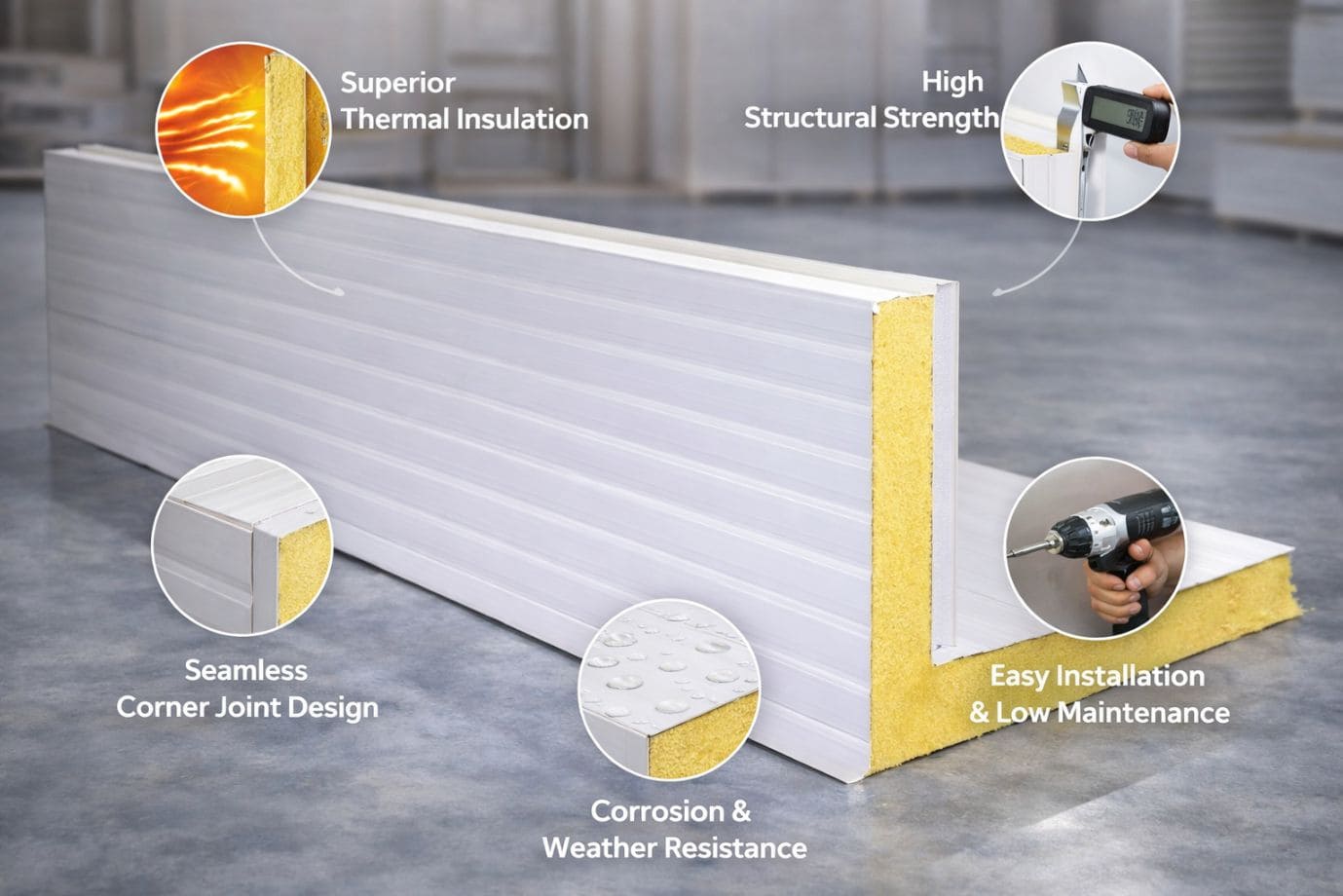
Superior Thermal Insulation
- Advanced polyurethane foam core ensures minimal heat transfer.
- Maintains uniform temperature at every corner.
- Eliminates thermal bridging at the corner.
- Reduces energy consumption in cold rooms and PEB structures.
A properly installed corner PUF panel ensures continuous insulation without gaps.
High Structural Strength
- Rigid foam core adds compressive strength.
- Reinforced metal facings improve durability.
- Enhances stability at critical panel corner junctions.
These corner panels provide additional rigidity where structural alignment is most important.
Seamless Corner Joint Design
- Precision-fabricated L-shape design.
- Tight interlocking at every corner.
- Prevents air leakage and moisture infiltration.
A seamless sandwich panel corner ensures airtight construction.
Corrosion & Weather Resistance
- Pre-coated galvanized or aluminum sheets.
- Resistant to humidity and harsh weather conditions.
- Protects the corner wall panel from rust and deterioration.
Fire Retardant Properties
- Available with fire-resistant PUF core options.
- Enhances safety compliance in industrial projects.
Easy Installation & Low Maintenance
- Pre-engineered corner PUF panel units reduce installation time.
- Minimal sealing requirements at the panel corner.
- Long service life with low upkeep costs.
Overall, PUF Corner Sandwich Panels combine insulation performance, strength, and durability — making them ideal for modern prefabricated structures.
Applications of PUF Corner Panels
High-performance PUF corner panels are widely used across industrial and commercial sectors where thermal efficiency, hygiene, and structural precision are critical. A properly engineered panel ensures airtight sealing and insulation continuity at every corner, making these panels essential for modern prefabricated construction projects. Below are the major applications of PUF Corner Sandwich Panels:
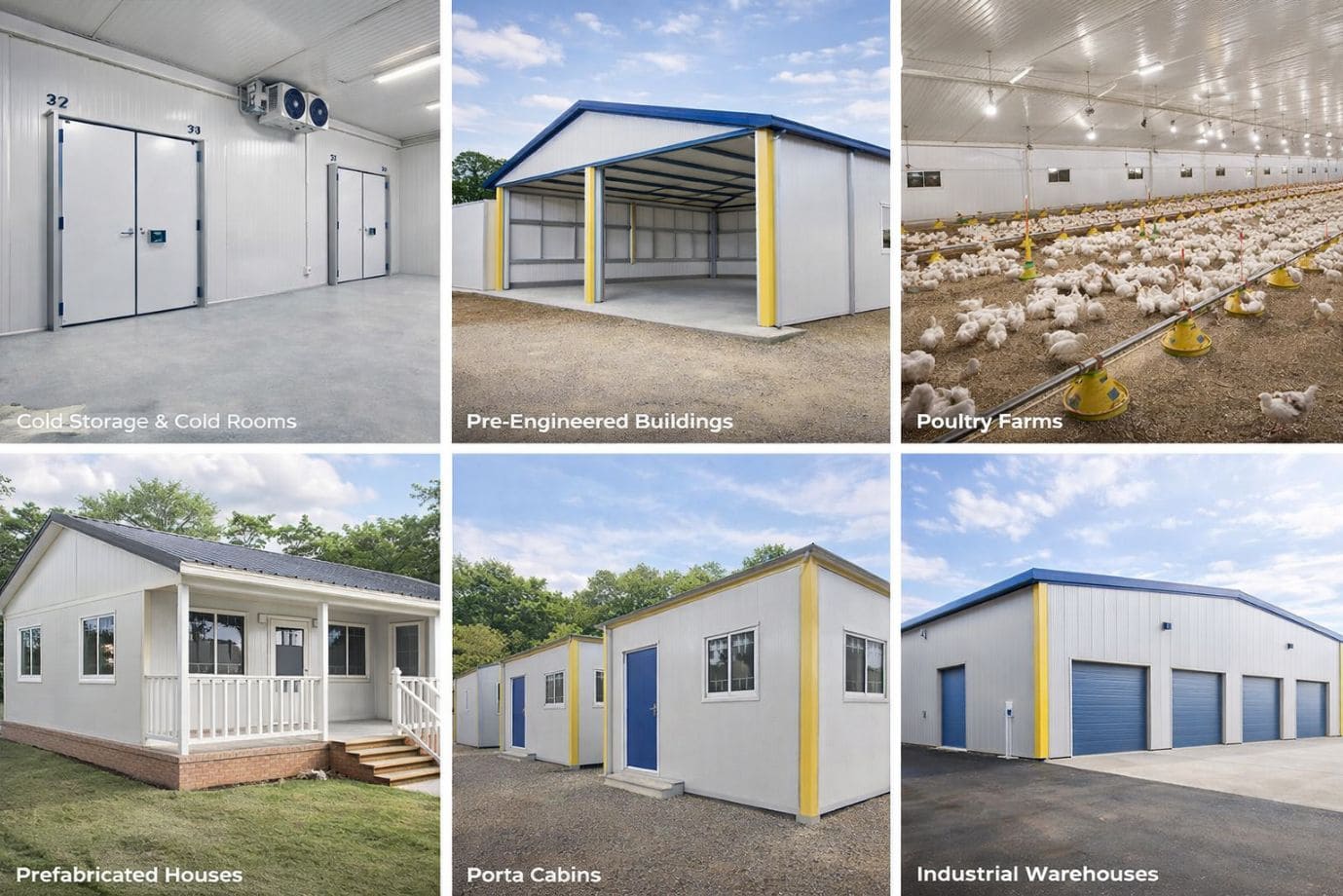
Cold Storage & Cold Rooms
In cold storage facilities, even minor gaps at a corner can lead to temperature fluctuations and energy loss. PUF corner panels help maintain strict temperature consistency by eliminating thermal bridging at the corner. Their seamless insulation prevents air leakage, reduces compressor load, and ensures energy-efficient operations — making them ideal for food processing units, pharmaceutical storage, and dairy facilities. You can also go to our detailed page on Cold Storage solutions.
Pre-Engineered Buildings (PEB)
In PEB structures, structural alignment at the corner is vital for overall stability. A precision-manufactured corner PUF panel maintains insulation continuity while enhancing the rigidity of the building envelope. This ensures faster project execution and long-term performance for factories, logistics hubs, and commercial buildings. For more information, you can read our dedicated page on Pre-Engineered Buildings (PEBs).
Poultry Farms
Temperature-controlled poultry environments require consistent insulation at every corner. PUF Corner Sandwich Panels maintain optimal indoor climate conditions, supporting better livestock health and productivity while reducing energy costs.
Also Read: PUF Panel Poultry Farms
Prefabricated Houses & Porta Cabins
For modular construction, PUF corner panels enable faster assembly and accurate alignment at each corner. Their lightweight yet strong design supports rapid installation and easy relocation.
You can also go through our comprehensive page on Prefabricated Structures.
Industrial Warehouses
Large-scale warehouses benefit from durable sandwich panel corner systems that prevent moisture infiltration and improve insulation efficiency. A robust corner PUF panel enhances structural durability while lowering long-term operational expenses.
You can also read our detailed page on Porta Cabins.
Advantages of Choosing PUF Corner Panels over Traditional Corner Construction
When comparing modern insulation systems with conventional construction methods, PUF corner panels clearly offer superior performance, efficiency, and long-term value. A properly designed corner wall panel ensures thermal continuity and structural precision that traditional corner solutions often fail to deliver.
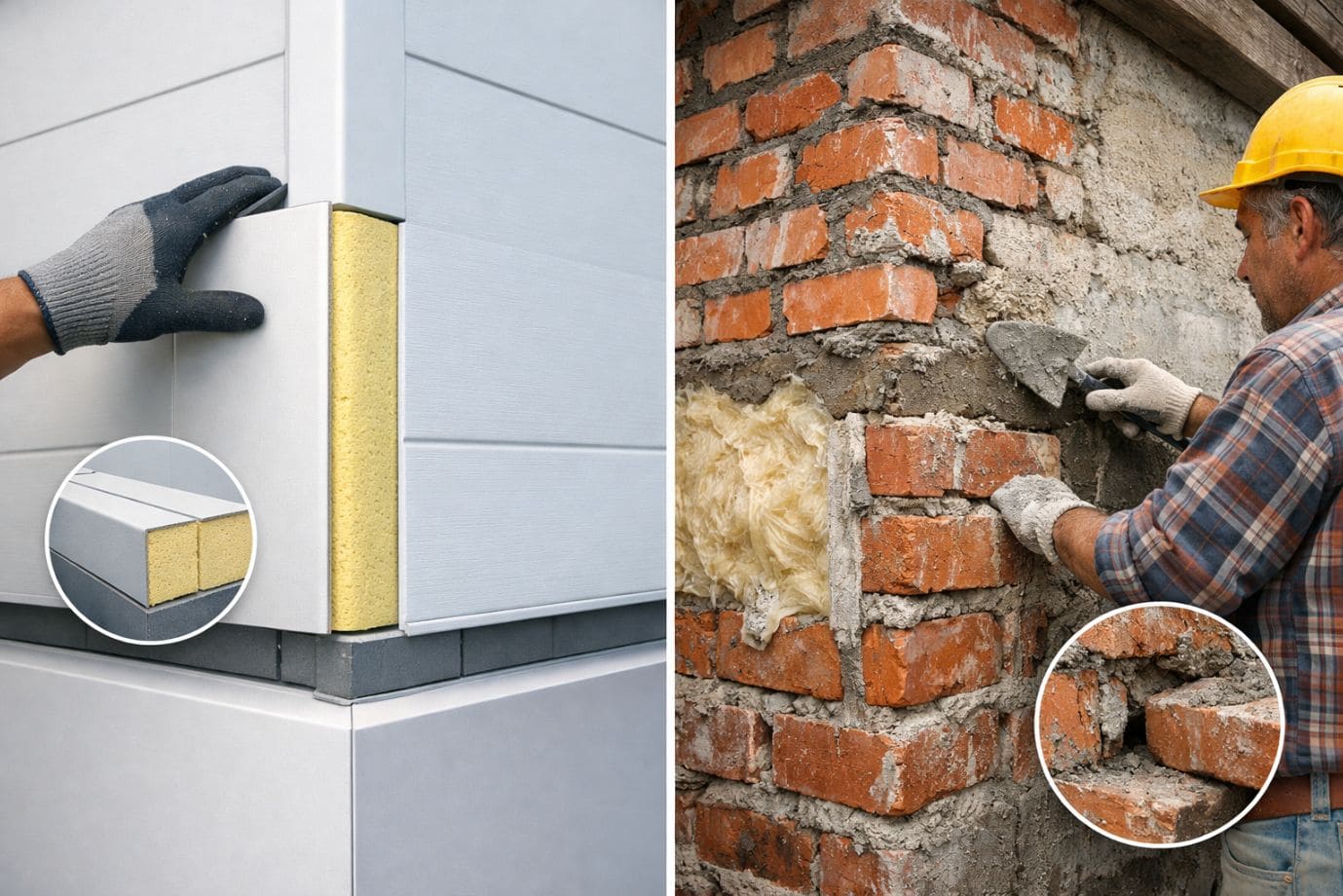
Brick & Mortar vs PUF Corner Panels
Traditional brick and mortar corners rely heavily on manual plastering and sealing, which can create gaps at the corner over time. These gaps lead to thermal leakage and moisture penetration. In contrast, PUF corner panels are factory-fabricated with precision, ensuring a seamless PUF panel corner that provides consistent insulation and airtight performance. For detailed information, you can also read our dedicated blog on Brick and Mortar vs PUF Panels.
Metal Cladding vs Insulated Corner Systems
Standard metal cladding may offer structural coverage, but it does not provide adequate insulation at the corner. This results in higher heat transfer and energy consumption. A dedicated corner PUF panel combines structural strength with high-density polyurethane insulation, eliminating thermal bridging at the corner.
Cost Comparison (Long-Term Energy Savings)
While traditional construction may seem cost-effective initially, energy loss from poorly sealed corner joints increases operational expenses over time. PUF corner panels significantly reduce heating and cooling costs by maintaining stable internal temperatures, delivering measurable long-term savings.
Installation Time Comparison
Brickwork and conventional corner finishing require longer curing and finishing periods. Pre-engineered PUF Corner Sandwich Panels are easy to install, reducing project timelines and labor costs.
Maintenance Cost
Traditional corners often require frequent repairs due to cracks and moisture damage. A durable corner PUF panel requires minimal maintenance, offering extended service life and better return on investment for industrial and commercial projects.
How to Choose the Right PUF Corner Panel Manufacturer
Selecting the right manufacturer for PUF corner panels is crucial for ensuring long-term performance, insulation efficiency, and structural reliability. Since the corner wall panel is one of the most critical junctions in any insulated structure, quality and precision should never be compromised.
- Strong Quality Control Process: A reliable manufacturer should follow strict quality checks at every stage — from raw material selection to final fabrication. High-density polyurethane foam, properly coated metal sheets, and precision engineering are essential for a durable corner. Consistency in thickness, bonding strength, and finishing ensures that every PUF panel corner delivers airtight and thermal performance as promised.
- Custom Fabrication Capability: Not all projects have identical structural requirements. The right supplier should be capable of manufacturing customized sandwich panel corner solutions based on project dimensions and insulation needs. Whether it’s an L-shaped corner PUF panel or a specialized angle design, customization ensures accurate fitting and seamless installation.
- Installation & Technical Support: Professional guidance during installation is essential to maintain insulation continuity at every wall panel corner. Experienced manufacturers provide technical assistance to ensure proper alignment and sealing of PUF Corner Sandwich Panels.
- Experience in Cold Storage & PEB Projects: Manufacturers with proven experience in cold storage and pre-engineered building (PEB) projects understand the importance of thermal sealing at each corner wall panel. This expertise directly impacts energy efficiency and long-term durability.
- After-Sales Support: Strong after-sales service ensures prompt assistance, maintenance guidance, and long-term reliability of PUF corner panels, making it a critical factor when choosing a trusted supplier.
Also Read: PUF Ceiling Panels
FAQs:
Q1. What are PUF corner panels used for?
A. PUF corner panels are used to provide seamless insulation and structural stability at building corners in cold rooms, PEB structures, poultry farms, porta cabins, and industrial warehouses. These panels ensure thermal continuity and prevent energy loss at critical junctions.
Q2. Why is a corner wall panel important in insulated buildings?
A. A corner wall panel is important because it eliminates gaps at building edges, preventing air leakage, moisture infiltration, and thermal bridging. Proper installation ensures long-term insulation performance and structural alignment.
Q3. How does a wall panel corner improve energy efficiency?
A. A well-designed wall panel corner improves energy efficiency by maintaining insulation continuity and reducing heat transfer at structural intersections. This helps lower cooling and heating costs in temperature-controlled environments.
Q4. What makes a panel corner different from traditional corner construction?
A. Unlike brick or metal joints, a panel corner is factory-engineered for precision fitting and airtight sealing. It provides better insulation, faster installation, and reduced maintenance compared to traditional corner methods.
Q5. Are PUF Corner Sandwich Panels suitable for cold storage applications?
A.Yes, PUF Corner Sandwich Panels are ideal for cold storage facilities because they maintain temperature consistency, prevent condensation, and reduce compressor workload.
Conclusion
In modern insulated construction, the smallest structural details often make the biggest difference — and the corner is one of the most critical elements of all. High-quality PUF corner panels ensure thermal continuity, structural strength, and long-term durability at every wall panel corner. Unlike conventional corner construction methods, a precision-engineered corner wall panel eliminates thermal bridging, air leakage, and moisture infiltration, making the entire building envelope more efficient and reliable.
Whether installed in cold storage facilities, PEB structures, poultry farms, porta cabins, or industrial warehouses, PUF corner panels provide seamless insulation at every corner. Their advanced polyurethane core significantly reduces energy consumption by maintaining stable internal temperatures, leading to measurable cost savings over time. A properly designed corner PUF panel not only enhances performance but also simplifies installation and reduces maintenance requirements.
Investing in premium PUF corner panels is ultimately an investment in energy efficiency, operational savings, and structural longevity. For businesses seeking dependable insulated solutions, choosing an experienced and quality-focused manufacturer is essential. MAKS Engineering offers precision-fabricated PUF Corner Sandwich Panels designed to meet diverse industrial requirements.
If you are planning your next insulated construction project, connect with Maks Engineering to explore customized corner wall panel solutions that deliver performance, efficiency, and long-term value. For more details, you can go to our HomePage.
